

How to Rent an Apartment in Brazil as a Foreigner (2026 Guide)
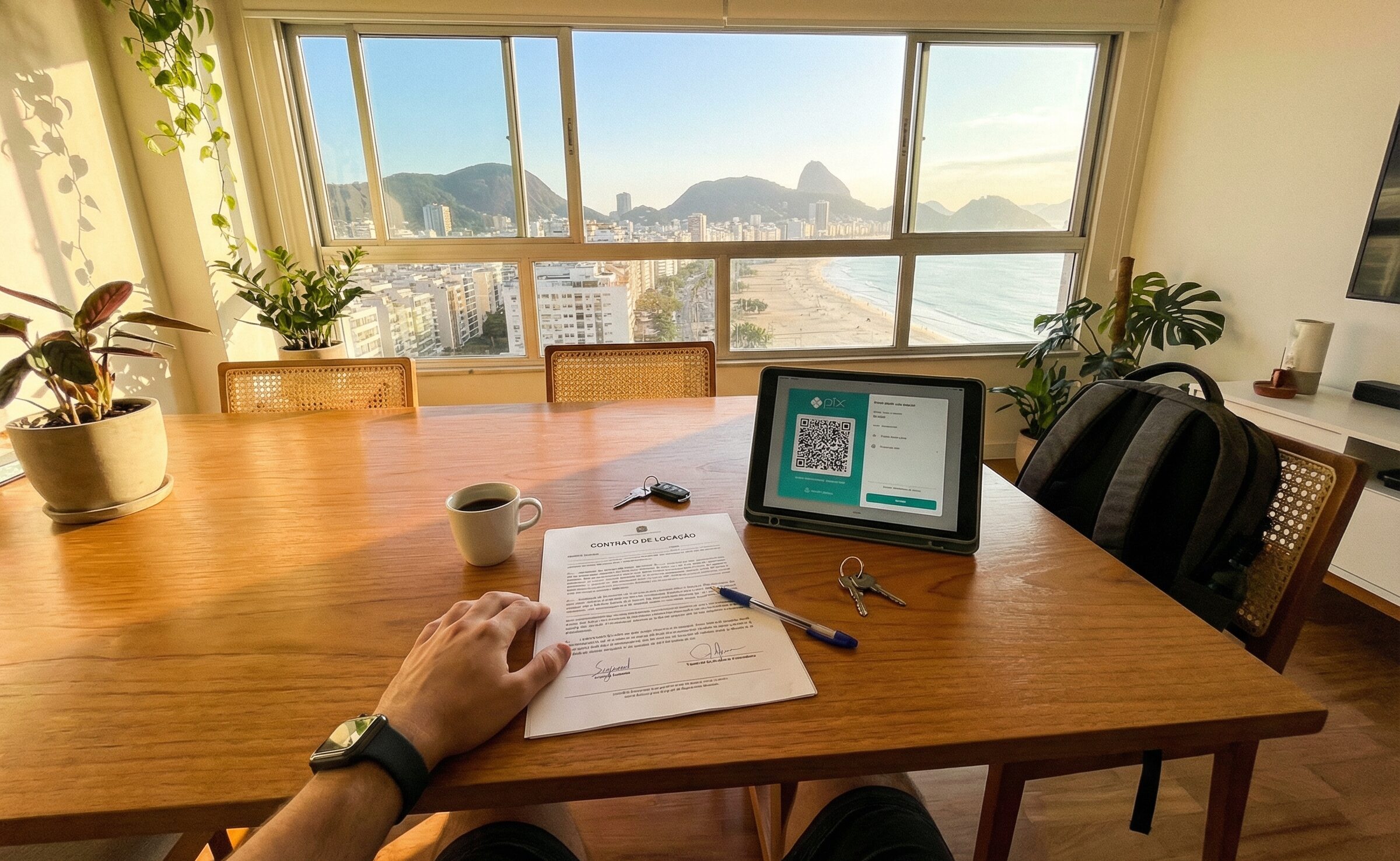
Renting in Brazil as a foreigner can be surprisingly accessible once you understand how the system works. Brazil is one of the most attractive places in Latin America to live for a few months or a few years, but it does come with its own rules: contracts in Portuguese, expectations around CPF, deposits, guarantors, and a culture of long-term leases.
This guide explains how renting works in Brazil, how Airbnb compares to long-term contracts, how payments and guarantees work, and how WanderWallet provides Pix for foreigners and helps you pay rent locally even if your money starts abroad.
Table of Contents
- Understanding Brazil’s Rental Landscape
- Renting vs Airbnb and Short-Term Stays
- How Payments, Deposits and Guarantees Work
- Step-by-Step: How to Rent as a Foreigner
- Where Foreigners Usually Rent in Brazil
- Comparative Table of Major Cities
- What Foreigners Say (Real Quotes)
- How WanderWallet Helps
- Resources and References
- FAQ
1. Understanding Brazil’s Rental Landscape
A quick background on how Brazilian rental law works and what that means if you are arriving from abroad.
Who can rent and what owners expect
Brazilian tenancy law (Lei do Inquilinato) does not block foreigners. On paper, you have the same rights and duties as any Brazilian tenant.
In practice, most formal leases ask for:
- Passport or Brazilian ID
- CPF (Brazilian tax number)
- Proof of income, often around 3x monthly rent
- One guarantee: deposit, guarantor or rental insurance
Classic residential contracts often use a 30 month term because it fits the legal framework used by agencies and owners in major cities.
Rent must always be priced in Brazilian reais and cannot be indexed directly to foreign currency. Annual adjustments are usually tied to an inflation index.
TL;DR:
Foreigners can rent normally, but you will usually be asked for a CPF, income proof and a guarantee. Contracts often run 30 months and are priced in BRL.
2. Renting vs Airbnb and Short-Term Stays
Most foreigners do not land in Brazil and jump straight into a 30-month lease. They combine short-term and long-term options.
Long-term rentals
- Typical term around 24–36 months
- Often unfurnished or semi-furnished
- Lower monthly cost than Airbnb-style rentals
- Heavier documentation requirements
Short-term and Airbnb-style rentals
- Furnished, utilities included
- Easy to book from abroad
- Higher cost per month
- Very light on paperwork
A common pattern seen in recent reddit threads: foreigners book 2–4 weeks in Airbnb, then start visiting long-term options once physically in the city.
TL;DR:
Long-term is cheaper but bureaucratic. Short-term is easy and more expensive, and often the best landing strategy before committing.
3. How Payments, Deposits and Guarantees Work
Expect 1-3 months deposit upfront. Rent is paid monthly via Pix or bank transfer. WanderWallet lets foreigners pay rent via Pix without a Brazilian bank account.
Three financial components matter most: monthly payments, guarantees, and how you move money into BRL.
Monthly rent and extra costs
Besides the rent itself, expect:
- Condomínio: building fee
- Utilities: electricity, possibly gas and water
- IPTU: local property tax, sometimes passed to the tenant
Always ask for the total monthly cost, not just the advertised rent.
Guarantee types
Brazilian law uses three main formats, and owners should choose one:
- Fiador: a guarantor who owns property
- Seguro fiança: rental insurance (common with agencies)
- Caução: deposit, usually equal to 3 months of rent
Some foreigners report paying higher deposits when no fiador is available.
How money actually moves
Landlords prefer receiving rent in BRL using Pix.
From your side, you need a clean way to convert USD/EUR into BRL without unpredictable fees or delays.
With WanderWallet you can:
- Load in USD or EUR
- Pay rent, deposits and utilities via Pix (in less than 10 seconds)
TL;DR:
Payments are in BRL. Owners want a guarantee and predictable schedules. WanderWallet fills the gap between your home currency and local rails.
4. Step-by-Step: How to Rent as a Foreigner
Step 1: Choose the city and your initial base
Foreigners commonly look at:
- São Paulo
- Rio de Janeiro
- Florianópolis
- Fortaleza
- Smaller towns like: Jericoacoara, Pipa, Búzios.
If you do not know the city well, start with 1 month of Airbnb in a central safe area. Usually reddit posts or whatsapp groups will provide enough information about these cities to make a decision.
Step 2: Sort documents
Try to prepare:
- Passport
- CPF
- Visa/residence status
- Proof of income or savings
Most agencies expect CPF, so many foreigners use a short-term rental address to complete this before signing long-term leases.
Step 3: Search, visit and compare
Use major rental platforms such as:
- QuintoAndar: https://www.quintoandar.com.br
- Zap Imóveis: https://www.zapimoveis.com.br
- VivaReal: https://www.vivareal.com.br
- ImovelWeb: https://www.imovelweb.com.br
- OLX Imóveis (owner-direct): https://www.olx.com.br/imoveis
- Airbnb (short-term): https://www.airbnb.com
During visits, evaluate:
- Total monthly cost
- Safety, noise, sunlight
- Whether the unit is furnished
Step 4: Agree terms, sign and pay
Before signing, confirm:
- Which guarantee is being used
- Who pays condomínio, IPTU and each utility
- Annual adjustment formula
Once aligned:
- Pay deposit or insurance
- Pay first month
- Receive keys and condition report
Given the owner probably has a Bank Account with Pix, you can pay them directly from WanderWallet in BRL.
TL;DR:
Pick your city, get a CPF, search widely, compare total costs, negotiate one guarantee, then sign and pay.
5. Where Foreigners Usually Rent in Brazil
Foreigners live all over Brazil, but a few cities appear most often in guides and forums.
- São Paulo: Financial and cultural hub, wide variety of neighborhoods and property types, strong agency presence.
- Rio de Janeiro: Beach and city mix, with many options near the coast and safer central areas, plus a lot of seasonal and aparthotel stock.
- Florianópolis: Island city popular with nomads, good balance of services and beach neighbourhoods.
- Fortaleza: Growing presence in expat forums, with coastal neighbourhoods like Meireles and Praia do Futuro showing a wide range of apartments.
Across these cities, the rental mechanics are similar. What changes is price level, competition and lifestyle.
São Paulo and Rio remain the main magnets, but Florianópolis, Belo Horizonte and Fortaleza are increasingly popular for foreigners that care about cost, climate and lifestyle.
TL;DR:
São Paulo and Rio remain the main magnets, but Florianópolis, Belo Horizonte and Fortaleza are increasingly popular for foreigners that care about cost, climate and lifestyle.
6. Comparative Table: 4 Main Cities
| City | Main Neighborhoods for Foreigners | Avg Monthly Rent (1BR) | Main Attractions |
|---|---|---|---|
| São Paulo | Pinheiros, Vila Madalena, Jardins, Bela Vista | R$3,000–R$5,500 | Business hubs, nightlife, museums, music/sport events |
| Rio de Janeiro | Ipanema, Leblon, Botafogo, Copacabana | R$3,500–R$6,000 | Beaches, Sugarloaf, Christ Redeemer, Nightlife |
| Florianópolis | Lagoa da Conceição, Campeche, Ingleses | R$2,800–R$4,800 | Beaches, surfing, nature |
| Fortaleza | Meireles, Aldeota, Praia do Futuro | R$2,000–R$3,800 | Coastal promenade, food scene, warm weather |
7. What Foreigners Say (Real Quotes From Reddit)
“You’ll need a CPF and most serious landlords expect it. I started with Airbnb for a month just to get an address and then everything got easier.”
“Finding a fiador is impossible when you’re new here. I paid a 3-month deposit instead and it was accepted.”
“My rent was R$2,800 but after condomínio and utilities the total was closer to R$3,500.”
“Agencies in Rio kept pushing 30-month contracts. I finally negotiated directly with an owner I met during a viewing.”
“Pix made everything easier. Once I could pay like a local, the whole process felt less intimidating.”
These quotes highlight the main friction points: CPF, guarantees, real monthly cost and payments from abroad.
8. How WanderWallet Helps
Renting in Brazil has two layers:
- The legal and contract side.
- The money and payments side.
WanderWallet focuses squarely on the second layer.
Paying rent without living in the old banking world
If your landlord or agency accepts BRL payments through Pix or QR codes, you can:
- Top up your WanderWallet balance using supported rails in your home currency.
- Convert to BRL inside the app at a competitive rate.
- Pay monthly rent, condo fees, and even some utilities by sending to their Pix key.
This means:
- No need to manage international transfers, wait several days, or wonder which rate the receiving side will apply.
- Clear visibility of how much each month’s rent actually costs you in your home currency.
- Easier splitting of costs if you share an apartment with other foreigners who also use WanderWallet.
Deposits, furniture, and move-in costs
When you move into a new place, you may need to:
- Pay a 3 month caução.
- Buy furniture or pay a higher first-month bill in a furnished place.
- Clear setup fees.
With WanderWallet, you can:
- Bring in larger chunks of USD or EUR once, convert to BRL in-app, and then spread payments through Pix instead of paying repeated international transfer fees for each cost category.
Short-term vs long-term stays
If you begin with Airbnb or aparthotels and later move to a long-term lease:
- WanderWallet can be your constant base for BRL spending, regardless of whether you are paying a platform, a hotel-style operator, or an individual landlord.
- You do not need to restructure your payment setup each time your housing situation changes.
TL;DR:
WanderWallet does not replace the legal contract, but it does remove a big hidden cost of renting in Brazil as a foreigner: getting your money into BRL each month on fair terms and paying through the same local rails everyone else uses.
9. References and Resources
For readers who want to dive deeper into the legal and practical aspects of renting in Brazil:
- Global Property Guide — overview of Brazilian rent law, currency rules and adjustment rights:
https://www.globalpropertyguide.com/latin-america/brazil/landlord-and-tenant- Baker McKenzie: Corporate Real Estate Guide — explains why 30-month leases are so common in Brazil:
https://resourcehub.bakermckenzie.com/en/resources/global-corporate-real-estate-guide/latin-america/brazil/topics/leases- The Brazil Business — clear explanations of fiador, seguro fiança and caução (the three main guarantee types):
https://thebrazilbusiness.com/article/payment-guarantee-in-brazil- Expat Arrivals — accommodation guide for Brazil, including short-term vs long-term rental expectations:
https://www.expatarrivals.com/americas/brazil/accommodation-brazil- Reddit Communities — where foreigners share recent rental experiences and tips:
https://www.reddit.com/r/brazil
https://www.reddit.com/r/expats
Related Guides
- Pix for Foreigners – Pay your rent and deposits with Pix
- Money in Brazil Guide – Complete guide to managing money as a foreigner
Frequently Asked Questions
Do I need a CPF to rent in Brazil?
Not legally, but in practice some agencies and many owners require it.
Can I rent without a fiador?
Yes. You can use a security deposit or rental insurance.
Is 30 months mandatory?
No, but it is standard. Some owners accept 12 or 24 month leases.
Is Airbnb always more expensive?
Usually per month, yes. But it includes furniture, utilities and far less bureaucracy.
How do I pay rent in Brazil from abroad?
WanderWallet, lets you fund in USD/EUR and pay in BRL through Pix without using traditional banks.
Ready to Start Paying with Pix?
Download WanderWallet and pay like a local in Brazil.


About the Author

Gabriel Otero
Gabriel is the co-founder of WanderWallet. Proudly Argentinian and based in Brazil, he brings years of experience in the payment processing industry to building seamless local payment access for travelers across Latin America.