

Bolivia’s Parallel Dollar: How Exchange Rates Used to Work Before July 2026
Editor’s Note (Updated June 2026): This Guide Describes Bolivia’s Old Two-Rate System
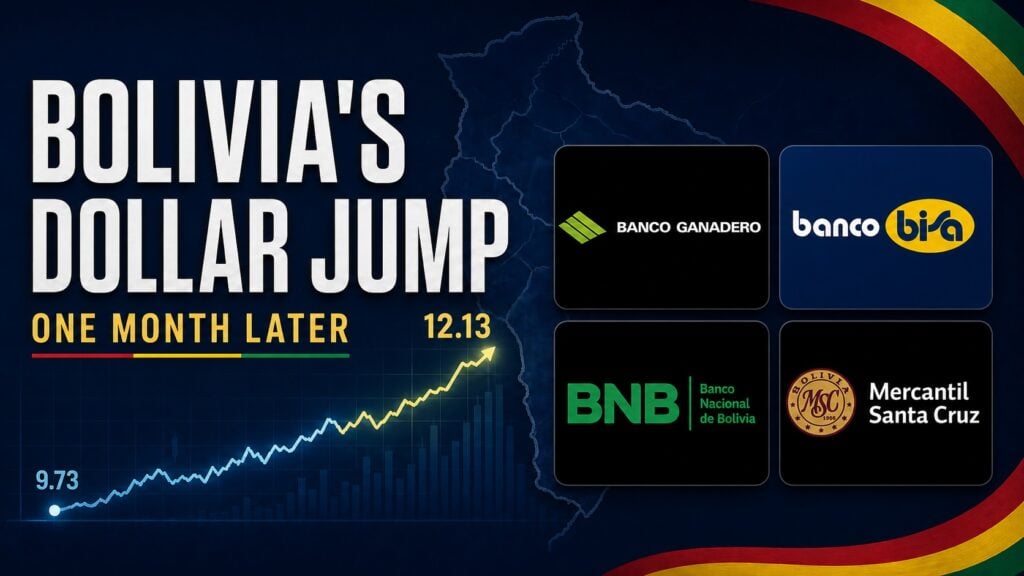
In late June 2026 Bolivia moved from its fixed 6.96 BOB/USD rate to a floating, market-based rate. The large gap between the official rate and the parallel (“blue”) rate described below has largely closed, so the 30% math in this article no longer reflects today’s reality. We are keeping this guide up as a record of how the system worked before the change.
What still holds: Bolivia runs on QR, physical cash is scarce, and WanderWallet remains the way foreigners pay the local QR codes their own bank apps cannot scan. For the current picture, read Bolivia’s Parallel Dollar Is Changing: What Travelers Need to Know.
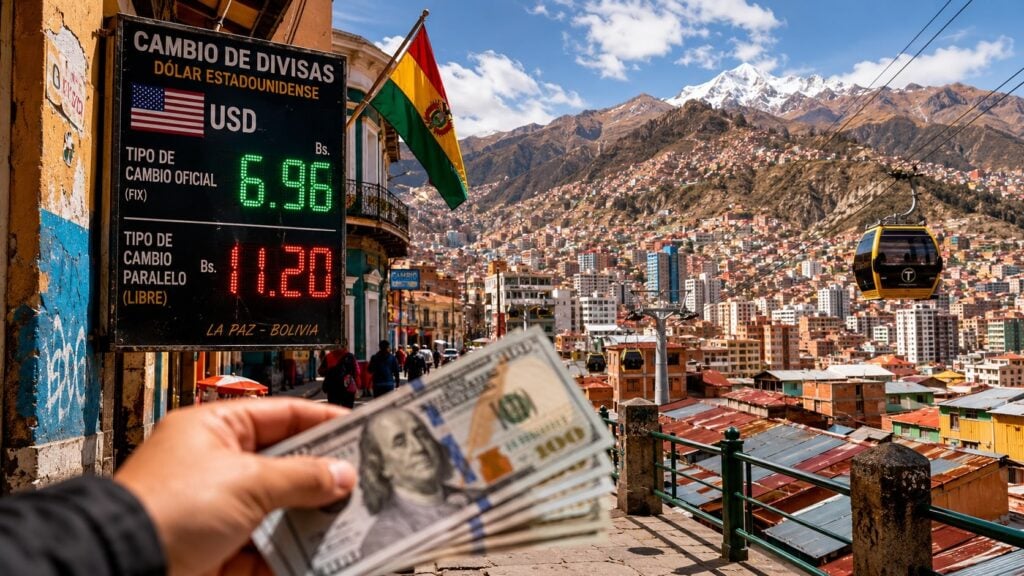
Bolivia has two exchange rates, and the difference between them can save or cost you 30% on everything you buy. The official rate is 6.96 bolivianos per dollar. The parallel rate is around 9.05. If you don’t know how to access the better rate, you’re overpaying for every meal, hostel, and tour. If you want to pay at a better rate without carrying stacks of cash, WanderWallet is already live in Bolivia.
TL;DR
- Official rate: 6.96 BOB/USD. Parallel rate: ~9.05. That’s a 30% gap.
- ATMs and credit cards lock you into the official rate.
- Bring crisp $50/$100 bills (2013 or newer) for the best rates at exchange houses.
- QR payments work almost everywhere. WanderWallet offers ~8.8 BOB/USD, 25% better than cards or ATMs.
Quick Answers to Foreigner Questions
- How can I pay in Bolivia? QR-first, cash-second, ATM-backup.
- Can I pay with QR in Bolivia? Yes, almost everywhere travelers actually spend.
- What is the expensive option? ATM/card-only behavior at official-rate FX.
Bolivia Has Two Exchange Rates. Here’s Why That Matters.
Bolivia’s official exchange rate is 6.96 bolivianos per dollar. It has been frozen there since 2011. But walk into any exchange house in La Paz or Santa Cruz today and you will see a very different number on the board.
The parallel rate (also called the “blue dollar” or informal rate) sits around 9.05 BOB per dollar as of February 2026. That is almost a third more purchasing power for every dollar you bring.
If you are planning a trip to Bolivia, understanding this gap is not optional. It is the difference between overpaying for everything and stretching your budget by nearly a third.
Why Bolivia Has a Parallel Exchange Rate
Bolivia is dealing with a dollar shortage. The country’s central bank liquid reserves dropped as low as $30 million in mid-2025, though they have since partially recovered through gold sales. Meanwhile, Bolivia imports over $10 billion worth of goods annually, including nearly all of its fuel.
The government keeps the official rate at 6.96 to control inflation and stabilize import costs. But the market tells a different story. Bolivians need dollars for imports, savings, and international purchases. When official channels cannot supply enough, a parallel market fills the gap.
This is not unique to Bolivia. Argentina went through the same thing with its “blue dollar.” Venezuela and Nigeria have dealt with similar gaps. When an official rate stops reflecting reality, an unofficial rate always emerges.
What This Means for Your Budget
The numbers speak for themselves. If you exchange $100 at the official rate, you get 696 bolivianos. Exchange that same $100 at the parallel rate, and you get about 905 bolivianos. That is 209 extra bolivianos, or 30% more spending money.
Here is what that looks like in daily spending:
- A nice dinner: 150 BOB costs $21.55 at the official rate, but only $16.57 at the parallel rate
- A hostel night: 80 BOB costs $11.49 official vs. $8.84 parallel
- A day tour in Uyuni: 400 BOB costs $57.47 official vs. $44.20 parallel
If you spend $50 worth of bolivianos per day for two weeks, the difference between official and parallel rates adds up to roughly $200. That is a domestic flight or an extra excursion you would otherwise skip.
How Tourists Access the Parallel Rate
Casas de Cambio (Exchange Houses)
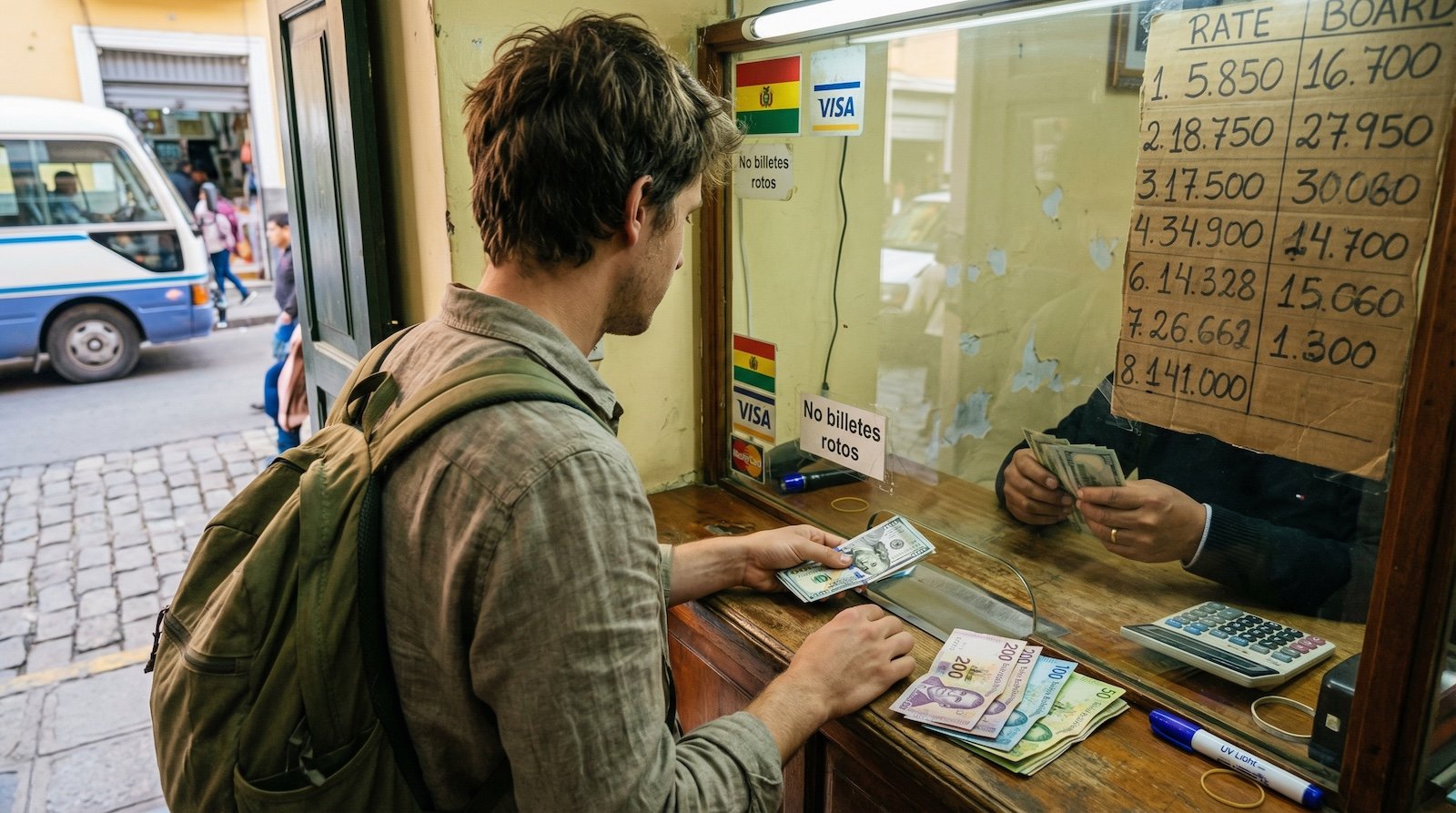
Exchange houses in La Paz, Santa Cruz, and Cochabamba openly offer parallel rates. In La Paz, Calle Camacho near Plaza del Estudiante is the main exchange street. Rates vary between locations, so it pays to compare if you are changing a significant amount.
These operate in a legal gray area but are widely used by locals and tourists alike. Established locations with posted rates are generally safe.
Hotels and Tour Operators
Many hotels exchange dollars for guests at rates slightly below the parallel market. Tour companies in Uyuni, Rurrenabaque, and other tourist hubs often accept dollars directly. Always ask their exchange rate before agreeing to a price in dollars.
Bringing US Dollars in Cash
Most experienced Bolivia travelers bring US dollars. A few things to know:
- Condition matters. Bolivia is notoriously strict about bill quality. Torn, marked, or heavily creased bills get rejected. Bring crisp, newer bills (2013 series or later preferred).
- $50 and $100 denominations get the best rates. Smaller bills sometimes get slightly worse offers.
- Do not use street exchangers. The risk of counterfeit bills or short-changing is real. Stick to established exchange houses.
What About ATMs and Credit Cards?
ATMs and credit card transactions in Bolivia process at or near the official rate of 6.96. There is no way around this. Banks operate within the regulated system. If you want the full breakdown of fees and limits, read our Bolivia ATM guide.
This means every ATM withdrawal or card payment gives you about 30% fewer bolivianos than the parallel rate. Some travelers use ATMs for small amounts (convenience) and exchange cash for larger spending.
How to Protect Yourself
The parallel market is unregulated, which creates room for scams. Basic precautions go a long way:
- Count carefully. Do not let bills leave your sight during transactions. Bring a calculator.
- Learn to spot fakes. Authentic US dollars have textured printing, color-shifting ink on the denomination, and a security strip visible when held to light.
- Be discreet. The average monthly salary in Bolivia is around $300. Do not flash large amounts of cash.
- Exchange smaller amounts more often rather than carrying everything at once.
- Use established locations during daylight hours in busy areas.
Paying with QR Codes in Bolivia
Here is something most travel guides do not mention: Bolivia has one of the highest QR payment adoption rates in South America. In December 2025, immediate payments represented 104,115,979 transactions out of 109,170,088 interbank electronic transfers in Bolivia, about 95.4% by volume, according to Banco Central de Bolivia (BCB). Virtually every store, restaurant, pharmacy, and even street vendor in major cities accepts QR payments through Bolivia’s QR Simple system.
This matters because QR payments can bypass the official exchange rate entirely. Services like WanderWallet let you pay Bolivian merchants directly via QR at rates significantly better than the official exchange rate. If you are new to this, start with Bolivia Runs on QR.
WanderWallet recently started offering QR payments in Bolivia, with rates around 8.8 BOB per dollar. That is not the full parallel rate (which fluctuates around 9.05), but it is roughly 25% better than the official rate of 6.96. No cash needed, no exchange house visits, no risk of counterfeit bills.
In practice, travelers can pay by QR across most of Bolivia, including major cities, tourist routes like Uyuni, and many small vendors. Keep some cash only as a backup for edge cases and tips. Want a real user example? Read I went to Bolivia with zero cash.
Quick Comparison: Your Options
Here is how $100 translates depending on how you pay:
- ATM / Credit card: ~696 BOB (official rate 6.96)
- WanderWallet QR: ~880 BOB (rate ~8.8)
- Cash at exchange house: ~900-905 BOB (parallel rate ~9.05)
Cash at the parallel rate gives you the most bolivianos, but comes with the hassle and risk of carrying cash. QR payments through WanderWallet land in the middle: significantly better than official rate, with the convenience of paying from your phone.
The Bottom Line
Bolivia’s dual exchange rate system is not going away anytime soon. As a traveler, the worst thing you can do is ignore it and default to ATM withdrawals at the official rate.
The smartest approach: bring some US dollars in cash for the best rates, use QR payments for everyday convenience, and avoid relying solely on ATMs or international cards. If you want to set this up before you fly, go to WanderWallet and get ready in a few minutes.
Your budget will thank you.
Frequently Asked Questions
How can I pay in Bolivia as a traveler?
Use QR as your default payment method, keep some USD cash as backup, and use ATMs only when needed. This usually gives better convenience and better FX outcomes than ATM-only behavior.
Can I pay with QR in Bolivia almost everywhere?
Yes. QR is widely accepted across Bolivia, including major cities, tourist hubs like Uyuni, and many small vendors. For most travelers, QR is the practical default.
What is the parallel dollar rate in Bolivia right now?
As of February 2026, parallel-market pricing has been around 9.05 BOB/USD versus the official 6.96 rate, which is why payment method changes purchasing power materially.
Do ATMs and foreign cards in Bolivia use the parallel rate?
No. ATMs and foreign cards usually process at official-rate FX, not parallel-market pricing.
Is WanderWallet live in Bolivia and what rate can tourists expect?
Yes. WanderWallet is live in Bolivia with QR Simple payments. Recent traveler rates around 8.8-8.9 BOB/USD have been materially better than official-rate ATM/card conversions.
Should I still carry cash if QR is widely accepted?
Yes, but as backup. Carry a small amount for edge cases and tips. For day-to-day spending, most travelers can pay by QR almost everywhere.
Ready to Start Paying with QRs in Bolivia?
Download WanderWallet and pay like a local.


About the Author

Milo
Milo writes about the stuff nobody tells you before you land: why your card gets declined, where cash still rules, and how to actually pay for things without getting ripped off. He's WanderWallet's resident payment nerd.