

Bolivia ATMs: Fee-Free But There’s a Catch (2026 Guide)
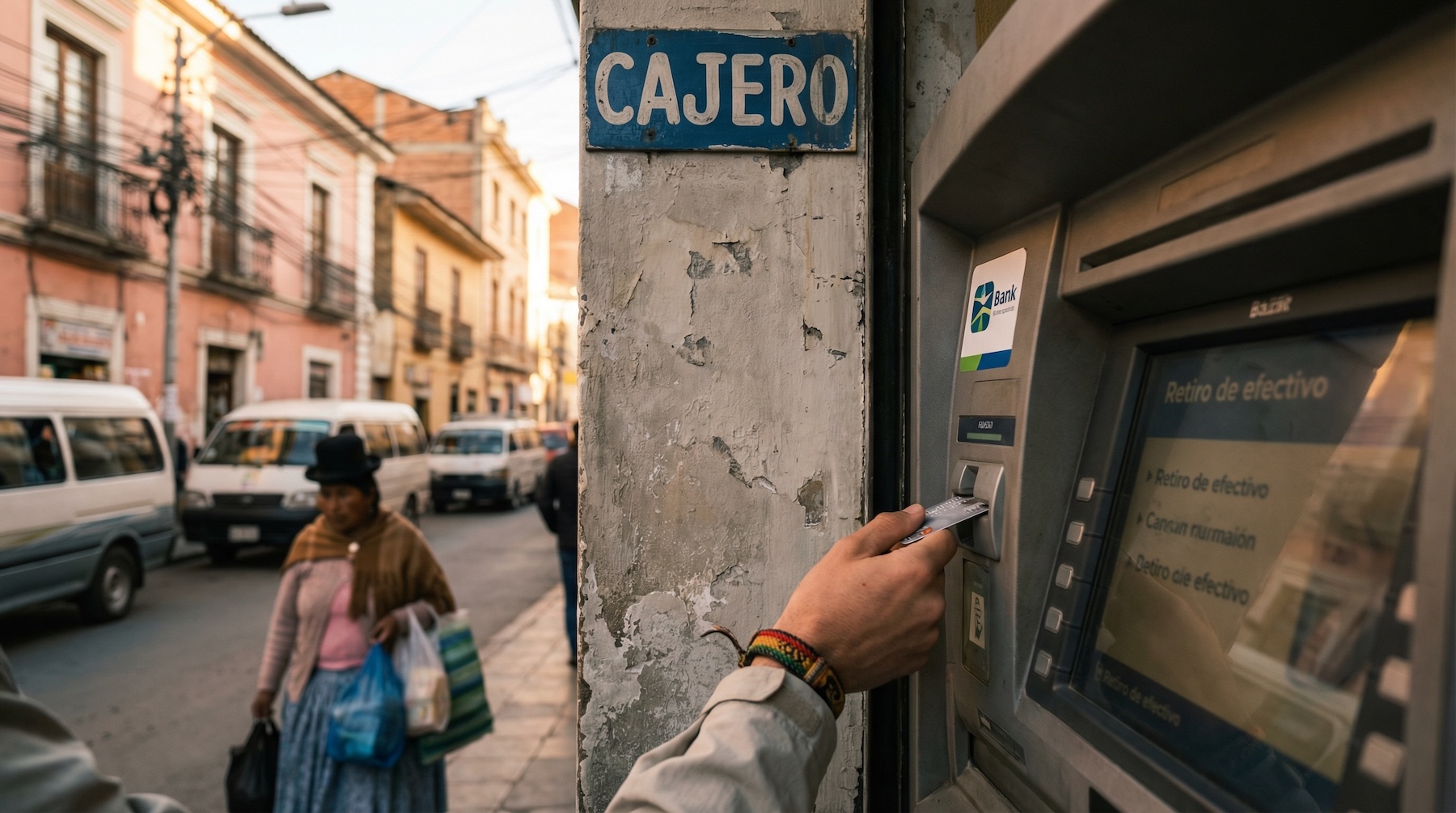
Most Bolivian ATMs don’t charge withdrawal fees for foreign cards. That’s the good news. The catch is everything around the cash: machines that ration or run dry, low per-transaction limits, and your home bank’s fees. And the bigger point most travelers miss, in a country that runs on QR, you rarely need ATM cash at all. If you want to skip the ATM hunt entirely, WanderWallet is live in Bolivia.
TL;DR:
- Most Bolivian bank ATMs (BMSC, BNB, Banco Fie) charge no operator fees for foreign cards.
- Bolivia floated its currency in mid-2026, so the old official-rate penalty on withdrawals has largely closed. ATMs no longer convert at a secretly bad rate.
- The real catch now: cash shortages, empty machines, low limits, and your home bank’s foreign-transaction and withdrawal fees.
- You mostly don’t need ATM cash. Bolivia runs on QR, and WanderWallet lets foreigners pay it directly.
- Keep a small cash backup for rural stretches, tips, and low-signal moments.
Questions Foreigners Ask Before Paying in Bolivia
- How can I pay in Bolivia? Use a QR-first approach with a small cash backup.
- Can I pay with QR in Bolivia? Yes, in practice QR is accepted almost everywhere travelers spend.
- Should I rely on ATMs? No. Keep ATMs as an emergency backup, not a strategy.
The Real Catch With Bolivian ATMs
Here is what travelers to Bolivia figure out too late: the ATMs are not the problem you were warned about. Most Bolivian banks do not even charge withdrawal fees for foreign cards, and since the currency floated in mid-2026, the old trick where withdrawals converted at a punishing official rate has largely gone away.
The catch is everything else. Bolivia has spent the last couple of years short on physical dollars and cash, so ATMs frequently ration withdrawals, cap you at low limits, or simply sit empty, especially outside the big cities. Add your home bank’s foreign-transaction fee and per-withdrawal charge, and the convenience you came for evaporates while you walk to the third machine that actually has money.
The deeper point: you are solving a problem you do not really have. Bolivia runs on QR, so for everyday spending you do not need a pocket full of bolivianos in the first place.
Wait, Bolivian ATMs Are Actually Fee-Free?
This surprises most people. Unlike ATMs in many countries, most major Bolivian banks do not charge foreign card fees at their ATMs.
Travelers consistently report fee-free withdrawals from these banks:
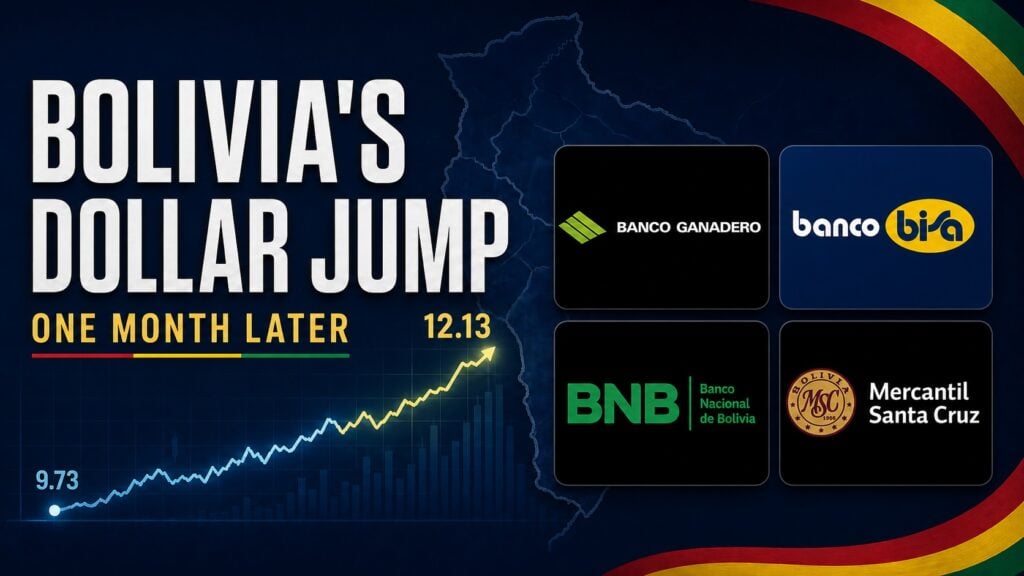
- Banco Mercantil Santa Cruz (BMSC): the largest bank, widely available, confirmed fee-free
- Banco Nacional de Bolivia (BNB): another popular option with no ATM operator fee
- Banco Fie: confirmed by multiple travel bloggers
- BCP Bolivia and Banca Ganadero: also listed as fee-free options
Your own bank at home is the part that still costs you. Most foreign banks add an international withdrawal fee (typically $2-5) plus a foreign-transaction fee (often around 3%) on top. The Bolivian side may be free, but your statement back home usually is not.
Cash Shortages and Low Limits Are the Bigger Annoyance
Most Bolivian ATMs cap withdrawals at roughly 2,000 to 3,500 BOB per transaction. Some banks like BMSC allow higher amounts. If you need more, you make multiple trips, assuming the machines have cash to give.
That last part is the catch that actually bites. During the dollar-and-cash crunch, travelers have reported machines that are empty, out of service, or limited to small amounts, particularly in smaller towns and on tourist routes. Planning your day around finding a working, stocked ATM is exactly the friction QR removes.
The Cash Option: Bringing US Dollars
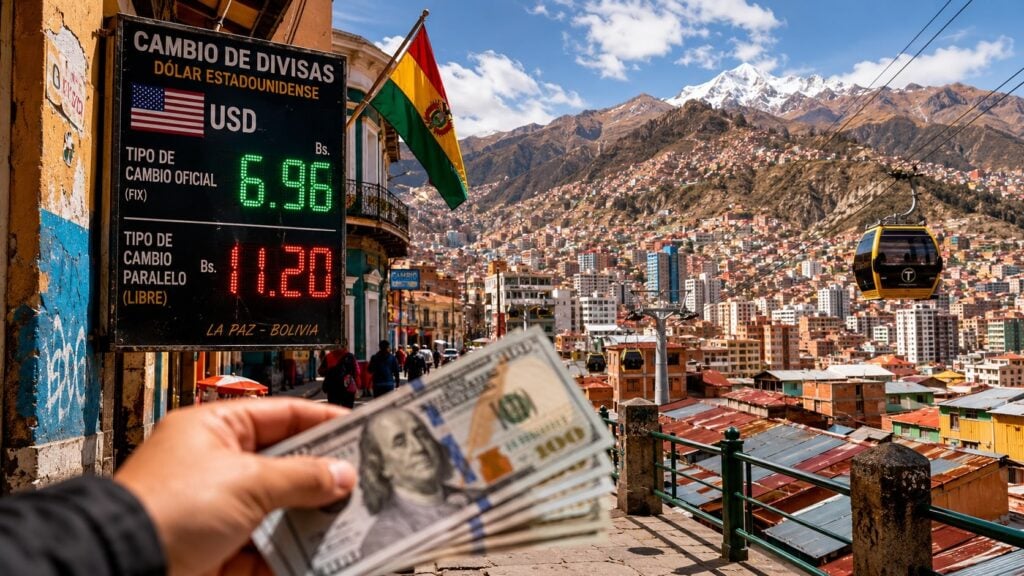
You can still bring US dollars and change them at casas de cambio. With the parallel premium largely gone after the float, this is now about having a backup, not chasing a better rate. A few things still make cash a hassle:
- Bill condition matters a lot. Bolivia is notoriously strict about USD bill quality. Torn, marked, or heavily creased bills get rejected, and exchange houses inspect notes under UV light. Bring crisp, newer bills (2013 series or later).
- Denomination matters. $50 and $100 bills get better treatment than small notes.
- Safety is a consideration. Carrying large amounts of cash requires common sense. Change smaller amounts and be discreet.
- Stick to established exchange houses. Calle Camacho in La Paz is the main exchange street. Avoid street exchangers where counterfeit risk is higher.
In other words, cash works as a backup, but the sourcing, the bill anxiety, and the carrying are precisely the headaches you can skip.
The Better Default: QR Payments
Bolivia has quietly built one of South America’s most advanced QR payment networks. Instant payments now make up about 95% of digital payments in the country.
Walk into almost any store, restaurant, pharmacy, or taxi in La Paz, Santa Cruz, or Cochabamba and you will see a QR code. Street vendors, salteña stands, even tour guides accept QR. It is how Bolivians pay for everything.
The catch for visitors is access: foreign cards and bank apps cannot scan Bolivia’s local QR codes. WanderWallet can. You fund your wallet with dollars or euros, scan the same codes locals use, and see the exact cost before you confirm, no cash to withdraw, no machine to find, no bills to inspect. If you want to see how QR works on the ground, read Bolivia Runs on QR.
The Smart Approach
Bolivia’s ATMs are not a nightmare. They work, they are mostly fee-free on the local side, and they are everywhere they have cash. The issue is that relying on them means planning around shortages, low limits, and home-bank fees, to get cash you mostly do not need.
For most travelers, the best strategy is simple:
- Pay by QR for everyday spending: restaurants, stores, transport, markets. This is your default.
- Keep a small USD cash backup ($100 and $50 bills, crisp and clean) for rural stretches, tips, and low-signal moments.
- Use ATMs as a genuine emergency only, when you have run out of both QR balance and cash.
The travelers who struggle in Bolivia are the ones who treat ATMs as their main plan, not realizing the country moved on to QR. If you are flying soon, set up WanderWallet before your trip so you are ready from day one.
Frequently Asked Questions
How can I pay in Bolivia as a foreigner?
Best practice is QR first, cash second, ATM backup. In real travel usage, QR works across most places foreigners spend, while cash helps for edge cases.
Can I pay with QR in Bolivia almost everywhere?
Yes. QR is a default payment method in Bolivia, including major cities, tourist hubs like Uyuni, and many small merchants. Carry a small cash buffer for rare edge cases.
Are Bolivia ATMs fee-free for foreign cards?
Often yes on the local ATM operator side, but your home bank usually still charges an international withdrawal fee and a foreign-transaction fee, so your statement back home is rarely free.
If the currency floated, are ATMs a good option now?
The conversion is fairer than during the old fixed-rate era, but the practical catch remains: cash shortages, empty machines, low per-transaction limits, and home-bank fees. For everyday spending, QR is simpler and you avoid the cash hunt entirely.
Is WanderWallet live in Bolivia and better than ATM rates?
Yes. WanderWallet is live in Bolivia and supports QR Simple. It lets foreigners pay the local QR rail directly, with the live rate shown before you pay, so you skip ATM shortages, limits, and home-bank fees.
Should I use ATMs, cash exchange houses, or QR in Bolivia?
Use QR for daily payments, keep a small amount of exchange-house cash as backup, and treat ATMs as an emergency fallback only.
Ready to Start Paying with QRs in Bolivia?
Download WanderWallet and pay like a local.


About the Author

Milo
Milo writes about the stuff nobody tells you before you land: why your card gets declined, where cash still rules, and how to actually pay for things without getting ripped off. He's WanderWallet's resident payment nerd.