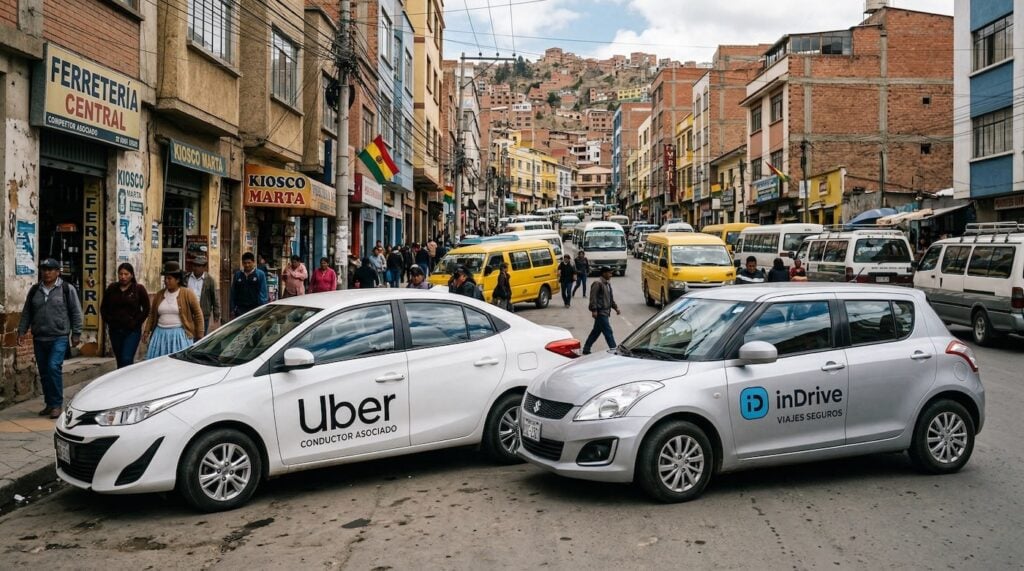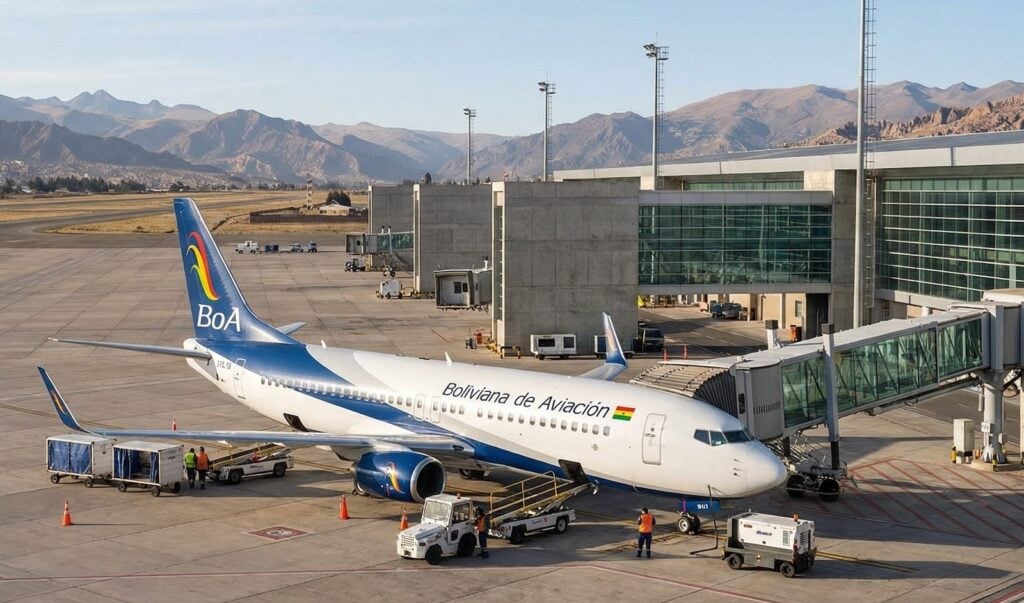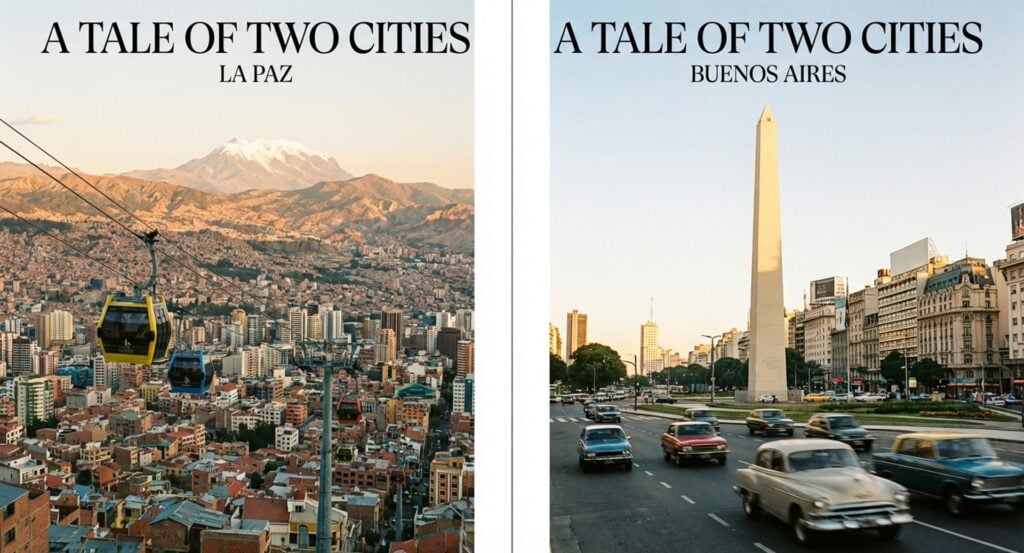


Bolivia Runs on QR. Tourists Can Finally Use It.
Bolivia built one of Latin America’s strongest real-time payment systems, but travelers were historically pushed back to cash. In December 2025 alone, immediate payments made up 95.4% of interbank electronic transfers (104 million total transactions). That gap is now closing because visitors can finally access local QR payment flow with WanderWallet.
TL;DR
Bolivia’s payment rails are fast and widely used, but tourists have often defaulted to cash. With WanderWallet, travelers can scan local QR codes with passport onboarding, avoid ATM friction, and get up to 30% better value than the official 6.96 BOB/USD rate. If you’re heading to Bolivia, start from the WanderWallet homepage.
Questions Foreigners Actually Ask
- How can I pay in Bolivia? For most travelers today: QR first, cash backup, ATM backup of backup.
- Can I pay with QR in Bolivia? Yes. QR is accepted across cities, tourist circuits like Uyuni, and many small merchants.
- Do I still need a lot of cash? Usually no. Keep a small buffer for edge cases.
Bolivia’s QR Payment System Is Already Mainstream
Bolivia’s payment adoption is not a future story. It is current reality:
- 6 million QR transactions in 2021
- 290 million QR transactions in 2024
- 104 million QR transactions in December 2025 alone
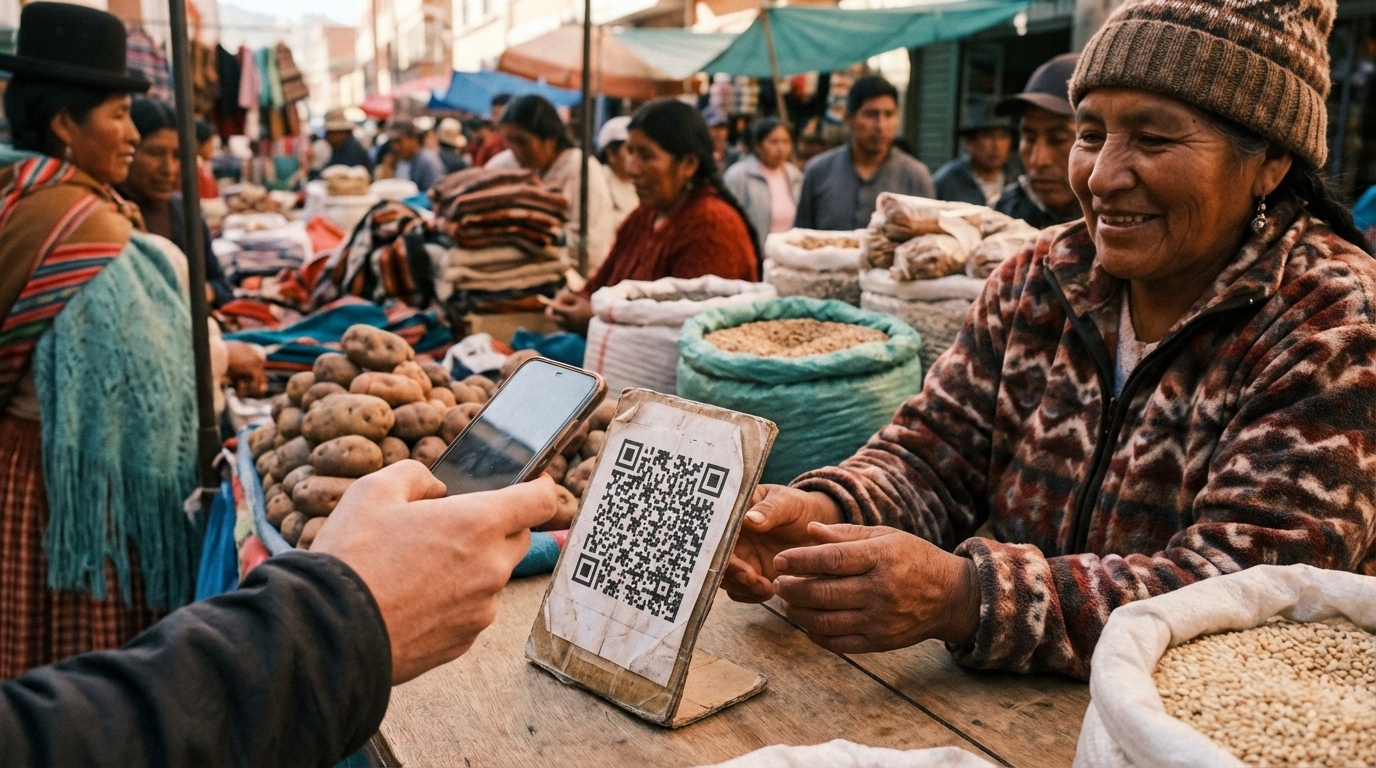
At street level, this is obvious. In markets, coffee shops, small retailers, tourist routes like Uyuni, and everyday services, people scan and pay in seconds.
Why Cash Still Creates Friction for Visitors
The barrier for foreigners has not been QR infrastructure. The barrier has been access. Many local wallet and banking onboarding flows expect Bolivian resident identity data, which short-term visitors typically do not have.
That creates daily friction: searching for working ATMs, carrying extra bills, handling change, and losing time on payment logistics instead of travel. If you’re planning your trip budget, this is exactly why reading how Bolivia ATMs really work in practice matters before arrival.
The Exchange-Rate Penalty Is the Hidden Cost
When fallback spending is tied to ATM or card conversion at the official 6.96 BOB/USD rate, purchasing power can drop significantly versus local market conditions. That gap has often been around 25-30%.
So this is not only a convenience issue. It is a value issue. For the same dollars, you can end up getting much less day-to-day spending power. For full context, see this guide to Bolivia’s parallel dollar dynamic.
How Tourists Can Pay QR in Bolivia Now
WanderWallet connects travelers to local QR rails without requiring a Bolivian bank account.
You keep your balance in dollars, scan the same QR merchants already use, and pay in bolivianos. Merchants receive a normal local payment, and you see conversion plus fee before confirming.
In real usage, travelers have seen rates around 8.9 BOB/USD, which is materially better than 6.96 and closer to local market conditions.
What this Changes on the Ground
- No daily cash planning before leaving your accommodation
- No over-withdrawing from ATMs “just in case”
- No getting blocked by change issues for larger bills
- A payment experience that matches how Bolivia already works
If you want a practical field report before your trip, read I Went to Bolivia with Zero Cash. I Didn’t Need It.
The Bottom Line
Bolivia already had the rails and adoption. The missing piece was foreign access.
Now that access is live, travelers can pay like locals with less friction and better practical FX outcomes. For setup steps and coverage details, go to wanderwallet.io/bolivia.
Frequently Asked Questions
How can I pay in Bolivia as a foreigner right now?
Use QR as your default. In practice, most travelers can pay by QR in daily scenarios, then keep small cash and ATM access only as backup layers.
Can I pay with QR in Bolivia almost everywhere?
Yes. QR is broadly accepted across Bolivia, including cities, tourist routes like Uyuni, and many small merchants. It is normal local payment behavior.
Do tourists need a Bolivian bank account to pay QR?
No. With WanderWallet, travelers can access local QR payment flow without opening a Bolivian bank account.
Is WanderWallet live in Bolivia now?
Yes. WanderWallet is live in Bolivia. Setup and details are available at https://wanderwallet.io/bolivia/.
Is it normal if a merchant photographs my payment confirmation screen?
Yes, this can be normal local reconciliation behavior in Bolivia and is not unusual by itself.
Should I still carry cash if QR works almost everywhere?
Carry a small backup amount for edge cases and tips, but for most travelers QR can handle the majority of real-world payments.
Ready to Start Paying with QRs or Pix?
Download WanderWallet and pay like a local.


About the Author

Milo
Milo writes about the stuff nobody tells you before you land: why your card gets declined, where cash still rules, and how to actually pay for things without getting ripped off. He's WanderWallet's resident payment nerd.