

Buenos Aires Cost of Living 2026: Real Budget Breakdown for Expats
Buenos Aires has always been one of Latin America’s most exciting cities. But while it used to be considered extremely cheap for anyone earning in USD or EUR, the reality in 2025 is different. Inflation slowed significantly, the Argentine peso strengthened, and prices adjusted upward while the dollar did not gain value at the same pace.
What Does It Really Cost to Live in Buenos Aires in 2026?
Buenos Aires costs between $1,200 and $2,500 USD per month for most foreigners, depending on lifestyle and neighborhood. This includes rent, food, transportation, and entertainment. The city remains 40-60% cheaper than major US or Western European cities, though it’s no longer the ultra-budget destination it was during Argentina’s 2019-2022 currency crisis.
TL;DR
Buenos Aires is more expensive for foreigners than it used to be, mainly due to the peso gaining strength and prices increasing. It is still cheaper than the US and Western Europe for rent, eating out and transportation. Most foreigners live comfortably on 1800 to 2500 USD per month. Payment habits matter a lot now.
Table of Contents
- Understanding the economic context in 2025
- Rent prices in Buenos Aires
- Grocery costs in Buenos Aires
- Eating out, cafés and nightlife
- Healthcare costs in Buenos Aires
- Education costs in Buenos Aires
- Transportation and Uber costs
- What expats say in 2025
- How much you really need per month
- Why paying like a local matters
- How WanderWallet helps
- Final thoughts
Understanding the economic context in 2025
Something important changed in Argentina: inflation cooled down to around 1 to 3 percent month over month, but the currency strengthened more quickly. That made prices feel higher for foreigners who were used to extremely favorable exchange rates.
None of this means Argentina is suddenly expensive. It simply means that 2025 Buenos Aires is closer to a normal capital in terms of cost, not the ultra discounted version many nomads remember.
Rent prices in Buenos Aires
Rent is the largest cost for most expats, and it varies widely based on neighborhood and type of rental.
Long term unfurnished rentals
- Studio or 1 bedroom in central neighborhoods: 400 to 600 USD
- Studio or 1 bedroom outside the city limits (Provincia/Conurbano): 250 to 350 USD
- High end 1 bedroom in Palermo, Recoleta or Puerto Madero: 1500 to 2000 USD
Short term rentals
- Standard 1 bedroom: 600 to 1000 USD per month
- High end or premium spaces: 1200 USD and above
Utilities generally cost 50 to 100 USD monthly. Expenses are typically not included (condo fees) and they tend to rise into the hundreds of dollars per month.
According to Numbeo’s Cost of Living Index, Buenos Aires rent is 65% cheaper than New York City and 45% cheaper than London for comparable apartments.
| Apartment Type | Buenos Aires | New York | London |
|---|---|---|---|
| 1BR City Center | $500-700 | $3,500 | $2,200 |
| 1BR Outside Center | $350-500 | $2,200 | $1,500 |
Source: Numbeo Cost of Living Comparison, January 2026
“I pay $580 for a nice studio in Palermo Hollywood. In Berlin, I was paying €1,400 for something smaller. Buenos Aires is still a great deal for Europeans.”
— Clara Schmidt, German UX designer living in Buenos Aires since 2023
Where foreigners tend to live
Palermo, Recoleta, Belgrano, Colegiales, Villa Crespo and San Telmo remain the most common choices for newcomers. Palermo in particular is the top pick due to walkability, cafés, parks and foreigner friendly services.
TL;DR
Long term rentals range between 400 and 600 USD for a central 1 bedroom. Short term stays usually land between 600 and 1000 USD. Expect much higher prices only in premium buildings or top tier neighborhoods.
Grocery costs in Buenos Aires
This is one of the categories where foreigners feel the biggest shift compared to pre 2023 levels. Many groceries now cost closer to US or European prices due to currency appreciation and supply adjustments.
Typical 2025 grocery prices
- Milk 1L: 2.5 USD
- Bread (quality loaf): 4 to 5 USD
- Cheese 200 g: 4 USD
- Ham 150 g: 2.8 USD
- Eggs, pack of 30: 4.5 USD
- Steak 1 kg: 10 USD
- Pasta 500 g: 1.5 USD
- Wine (mid range): 5 to 7 USD
“Groceries surprised me — they’re not cheap anymore. But eating out is incredible value. A steak dinner with wine for $35 would cost $100+ in the US.”
— Michael Torres, American expat and remote worker in Recoleta
Compared to other regional capitals, Buenos Aires groceries are more expensive than Lima or Bogotá, similar to Madrid or Lisbon, and still cheaper than US cities or Northern Europe.
TL;DR
Groceries increased the most for foreigners. Prices are no longer extremely cheap, but still competitive internationally.
Eating out, cafés and nightlife
Eating out remains one of the best points of Buenos Aires. The city still offers incredible food, craft beer, cafés and nightlife at reasonable prices for international standards, although it is now more expensive than in many similar Latin American cities.
Prices in 2025
- Mid range restaurant: 10 to 12 USD per person
- Steakhouse dinner with wine: 30 to 40 USD per person
- Empanadas or fast bites: 2 to 4 USD
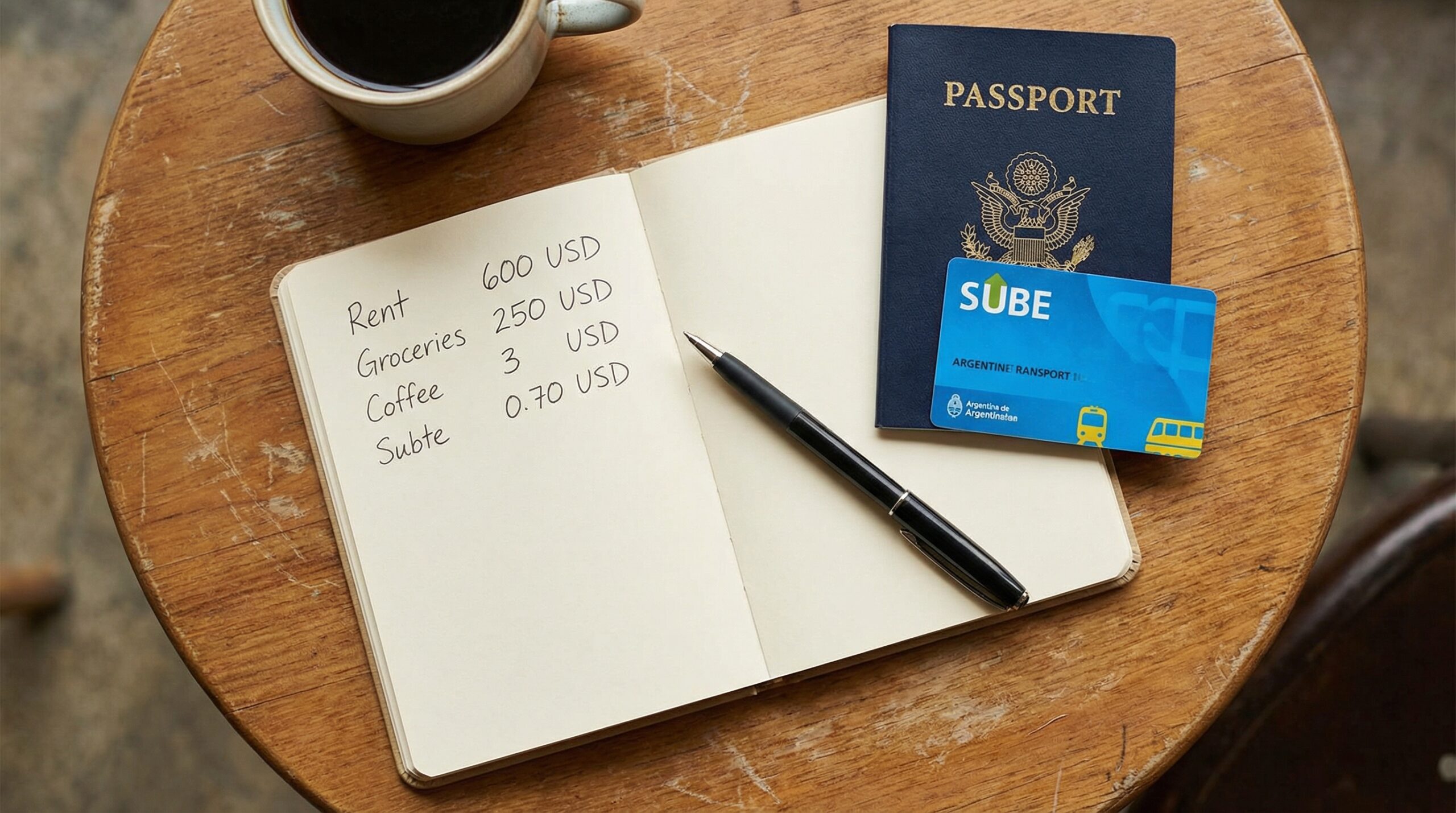
- Coffee or cappuccino in specialty coffee shop: 3 to 4 USD
- Craft beer: 4 to 5 USD
- Cocktails: 8 to 10 USD
Healthcare costs in Buenos Aires
Argentina has one of the strongest healthcare systems in the region. Public hospitals are free, but most expats choose private insurance for convenience and shorter wait times.
Private healthcare in 2025
- Monthly private insurance: 150 to 250 USD
- Specialist visit without insurance: 20 to 50 USD
Major private hospitals include Swiss Medical, Hospital Alemán, Galeno and OSDE.
For a deeper breakdown of healthcare for foreigners, see this updated guide.
Education costs in Buenos Aires
Universities
- Public universities: free (admin fees 50 to 200 USD per semester)
- Private universities: 1200 to 3500 USD per year
- Specialized degrees: 4000 to 7000 USD per year
Language schools
- Group classes: 100 to 250 USD per week
- Private 10 hour course: 350 USD per week
- Intensive private 20 hour: 680 USD per week
You can compare Spanish school pricing via Ibero Spanish School.
Transportation and Uber costs
Public transportation is still extremely cheap, and Uber remains good value compared to other global cities.
Public transport prices
- Subway or train: 0.70 USD per ride
- Bus: 0.60 USD per ride
Uber and taxi prices
- Typical urban ride 4 to 5 km: 6 to 10 USD
- Cross city ride: 12 to 20 USD
- Taxi initial fare: 3 USD
For cost of living comparisons including transportation, check this resource on ExpatExchange.
What expats say in 2025
Groceries are way more expensive now, but eating out is still great value.
I pay 580 USD for a nice studio in Palermo. Rent is still a good deal compared to Europe.
Ubers are cheap, events are cheap, steak is cheap. Imported or processed items feel pricey or hard to find.
I live very comfortably on 2000 to 2500 USD per month.
Argentina is not the super bargain it was, but it is still one of the most enjoyable cities to live in.
(These insights come from recent discussions on r/digitalnomad, r/argentina and expat forums sourced in our research.)
How much do you really need per month
Minimum comfortable: 1200 to 1500 USD
Standard comfortable: 1800 to 2500 USD
Higher end or luxury: 2500 to 3500 USD
TL;DR
Most foreigners report spending between 1800 and 2500 USD per month in Buenos Aires. Rent and eating out remain reasonable. Groceries and imported goods push budgets upward.
Why paying like a local matters for your cost of living
One of the biggest cost differences foreigners face today has nothing to do with rent or food. It comes from how you pay.
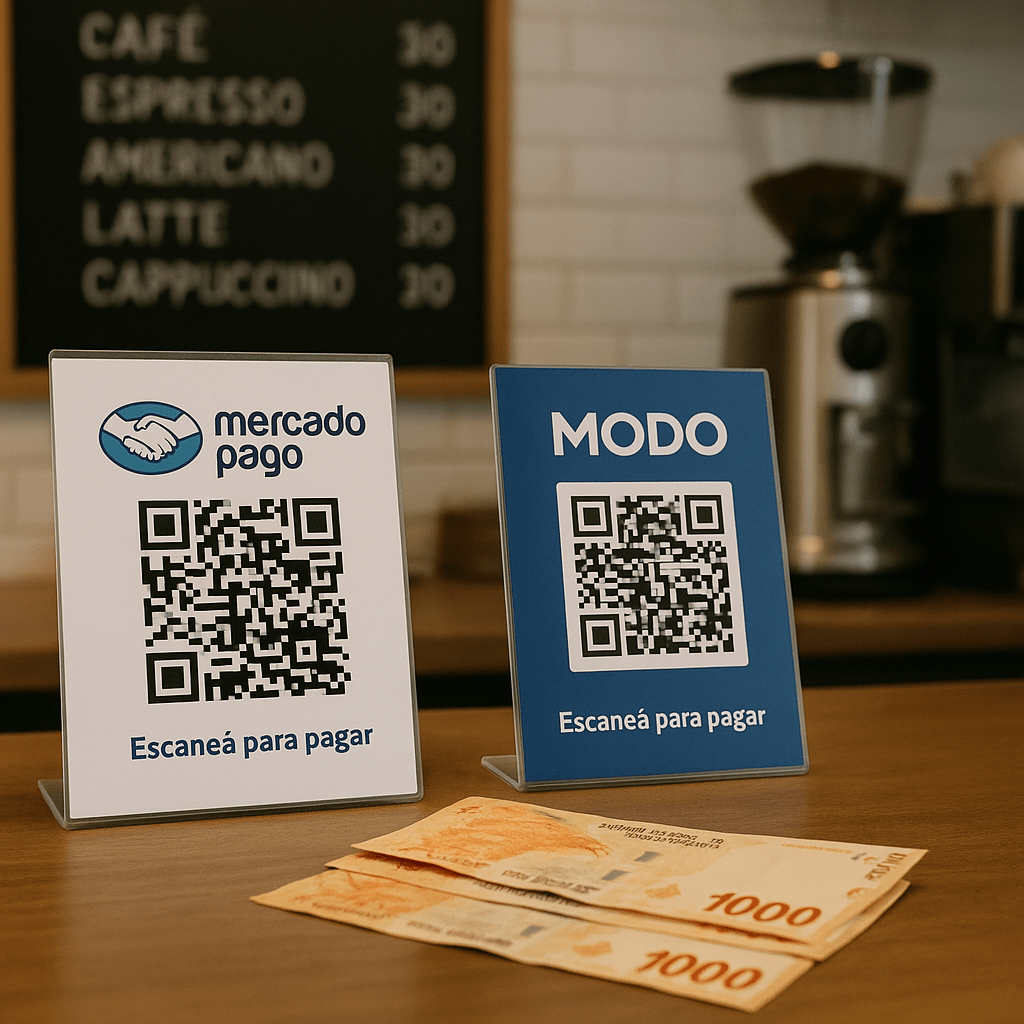
Argentina in 2025 is a QR first economy. Locals use Mercado Pago, Modo and bank linked QRs for almost everything because they are cheaper, faster and avoid foreign card fees.
- You pay higher fees and get worse FX
- Some merchants surcharge foreign cards
- Many small stores will not accept foreign cards at all
- ATMs often charge high withdrawal fees
This means your cost of living can increase simply because your payment method is not local.
How WanderWallet helps
- Pay any QR code in Argentina
- Use Mercado Pago compatible rails
- Withdraw cash from RedATM machines
- Avoid foreign card fees
- Hold USD, EUR or USDC and spend locally
If you want to check the latest usage fees or exchange conditions, you can consult current rates.
For a step by step explanation of how payment rails work in Argentina, see How foreigners can make payments in Argentina.
Final thoughts
Buenos Aires remains one of the most vibrant cities in the world. The food, the wine, the architecture, the cafés, the football culture and the social life are unmatched. The cost of living in Buenos Aires rose compared to the past, but the city still delivers incredible value for anyone earning in a strong currency.
With the right neighborhood, realistic budgeting and smarter payment methods, living in Buenos Aires in 2025 can be not only affordable, but deeply enjoyable.
Frequently Asked Questions
How much does it cost to live in Buenos Aires as an expat in 2026?
A comfortable lifestyle in Buenos Aires costs $1,200-2,000 USD per month including rent, food, transport, and entertainment. Budget travelers can live on $800-1,000.
What is the average rent in Buenos Aires for foreigners?
Expect $400-800 USD/month for a one-bedroom in popular neighborhoods like Palermo or Recoleta. Temporary rentals for tourists are typically higher at $600-1,200.
Is Buenos Aires expensive for digital nomads?
No, Buenos Aires is one of the most affordable major cities for digital nomads. Great food, nightlife, and culture at a fraction of European or US prices.
How much should I budget monthly for Buenos Aires?
Budget $1,500 USD for a comfortable lifestyle with eating out, activities, and a nice apartment. Add 20% buffer for unexpected expenses.
Ready to Start Paying with QRs or Pix?
Download WanderWallet and pay like a local.


About the Author

Gabriel Otero
Gabriel is the co-founder of WanderWallet. Proudly Argentinian and based in Brazil, he brings years of experience in the payment processing industry to building seamless local payment access for travelers across Latin America.