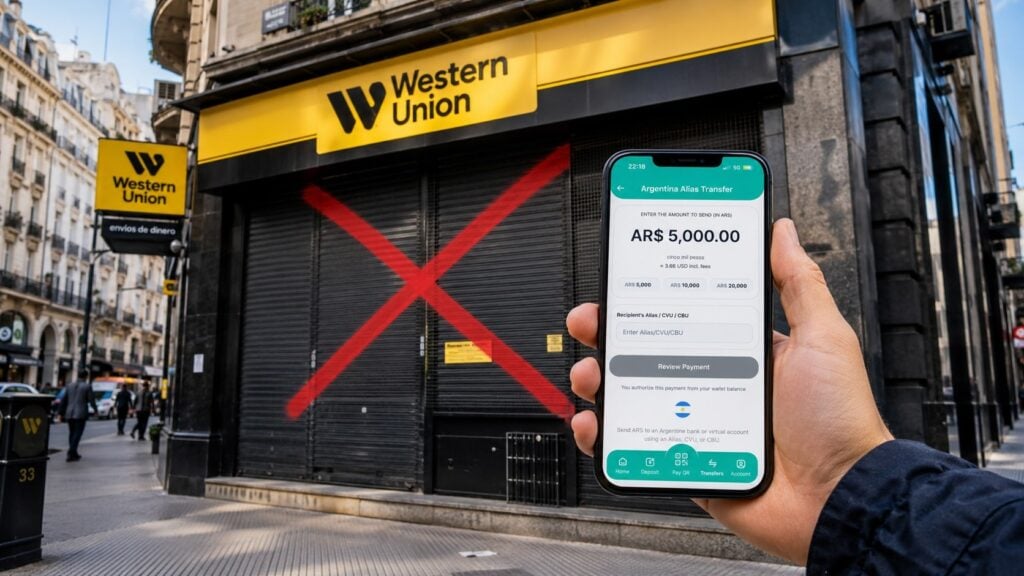


Alias Payments in Argentina: What It Is and Why It Matters
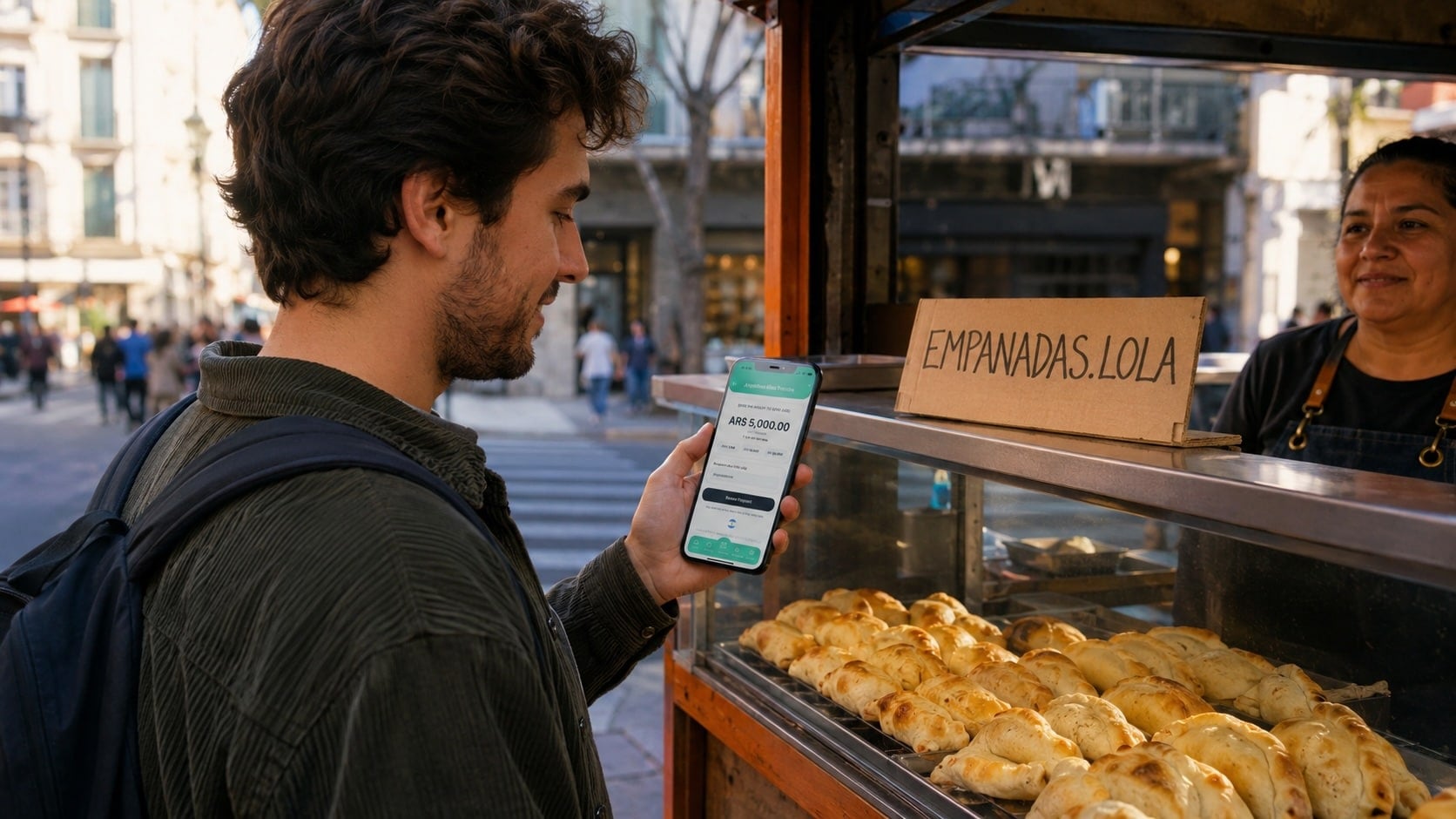
If you spend enough time in Argentina, someone will eventually say: te paso mi alias. That does not mean they are sending you a username for a social app. It means they want to be paid through Argentina’s local bank and wallet transfer rails.
For travelers, nomads, and expats, this is a huge deal: WanderWallet now supports Alias, CBU, and CVU payments in Argentina, so you can pay people and small businesses through local rails without opening an Argentine bank account. Combined with QR payments, these transfer rails mean cash becomes the backup, not the plan.
TL;DR
- An Alias is a human-readable payment handle linked to an Argentine bank account or wallet account.
- QR payments are best at checkout. Alias payments are best when someone sends you a payment handle instead of showing a QR code.
- Alias can matter for services, small businesses, delivery drivers, guides, WhatsApp payment requests, person-to-person payments, and some rent or deposit situations where the recipient and payment amount are supported.
- Some merchants prefer Alias because direct transfers can feel simpler than QR/acquirer flows that may involve fees, settlement rules, reporting, or tax withholdings. Alias does not remove tax obligations and may still be reportable.
- WanderWallet now supports Alias payments in Argentina, making the cashless local-payment story much stronger for foreigners.
When to Use Alias vs QR vs Mercado Pago
| Flow | Use It For | What Travelers Should Know |
|---|---|---|
| QR | Checkout counters, restaurants, taxis, shops, and kiosks. | The merchant presents a code. Scan, review, and pay. |
| Alias | Rent, deposits, WhatsApp payment requests, service providers, and person-to-person payments. | The recipient sends a payment handle. Enter it, confirm the recipient, and pay. |
| Mercado Pago | The wallet ecosystem and QR brand tourists see everywhere. | You may see Mercado Pago QRs often, but opening a local account is not always realistic for foreigners. |
What Is an Alias in Argentina?
An Alias is a readable shortcut for receiving a local transfer in Argentina. Instead of giving someone a long CBU or CVU number, a person or business can give a short handle, such as a name-like phrase linked to their account.
Technically, the Alias is not a separate payment network by itself. It is a lookup layer. The payment still moves through the underlying bank or wallet transfer rails. But in everyday conversation, Argentines often just say “send it to this Alias” because that is the easiest thing to copy, paste, and confirm.
The Central Bank of Argentina introduced Alias CBU so people would not need to share a 22-digit bank account number for transfers. Later, CVU accounts made wallet-to-bank and wallet-to-wallet interoperability more common. The result is a payment culture where a short Alias can stand in for complicated local account details.
CBU, CVU, and Alias: The Difference
| Term | What It Means | Traveler Translation |
|---|---|---|
| CBU | A bank account identifier in Argentina. | The long number for a traditional bank account. |
| CVU | A wallet or payment-service-provider account identifier. | The long number behind many fintech wallet accounts. |
| Alias | A readable nickname linked to a CBU or CVU. | The short handle someone sends you so you can pay them. |
The important part is this: Alias can point to either a bank account or a wallet account. For the person paying, that usually does not matter. You enter the Alias, check the recipient details, enter the amount, and confirm.
Alias vs QR: When to Use Each
Argentina has two local-payment behaviors travelers need to understand: QR and Alias. They are related because both sit inside Argentina’s local digital payment culture, but they solve different moments.
| Payment Flow | Best For | How It Feels |
|---|---|---|
| QR payment | Checkout counters, restaurants, taxis, shops, kiosks, market stalls. | The merchant shows a code. You scan, review, and pay. |
| Alias payment | Transfers to people, service providers, small businesses, rent, deposits, direct payment requests. | The recipient sends a handle. You enter it, confirm the recipient, and pay. |
QR is what foreigners notice first because the code is visible at the counter. Alias is what you discover when the payment is more direct: a WhatsApp message from a landlord, a guide sending payment details, a small business asking for transferencia, or a service provider who does not have a checkout QR in front of you.
If QR is the local checkout layer, Alias is the local transfer layer. To really pay like a local in Argentina, you want access to both.
Why Merchants Ask for Alias Transfers
Argentina’s payment habits are moving away from cash, but not every merchant wants the same digital flow. QR payments became common because they are easy at checkout and work well with wallets such as Mercado Pago and bank apps. But many businesses and individuals also use direct transfers, especially when the payment is not a simple card-terminal moment.
There is also a merchant-side reason Alias keeps coming up. QR payments can involve aggregators, acquiring flows, settlement timing, fees, reporting, and in some cases tax withholdings or perceptions. Direct transfers to an Alias can feel operationally simpler for some merchants, but they are still part of the formal financial system and may also be reportable.
That does not mean Alias payments are a way around taxes. Businesses still have tax and invoicing obligations. The practical point for travelers is different: if a merchant or person prefers to be paid by Alias, you need a way to follow that local payment request. This is exactly why WanderWallet support matters: when someone asks for an Alias, users no longer have to fall back to cash.
Where Travelers See Alias in Real Life
You may run into Alias payments in exactly the situations where foreign cards are weakest:
- Paying a short-term apartment deposit or local rent balance.
- Paying a Spanish teacher, tour guide, driver, repair person, or local service provider.
- Buying from a small business that accepts transfers but does not want to run a foreign card.
- Paying someone who sends payment details over WhatsApp instead of showing a QR code.
- Handling person-to-person payments where cash would otherwise be the fallback.
This is why Alias is a bigger deal than it sounds. It is not just another fintech term. It is part of the local language of money in Argentina.
Can Foreigners Pay an Alias in Argentina Without a Local Bank Account?
Foreigners can receive an Alias from someone in Argentina, but paying it normally requires access to compatible local payment rails. That is the hard part. Tourists and short-term visitors usually cannot simply open a full Argentine bank account, and many local wallets require Argentine identity, residency, or local account details.
That is the gap WanderWallet now closes for Argentina. Instead of forcing you to choose between foreign cards, cash, or a local bank account you cannot easily get, WanderWallet gives travelers a way to access supported local payment flows from a foreigner-friendly balance, subject to app availability, recipient compatibility, limits, and compliance checks.
How WanderWallet Alias Payments Work
With WanderWallet, the Argentina payment stack becomes simple. You can use whichever local transfer detail the recipient gives you: Alias, CBU, or CVU.
- Add funds to your WanderWallet balance.
- If a merchant shows a QR, scan it and pay.
- If someone sends an Alias, CBU, or CVU, enter it in WanderWallet.
- Check the recipient details and amount before confirming.
- Pay through local rails without needing an Argentine bank account.
The headline is not “one more payment method.” The headline is that WanderWallet now covers the two local payment moments that matter most in Argentina: QR at checkout and transfers when someone sends an Alias, CBU, or CVU. For many users, that turns cash into a backup instead of a daily requirement.
Why Alias Support Matters for Travelers
Before Alias, CBU, and CVU support, WanderWallet was strongest when a QR code was present. That already covered many checkout moments across Argentina, from cafes and shops to taxis and restaurants.
Alias, CBU, and CVU support change the product in a bigger way. It lets users respond to the payment details Argentines actually send: an Alias over WhatsApp, a CBU/CVU for a direct transfer, or payment details from a landlord, guide, teacher, driver, or small business.
That is why this matters so much. WanderWallet is no longer just a way to scan QRs in Argentina. It is becoming a practical bridge to local payment rails for foreigners who want to move through the country without planning their day around cash.
Common Mistakes About Alias
- Thinking Alias is a Mercado Pago username. It is broader than that. An Alias can point to a bank account or wallet account.
- Thinking Alias is only for bank-to-bank transfers. In practice, an Alias can point to a bank account or wallet account, so it shows up across much more of Argentina’s local payment behavior.
- Thinking Alias replaces QR. It does not. QR is usually the easiest checkout flow when a merchant presents a code. Alias is the direct-transfer flow when the recipient sends payment details.
- Assuming every merchant has a QR. Many do, but not every payment moment happens at a counter.
- Assuming foreign cards solve everything. Cards are useful, but local rails are often what merchants actually prefer.
- Sending before checking the recipient. Always confirm the recipient name and amount before you pay.
Official References
For the technical payment-rail background, see the Central Bank of Argentina communications on Alias CBU, CVU accounts, and Transferencias 3.0 interoperable QR payments.
Related Guides
- QR Payments in Argentina for Tourists – how checkout QR payments work.
- Mercado Pago for Foreigners – what tourists need to know about Argentina’s biggest wallet ecosystem.
- How Foreigners Can Make Payments in Argentina – the broader payment guide.
- Argentina Payments Cheat Sheet – quick reference for QR, Alias, CBU, CVU, cards, and cash.
Frequently Asked Questions
What is an Alias in Argentina?
An Alias in Argentina is a readable payment handle linked to a CBU bank account or CVU wallet account. It lets someone receive a transfer without sharing a long account number.
What is the difference between CBU, CVU, and Alias?
CBU identifies a bank account, CVU identifies a wallet or payment-service-provider account, and Alias is the readable nickname linked to one of those accounts. WanderWallet supports payments to Alias, CBU, and CVU in Argentina.
Is Alias the same as a QR payment?
No. QR is usually a checkout flow where you scan a merchant code. Alias, CBU, and CVU are transfer details someone sends you when they want a direct local payment.
Can tourists pay CBU, CVU, or Alias requests in Argentina?
Tourists can be asked to pay an Alias, CBU, or CVU, but they usually need access to compatible local payment rails. WanderWallet now supports these payment requests in Argentina so foreigners can pay without opening an Argentine bank account.
Why do some merchants prefer Alias, CBU, or CVU payments?
Some merchants prefer direct transfer details because they can be simpler than QR or acquirer flows that may involve fees, settlement rules, reporting, or tax withholdings. These payments do not remove tax obligations and may still be reportable.
Do I still need cash in Argentina?
Cash can still be useful as a backup, but WanderWallet now supports QR, Alias, CBU, and CVU payments in Argentina. That covers far more everyday local payment moments, so users do not need to plan their day around cash.
Ready to Start Paying with Alias in Argentina?
Download WanderWallet and start paying like a local.


About the Author

Milo
Milo writes about the stuff nobody tells you before you land: why your card gets declined, where cash still rules, and how to actually pay for things without getting ripped off. He's WanderWallet's resident payment nerd.