

Bolivia vs Argentina Payments: QR, Alias, and Cashless Travel in 2026
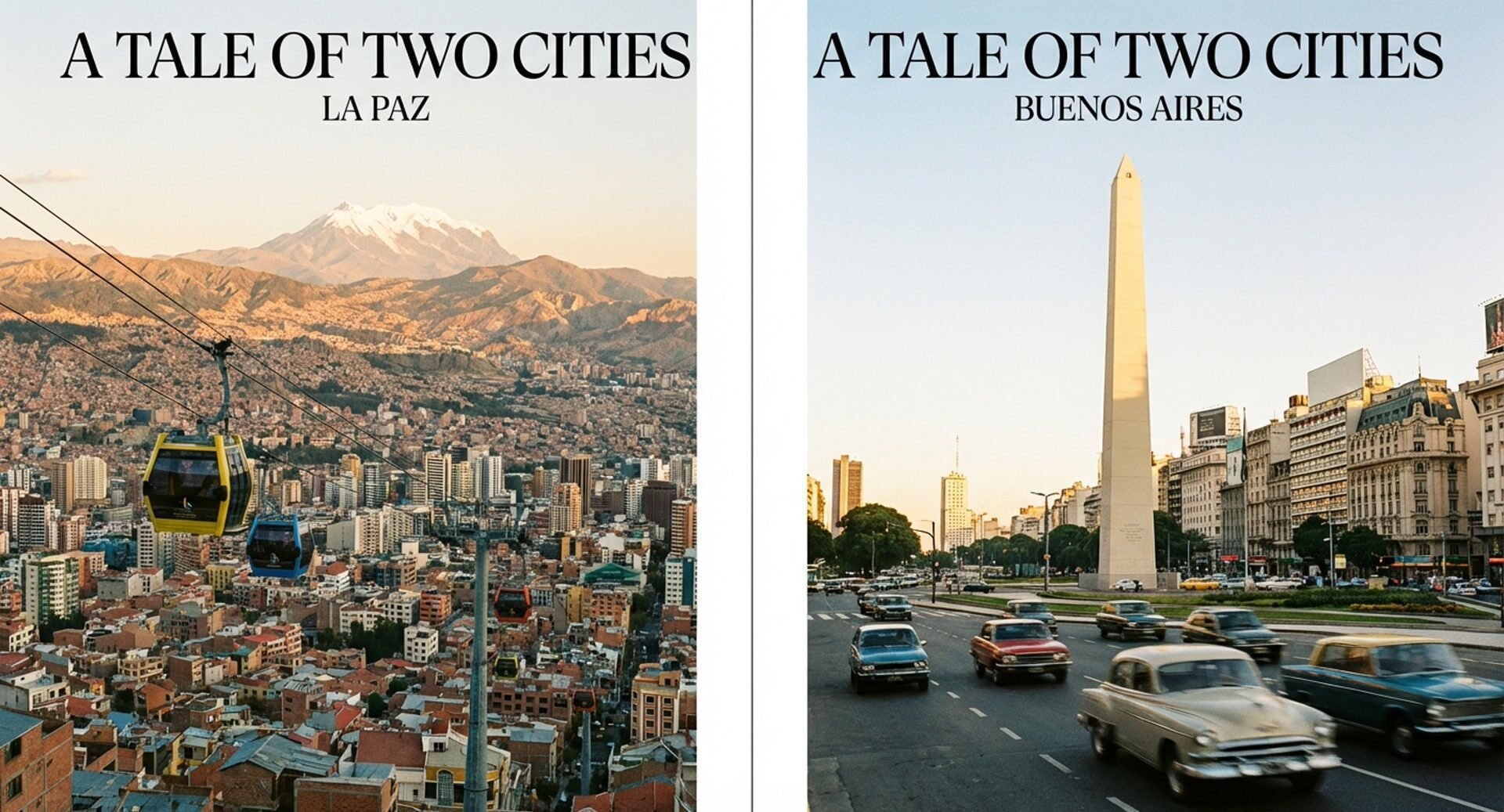
Bolivia and Argentina share a border, but the local payment experience is not the same. In 2026, the useful comparison is no longer just cards vs cash vs QR. It is whether a traveler can access the local rails people actually use.
WanderWallet now supports the relevant local payment rails in both countries. In Argentina, that means QR payments plus Direct Alias Transfers to Alias, CBU, and CVU recipients. In Bolivia, that means QR-based local payments through the rails people already use every day. Same idea, different local flow: pay like a local without opening a local bank account.
TL;DR: Argentina is now much closer to cashless for WanderWallet users because QR handles checkout and Direct Alias Transfers handle the “send it to my Alias” situations that used to force cash. Bolivia is already a QR-first market, and WanderWallet gives foreigners access to that local QR/payment flow. If you are crossing between the two, the practical setup is simple: use WanderWallet for local rails in both countries, keep cards available, and carry a small cash backup for edge cases.
Bolivia Vs Argentina Payments: Side-By-Side Reality
| Feature | Argentina | Bolivia |
|---|---|---|
| Main local rails | QR payments plus Alias, CBU, and CVU transfers | QR-based local payments |
| WanderWallet support | QR payments and Direct Alias Transfers | Local QR/payment rail support |
| Best WanderWallet use case | Checkout payments plus direct transfers to people and businesses | Everyday QR payments at local merchants |
| Cashless potential | Very strong: QR plus Alias covers most normal payment situations | Very strong where QR is accepted, with cash backup for edge cases |
| Common local request | “Do you have QR?” or “I’ll send you my Alias” | Merchant shows or asks for QR payment |
| Without local rails | You can still hit cash moments when someone wants a transfer | You are pushed toward cash or non-local payment workarounds |
The Big Argentina Update: QR Plus Alias
Argentina used to be easy to explain in one sentence: cards often work, but locals prefer local rails. That is still true, but WanderWallet now changes the important part for travelers.
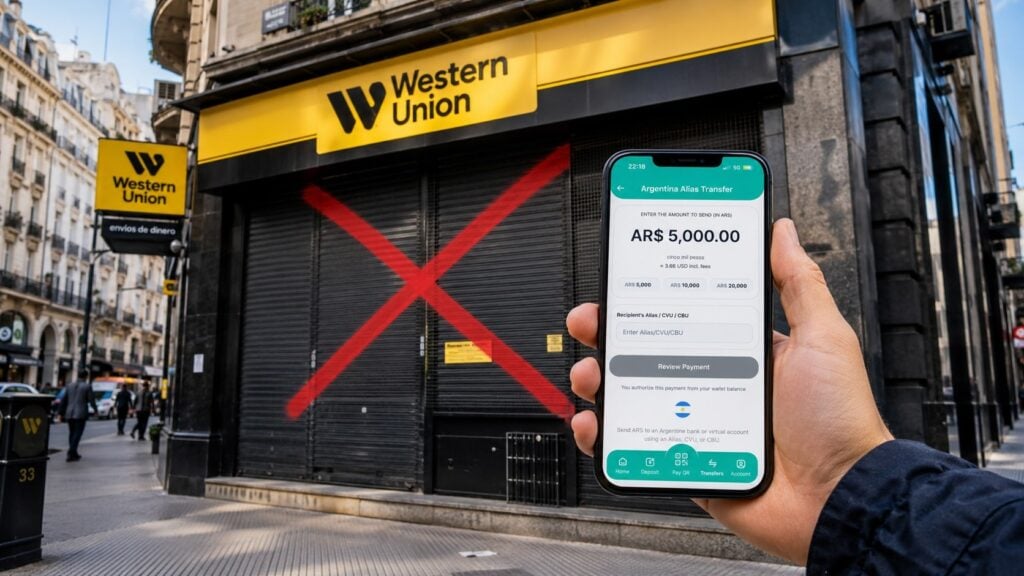
QR payments already solved a lot of normal checkout moments: cafes, restaurants, taxis, kiosks, pharmacies, markets, and everyday shops. Direct Alias Transfers solve the other side of Argentina: the situations where someone does not show you a QR code, but sends you an Alias, CBU, or CVU and expects a local transfer.
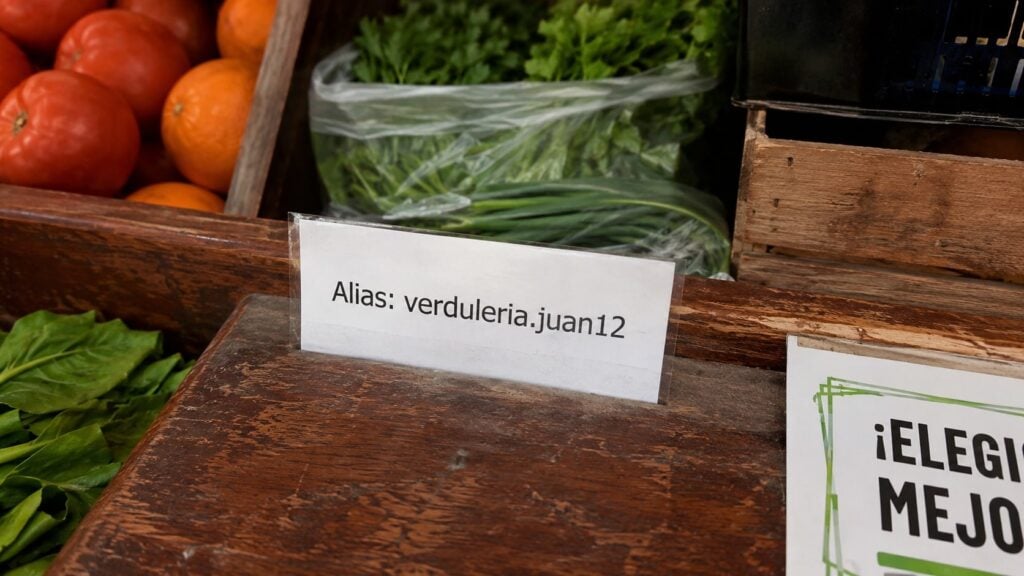
That is huge because those are exactly the moments that used to push travelers back to cash. Apartment deposits, guides, drivers, small service providers, informal bookings, local vendors, WhatsApp payment requests, and person-to-person payments can all end with the same phrase: te paso mi alias.
With WanderWallet, that is no longer a dead end. You can scan QR codes for checkout and send Direct Alias Transfers from the same app balance, without needing an Argentine bank account.
What “Cashless Argentina” Actually Means
Cashless does not mean you should never carry pesos. It means cash stops being the plan.
In Argentina, QR plus Alias covers the two local behaviors that matter most:
- QR for checkout: restaurants, cafes, taxis, kiosks, shops, pharmacies, and many everyday merchants.
- Alias, CBU, or CVU for transfers: guides, drivers, apartments, deposits, services, WhatsApp payment requests, local vendors, and people who ask for a transfer.
That combination is the new Argentina story. The old advice was to plan around cash pickups, exchange errands, and carrying enough pesos for whatever cards or QR could not cover. With Direct Alias Transfers, many of those leftover cash situations become local payments from your phone.
For the full Argentina cashless breakdown, read How to Travel Argentina Without Cash Using QR Payments and Direct Transfers. For the feature announcement, see Massive Argentina Update: Direct Alias Transfers Are Now Supported.
Bolivia Is Already a QR-First Market
Bolivia should not be understood as “Argentina, but missing transfers.” The user-facing payment flow is simply different. Bolivia runs heavily on QR-based local payments, and that is the flow WanderWallet supports for foreigners.
For travelers, the practical point is straightforward: when a Bolivian merchant presents a QR, WanderWallet lets you use that local payment flow without needing a Bolivian bank account. That is the core value. It is not about inventing a separate alternative rail; it is about plugging travelers into the rail that is already normal on the ground.
Bolivia’s exchange-rate story has also changed. The old official-rate gap is no longer the whole story after Bolivia’s FX rules shifted in 2026. The current Bolivia picture is covered separately in Bolivia’s Parallel Dollar Is Changing: What Travelers Need To Know.
A Normal Day Paying in Buenos Aires
In Buenos Aires, a WanderWallet day can now look very local:
- Pay for coffee with QR.
- Scan a QR at lunch or a pharmacy.
- Send an Alias transfer to a guide, driver, apartment host, or small service provider.
- Use a card where it is convenient.
- Keep a little cash for the occasional edge case, not as the main plan.
The important update is the transfer piece. QR already covered a lot of checkout. Alias, CBU, and CVU support expands WanderWallet into the situations where Argentina still used to feel cash-first for foreigners.
A Normal Day Paying in La Paz
In La Paz, QR is routine for everyday transactions. Restaurants, shops, supermarkets, transport moments, and many market-style merchants can work through QR-based local payments.
With WanderWallet, the traveler experience is simple: scan the local QR, review the payment, and confirm. Keep a small cash buffer for offline moments, remote stops, or the rare merchant that does not support the flow you need.
If you want the full Bolivia walkthrough, read How to Pay in Bolivia as a Tourist.
Where Each Country Is Strongest
Argentina Strengths
- QR plus Direct Alias Transfers now cover most normal local-payment situations.
- Alias, CBU, and CVU support removes many cash moments that QR alone did not solve.
- Cards can still be used where convenient, but local rails are now accessible from WanderWallet.
- The country is increasingly realistic to travel cash-light, and in many situations close to cashless.
Bolivia Strengths
- QR-based local payments are deeply normal in everyday commerce.
- WanderWallet gives foreigners access to the local QR/payment flow.
- The app keeps Bolivia practical without needing a local bank account.
- Cash remains useful as backup, but QR is the main local behavior.
Main Traveler Constraints
Argentina: the issue is not that cards never work. The issue is that Argentina does not run only on cards. Locals use QR and transfers, and travelers used to get stuck whenever the answer was “send it to my Alias.” WanderWallet now supports QR plus Direct Alias Transfers, so those cash moments drop sharply.
Bolivia: the practical challenge is accessing the QR-based local payment flow as a foreigner. WanderWallet supports that flow directly, so Bolivia becomes much easier without trying to turn it into a card-first country.
How WanderWallet Fits in Both Countries
WanderWallet is designed for one specific problem: paying like a local without a local bank account.
- Argentina: WanderWallet supports QR payments and Direct Alias Transfers to Alias, CBU, and CVU recipients. That is the full local-payment story: scan when there is a QR, transfer when someone gives you local account details.
- Bolivia: WanderWallet supports QR-based local payments, which is the everyday payment behavior travelers actually need on the ground.
If you are planning a border hop, pair this guide with the Argentina Payments Cheat Sheet 2026, Alias Payments in Argentina, and How to Pay in Bolivia as a Tourist.
Bottom Line
Argentina and Bolivia are both local-rail markets now fully covered by WanderWallet, but the user-facing flows are different.
In Argentina, the big unlock is QR plus Direct Alias Transfers. That means checkout payments and transfer requests can both happen from WanderWallet, making cash much less central to the trip.
In Bolivia, the core unlock remains QR-based local payments. That is the payment behavior people use every day, and WanderWallet makes it accessible to foreigners.
Different countries, different rails, same result: you can move through both places much closer to how locals actually pay.
Frequently Asked Questions
Why does Bolivia need a different payment tool than Argentina?
Because Bolivia is QR-first and foreign cards and bank apps can’t scan the local QR codes, while cash is scarce. WanderWallet bridges that access gap so foreigners can pay the local QR rail directly.
Can travelers use the same payment app in Bolivia and Argentina?
Yes. WanderWallet supports local payment rails in both countries so travelers do not need a local bank account.
Should I still carry cash in both countries?
Yes. Carry a small backup for edge cases like some taxis, remote areas, or occasional maintenance windows.
Is Argentina or Bolivia easier for foreign cards?
Argentina is generally easier for foreign cards. Bolivia remains much more QR-first in daily commerce.
Ready to Start Paying with QRs in Argentina and Bolivia?
Download WanderWallet and start paying like a local.


About the Author

Milo
Milo writes about the stuff nobody tells you before you land: why your card gets declined, where cash still rules, and how to actually pay for things without getting ripped off. He's WanderWallet's resident payment nerd.