

Bolivia’s Parallel Dollar Is Changing: What Travelers Need To Know
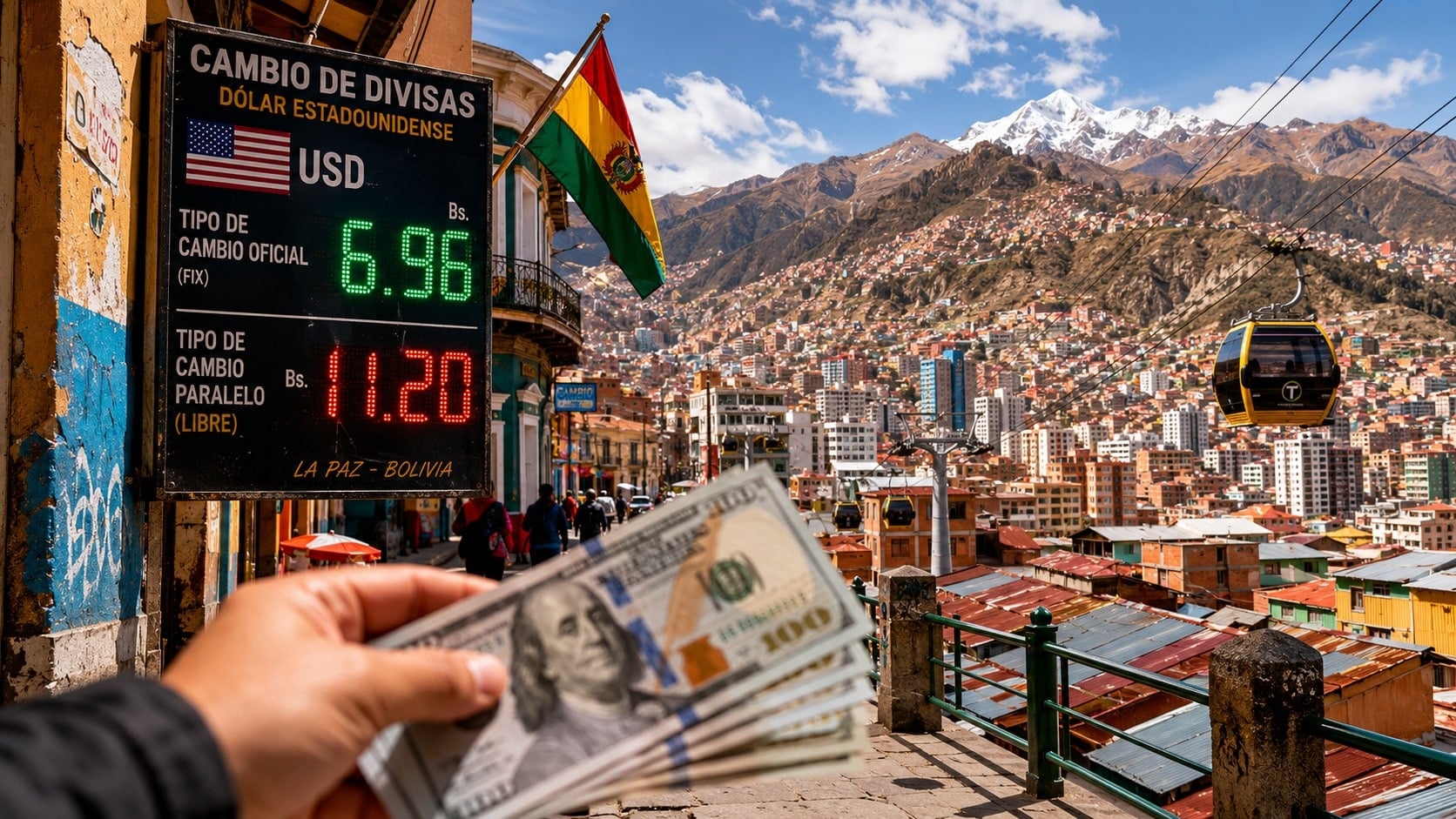
Bolivia’s exchange-rate story changed in June 2026. For most of the year, travelers had to think in two numbers: the old official 6.96 Bs/USD path used by many cards and ATMs, and the higher parallel-market price used by cash and local-market flows. Now the Banco Central de Bolivia is publishing much higher official and referential dollar values, which means the old parallel-dollar gap is starting to compress.
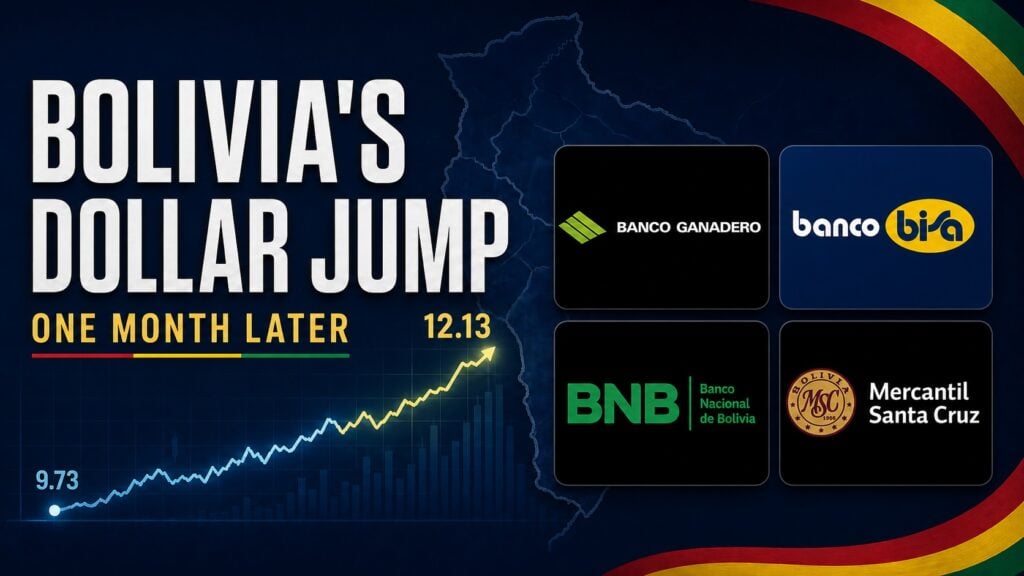
TL;DR: Bolivia is moving away from the old fixed 6.96 Bs/USD reality. On June 26, 2026, the BCB showed a referential dollar around 9.76 buy / 9.96 sell, while its official-rate panel showed 9.73 Bs/USD for June 29. Travelers should stop relying on old Bolivia money advice and check the live payment rate before using cards, ATMs, cash, or QR.
What Changed?
Bolivia used to be simple to explain but painful in practice. The official exchange rate sat around 6.86-6.96 Bs/USD for years, while the parallel market often priced dollars much higher. That gap made foreign cards and ATMs expensive for travelers because many transactions were pulled onto the weaker official-rate path.
The fresh development is that Bolivia’s official and reference numbers are now much closer to market pricing. The BCB homepage on June 26, 2026 showed a referential dollar value of 9.76 Bs buy / 9.96 Bs sell, plus an official exchange-rate panel of 9.73 Bs/USD for Monday, June 29. Independent market trackers were showing the blue dollar near 10.00 Bs around the same time.
That does not mean every payment method is now identical. It means the old shortcut of saying “cards equal 6.96 and the market equals 9-10” needs updating. The practical question for travelers is now: what rate does this specific rail give me today?
Why This Matters for Tourists
Most Bolivia travel money advice was written for the fixed-rate period. It told visitors to bring crisp US dollars, use exchange houses, and avoid relying on foreign cards because the official rate could be far below the cash market. That advice was directionally right while the gap was wide.
Now the traveler decision is more dynamic. Cards, ATMs, exchange houses, and QR payments may move at different speeds as banks, processors, merchants, and local liquidity adjust to the new exchange-rate environment.
The smart behavior is not to assume one method is always best. The smart behavior is to compare the live rate before each meaningful payment.
The New Bolivia Payment Stack
| Payment Method | What Changed | Traveler Takeaway |
|---|---|---|
| Foreign cards | The old official-rate penalty may be smaller if card settlement follows the updated official/reference path. | Useful backup, but check the effective rate and merchant acceptance before making large purchases. |
| ATMs | ATM value may improve if withdrawal conversion updates, but fees, limits, and availability still matter. | Better as a backup than a full Bolivia money strategy. |
| Cash exchange | The parallel premium may compress as official/reference pricing moves closer to market pricing. | Still useful, but less automatically dominant than when the gap was 25-30%. |
| Local QR | QR remains the normal local checkout behavior in Bolivia. | Still the cleanest way to pay merchants like a local when you can access the rail. |
Does This End Bolivia’s Parallel Dollar?
It may end the old version of the story, but not necessarily every parallel-market behavior overnight. Bolivia can have an official number, a BCB reference number, bank pricing, exchange-house pricing, and informal market pricing all moving at slightly different speeds.
For travelers, the important point is practical: the old 6.96-vs-9.0 mental model is now stale. The BCB reference rate being close to 10 means the spread has narrowed dramatically compared with the earlier fixed-rate period.
What To Do Before Paying in Bolivia Now
Use this quick check before any large payment:
- Check the live BCB reference or a current local dollar tracker.
- Check the rate shown by your card, ATM, cash exchange desk, or WanderWallet app.
- For normal merchant spending, ask whether QR is accepted before reaching for cash or a foreign card.
- Keep a small cash backup for rural stretches, tips, transport edge cases, or low-signal moments.
- Do not treat QR Simple as a cash-out rail. In Bolivia, QR is for payments, not withdrawals.
Where WanderWallet Fits
WanderWallet’s Bolivia value was never just “there is a parallel rate.” The deeper value is access: Bolivia runs heavily on local QR payments, but foreigners normally do not have the local bank or wallet setup needed to scan and pay those merchant QR codes.
That remains true even if the official/reference exchange-rate gap compresses. WanderWallet helps travelers use the local QR checkout behavior directly, with the live rate visible before payment. In a changing FX environment, that visibility matters more, not less.
If you want the practical country setup, start with WanderWallet in Bolivia. For the broader payment walkthrough, read How Foreigners Can Pay in Bolivia. If you are comparing old advice, keep the Bolivia parallel-dollar guide as historical context, but treat current live rates as the source of truth.
Bottom Line
Bolivia’s parallel-dollar era is not something travelers should describe with old fixed-rate numbers anymore. The official and reference rates have moved much closer to market pricing, which changes the payment math.
The best Bolivia money strategy now is live-rate awareness: check the rate, use QR where merchants accept it, keep cash as a backup, and avoid assuming that advice from the 6.96 era is still true.
Frequently Asked Questions
Is Bolivia's parallel dollar ending?
The old fixed-rate version of Bolivia’s parallel-dollar story is changing. The BCB is now publishing official and reference dollar values much closer to market pricing, so travelers should compare live rates instead of relying on the old 6.96 Bs/USD assumption.
What is the official dollar rate in Bolivia now?
On June 26, 2026, the BCB homepage showed a referential dollar around 9.76 Bs buy / 9.96 Bs sell and an official-rate panel of 9.73 Bs/USD for June 29. Rates can move, so check the latest source before paying.
Should tourists still bring cash to Bolivia?
Yes, but cash is now a backup and comparison point rather than an automatic answer for every purchase. Keep some cash for edge cases, rural areas, tips, and low-signal moments, then compare live rates for larger spending.
Are cards and ATMs better in Bolivia now?
They may be better than during the old fixed-rate period if settlement follows updated official or reference pricing. But fees, limits, merchant acceptance, and processor timing still matter, so check the effective rate before large payments.
Does WanderWallet still matter if the official rate changed?
Yes. WanderWallet solves the local QR access problem for foreigners. Bolivia merchants commonly use QR, and the app shows the live rate before payment, which matters even more during a changing exchange-rate period.
Ready to Start Paying with QRs in Bolivia?
Download WanderWallet and pay like a local.


About the Author

Vojta Pohunek
Vojta is the cofounder and CEO of WanderWallet. He is from Prague and has lived in Latin America for three years, where he focuses on making everyday payments simpler for anyone moving between countries.