

Traveling to Brazil: 10 Things You Should Know
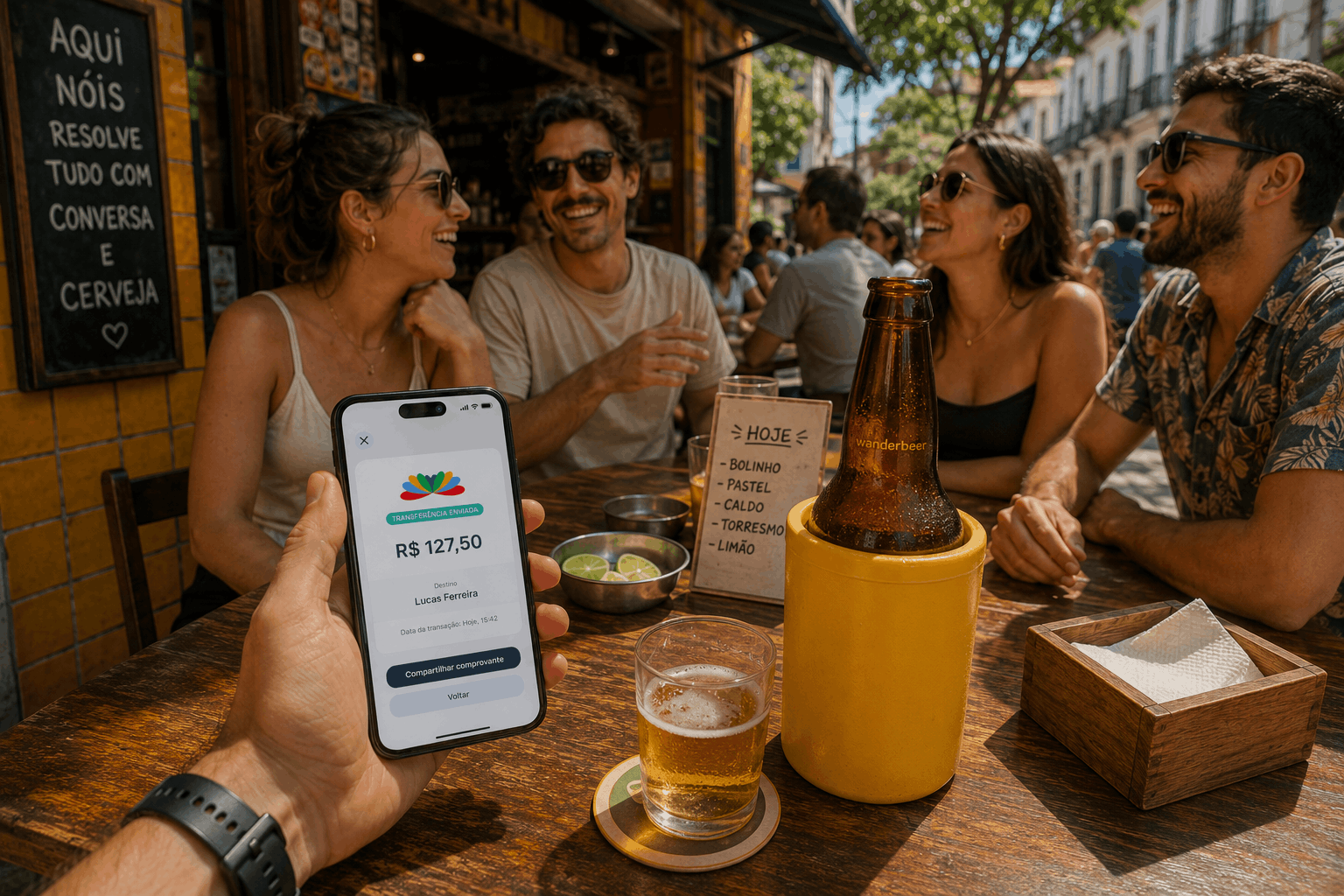
One of the happy consequences of running WanderWallet is that we get to talk to hundreds of travelers.
Some are in Brazil for two weeks. Some are digital nomads staying for three months. Some came for Carnival and accidentally stayed longer. Some are Brazilians living abroad who come back with foreign friends and suddenly realize how complex Brazil can be when you do not have a local bank account, or Pix anymore because they did the saida fiscal.
Very often, people tell us the same things: “I wish I knew this before coming.” “I thought Brazil would be cheaper.” “I did not realize Pix was that important.” “I came during Carnival and could not do anything else.” “I thought Portuguese would be close enough to Spanish.”
Part of the WanderWallet team is in Brazil, myself included, so this is the practical version of the advice we usually give friends before they visit. Not the shiny brochure version of Brazil. The version that helps you enjoy the country more and struggle less.
TL;DR
Brazil is amazing, but it works on its own rhythm. Do not try to see the whole country in one trip. Check your visa. Treat Carnival as its own trip. Plan around dry and rainy seasons, not just “summer” and “winter.” Do not assume Brazil is cheap. Consider getting a CPF if you will stay longer. Learn a little Portuguese. And understand Pix before you arrive.
Brazil is a Pix country now. Cards and cash still matter, but Pix is often how real life gets paid for. WanderWallet exists for that gap: helping foreigners pay through local payment rails like Pix in Brazil, without needing to open a Brazilian bank account just to function day to day.
1. Either Go to Carnival, or Avoid Carnival
Carnival in Brazil is incredible. It is one of the great cultural experiences of the world. In Rio, Salvador, Recife, Olinda, Belo Horizonte, São Paulo, and many smaller cities, Carnival can completely take over the rhythm of life.
That is the important part: it takes over. If you go to Rio during Carnival, go because you want Carnival. Not because you want a normal Rio trip with a little samba on the side.
During the pre-Carnival, Carnival, and post-Carnival period, accommodation gets expensive, traffic changes, streets close, restaurants and services operate differently, and the city’s energy is completely oriented around the party. For 2027, Rio’s official Carnival calendar starts in February 5th and goes all the way to the 12th, and the city expects millions of people across the festivities.
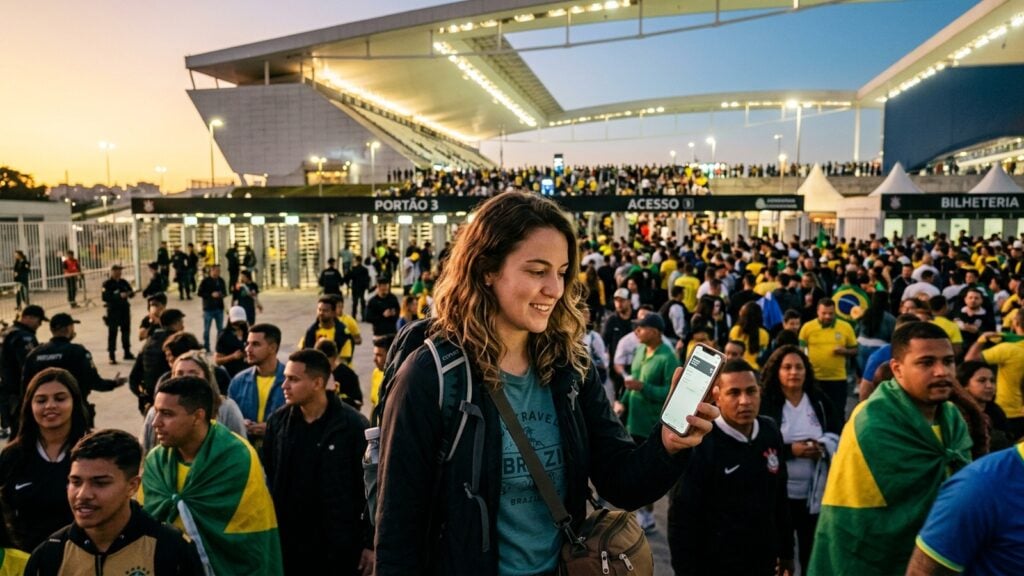
My practical advice: if you want Carnival, commit to Carnival. Book early. Stay central. Keep your phone safe. Go with people. Expect crowds, noise, chaos, and joy. If you do not want Carnival, avoid the main Carnival cities before, during, and right after the main dates.
2. Brazil Is Huge
Brazil is not a country you “do” in ten days. It is closer to a continent in travel terms. Rio, São Paulo, Salvador, Florianópolis, Foz do Iguaçu, the Amazon, Lençóis Maranhenses, Fernando de Noronha, Fortaleza, Belo Horizonte, the Pantanal, and Chapada Diamantina are all completely different trips.
This is one of the most common mistakes we see foreigners make. They create an itinerary that looks good on a map, then spend half the trip in airports or recovering from moving too much.
A better first trip is usually two or three bases. Brazil rewards slow travel. The country is intense enough. You do not need to make your itinerary intense too.
3. Half the Country Does Not Really Have Four Seasons
A lot of foreigners arrive with a very European or North American idea of seasons. That exists in parts of Brazil, especially in the South and Southeast. But in much of the country, especially the North and Northeast, it is more useful to think in terms of dry season and rainy season.
This matters a lot. The Northeast can be fantastic in the second half of the year. But the same region can be frustrating if you hit the wrong rainy period. Recife, for example, has a distinct rainy season, with frequent rain especially from roughly March or April through July or August, depending on the source and year.
Rain in Brazil can be serious. Not just “bring a cute umbrella” rain. It can change beach plans, road conditions, boat trips, hikes, and even city mobility. There is no single best time to visit Brazil. There is only the best time for the specific Brazil you want.
4. Brazil Is Not Really Cheap
Brazil can be more affordable than North America or Western Europe in some areas. But Brazil is not “cheap” in the way many travelers expect. Technology, flights, good hotels in peak season, imported clothes and brands, electronics, quality sunscreen, outdoor gear, Apple products, cameras, and laptop accessories can all surprise you.
Part of this comes from Brazil’s tax and import structure. The U.S. International Trade Administration notes that imports can be subject to multiple layers of federal and state taxes, including ICMS, which is generally passed on to the buyer.
So yes, your coffee, lunch, or Uber may feel cheaper. But replacing your iPhone charger, buying new headphones, booking a last-minute domestic flight, or buying imported sneakers may not.
5. Pix Is Not Optional
This is where WanderWallet comes in, but let’s start with the reality on the ground.
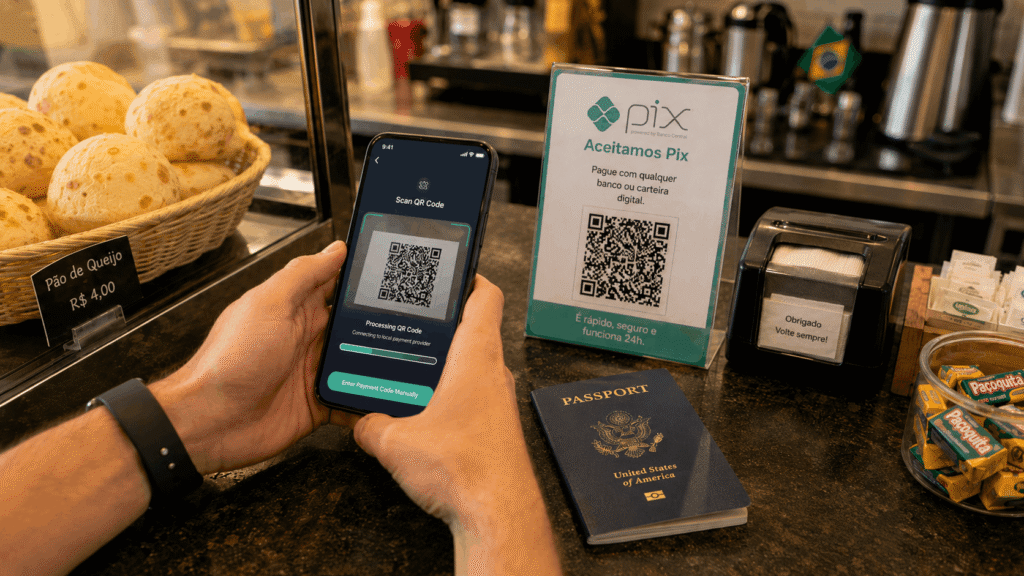
Brazil runs on Pix. Pix is Brazil’s instant payment system, created by the Central Bank. It lets people and businesses send and receive payments in seconds, any day, any time. Pix processed about R$26.4 trillion in 2024, which gives you an idea of how normal it has become.
Foreign cards work in Brazil. You can use them in hotels, restaurants, supermarkets, pharmacies, malls, and many formal businesses. But that is not the whole country.
Pix is what people use for small shops, street food, beach vendors, local guides, WhatsApp sellers, informal services, deposits, splitting bills, paying friends, and countless everyday situations.
The problem is that Pix usually lives inside Brazilian financial accounts. If you are a foreigner without a Brazilian bank account, you can feel like the whole country has a payment shortcut that you cannot access.
That is one of the reasons we built WanderWallet. In Brazil, WanderWallet helps travelers and expats use Pix for everyday payments without opening a Brazilian bank account just to pay for lunch, a tour, a beach chair, or a local service.
The Brazil payment stack I recommend is simple: use WanderWallet for Pix situations, use your international card at formal businesses.
6. Getting a CPF Can Be Very Useful
A CPF is Brazil’s individual taxpayer ID. That sounds boring. In practice, it is one of the most useful numbers you can have in Brazil.
You may be asked for CPF when buying tickets, signing up for services, ordering things online, getting a phone plan, joining gyms, registering on platforms, booking certain experiences, or dealing with local systems.
Foreigners can apply for a CPF through Receita Federal channels, including official online and in-person flows depending on where they live. Is it mandatory for a short tourist trip? Not always. Is it useful if you are staying longer, coming back often, or trying to live more normally in Brazil? Yes.
7. Safety Is Real, but Brazil Is Not a War Zone
Foreigners often swing between two bad extremes. Some arrive terrified, as if every corner of Brazil is dangerous. Others arrive careless, walking around with their phone out, wearing expensive watches, leaving bags unattended, and then acting surprised when something happens.
The right attitude is in the middle: relaxed, but alert.
In practical terms: do not walk around with your phone loose near traffic, do not wear flashy jewelry, use Uber/99 at night, avoid empty beaches after dark, ask locals which streets to avoid, keep one backup card separate from your wallet, do not bring your passport to the beach, do not accept random help at ATMs, and be extra careful during Carnival, nightlife, and crowded events.
8. The Best Way to Make Friends Is Not an App
Brazilians are social, but that does not mean friendship happens automatically. If you are staying longer, the best ways to meet people are usually sports, meetups, live music, classes, coworking spaces, language exchanges, and friends of friends.
Sports are especially powerful in Brazil: football, beach volleyball, tennis, running clubs, jiu-jitsu, functional training, surfing, hiking groups, cycling groups. Pick something and show up consistently.
Live music is another shortcut into Brazilian life: samba, forró, choro, MPB, pagode, funk, jazz nights, local bars, neighborhood events. You do not need to understand every lyric to feel the social energy.
9. Get Used to the Cultural Differences, and Enjoy Them
Brazil is culturally close to the West in some ways, but not identical. And honestly, that is part of the fun.
Time is more flexible socially. People may be warmer in public. “Let’s do something” can mean many things. Brazilian systems can be confusing, but people are often surprisingly helpful when you are stuck. Brazil can be bureaucratic and generous at the same time.
10. Learn Enough Portuguese to Be Polite
Brazil speaks Portuguese, not Spanish. Spanish can help a little, especially with reading, but do not assume it will carry you through daily life.
- Bom dia — Good morning
- Boa tarde — Good afternoon
- Boa noite — Good evening or good night
- Por favor — Please
- Obrigado / obrigada — Thank you
- Você aceita Pix? — Do you accept Pix?
- Posso pagar no cartão? — Can I pay by card?
- Quanto custa? — How much does it cost?
- Um chopp/Uma cerveja por favor — A beer please!
A little Portuguese changes the mood. People see the effort. And in Brazil, effort matters!
A Practical Brazil Setup Before You Land
- Check your visa requirements. Travelers with passports from the U.S., Canada, and Australia have needed an eVisa for tourism and business visits since April 10, 2025.
- Pick two or three places, not seven.
- Avoid Carnival dates unless Carnival is the point. Same applies to NYE.
- Check rainy and dry seasons by region.
- Bring your important tech from home.
- Set up mobile data before arrival.
- Install WanderWallet and be ready for Pix.
- Bring an international card.
- Carry a little cash.
- Consider getting a CPF if staying longer.
- Learn ten Portuguese phrases.
Where WanderWallet Fits
WanderWallet is not here because every travel article needs a product mention. It is here because Brazil has a specific payment problem for foreigners.
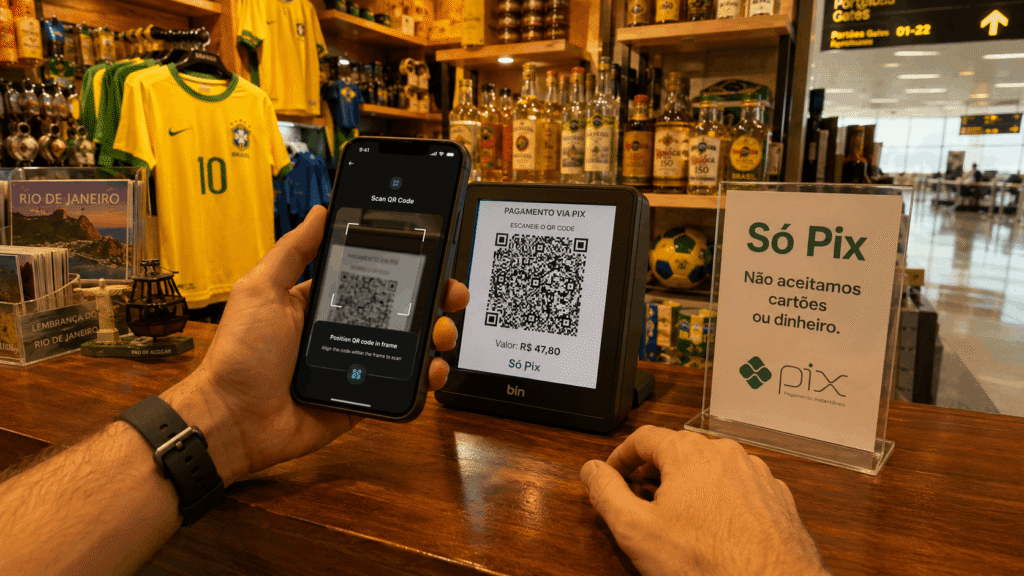
Locals pay with Pix all the time. Foreigners often cannot. That gap shows up constantly in real life: a small merchant wants Pix, a beach vendor shows a QR code, a local guide asks for payment, a friend says “just Pix me,” or a shop’s card terminal does not like your foreign card.
WanderWallet helps travelers and expats pay through local payment rails, including Pix in Brazil, so they can function more like locals without getting stuck in the local banking system.
Related Guides
- Money and Pix for Foreigners in Brazil — A deeper guide to how payments work for travelers.
- Pix for Foreigners in Brazil — What Pix is, why it matters, and where foreigners get stuck.
- How to Get a CPF in Brazil as a Foreigner — When a CPF helps and when you can avoid needing one.
- Brazil Carnival Scams — Practical safety tips if Carnival is part of your trip.
Sources
- Brazil eVisa information portal
- Central Bank of Brazil: Pix
- CNN Brasil on Pix 2024 volume
- Brazil gov.br: CPF registration
- U.S. State Department Brazil Travel Advisory
- U.S. International Trade Administration: Brazil import tariffs
- Climate to Travel: Recife climate
Final Takeaway
Brazil is one of the most rewarding countries in the world to visit. But it is not frictionless. It has its own rhythm, bureaucracy, payment culture, social codes, weather logic, and way of making simple things both confusing and beautiful.
Come prepared, but not rigid. Learn a little Portuguese. Respect the weather. Do not underestimate Carnival. Do not assume everything is cheap. Get a CPF if you are staying longer. Meet people through sports, music, and real-life events.
And please, be ready for Pix. Once you understand that Brazil runs on Pix, a lot of daily life starts making more sense.
That is exactly why we built WanderWallet: to help foreigners pay like locals, move with less friction, and spend more time enjoying Brazil instead of fighting the payment system.
Frequently Asked Questions
Is Brazil good for first-time travelers?
Yes, but choose your destination carefully. Rio is iconic, São Paulo is great for food and culture, Salvador is amazing for music and Afro-Brazilian history, Florianópolis is easier for beach life, and Foz do Iguaçu is one of the most straightforward big nature trips.
Should I visit Brazil during Carnival?
Only if you want Carnival. It is incredible, but it dominates the city. If you want a normal Rio, Salvador, or Olinda trip, avoid the weeks around Carnival.
Do I need Pix in Brazil?
You can survive without Pix, but life is easier with it. Brazil uses Pix constantly for everyday payments, especially outside large formal businesses.
Can foreigners use Pix in Brazil?
Pix is usually tied to Brazilian financial accounts, which is the hard part for visitors. WanderWallet helps bridge that gap by giving travelers access to local payment rails like Pix in Brazil for everyday spending.
Is getting a CPF worth it?
For a short tourist trip, maybe not. For a longer stay, repeated visits, or anything involving local online services, yes. It will not solve everything, but it is very useful.
Is Brazil cheap?
Some things are affordable compared with North America or Europe. Other things, especially electronics, flights, imported goods, and peak-season hotels, can be expensive. Budget with nuance.
When is the best time to visit Brazil?
It depends on the region. Do not think only in terms of summer and winter. In much of Brazil, dry season versus rainy season matters more.
Ready to Start Paying with Pix?
Download WanderWallet and pay like a local in Brazil.


About the Author

Gabriel Otero
Gabriel is the co-founder of WanderWallet. Proudly Argentinian and based in Brazil, he brings years of experience in the payment processing industry to building seamless local payment access for travelers across Latin America.