

How to Pay in Brazil Without a Brazilian Bank Account
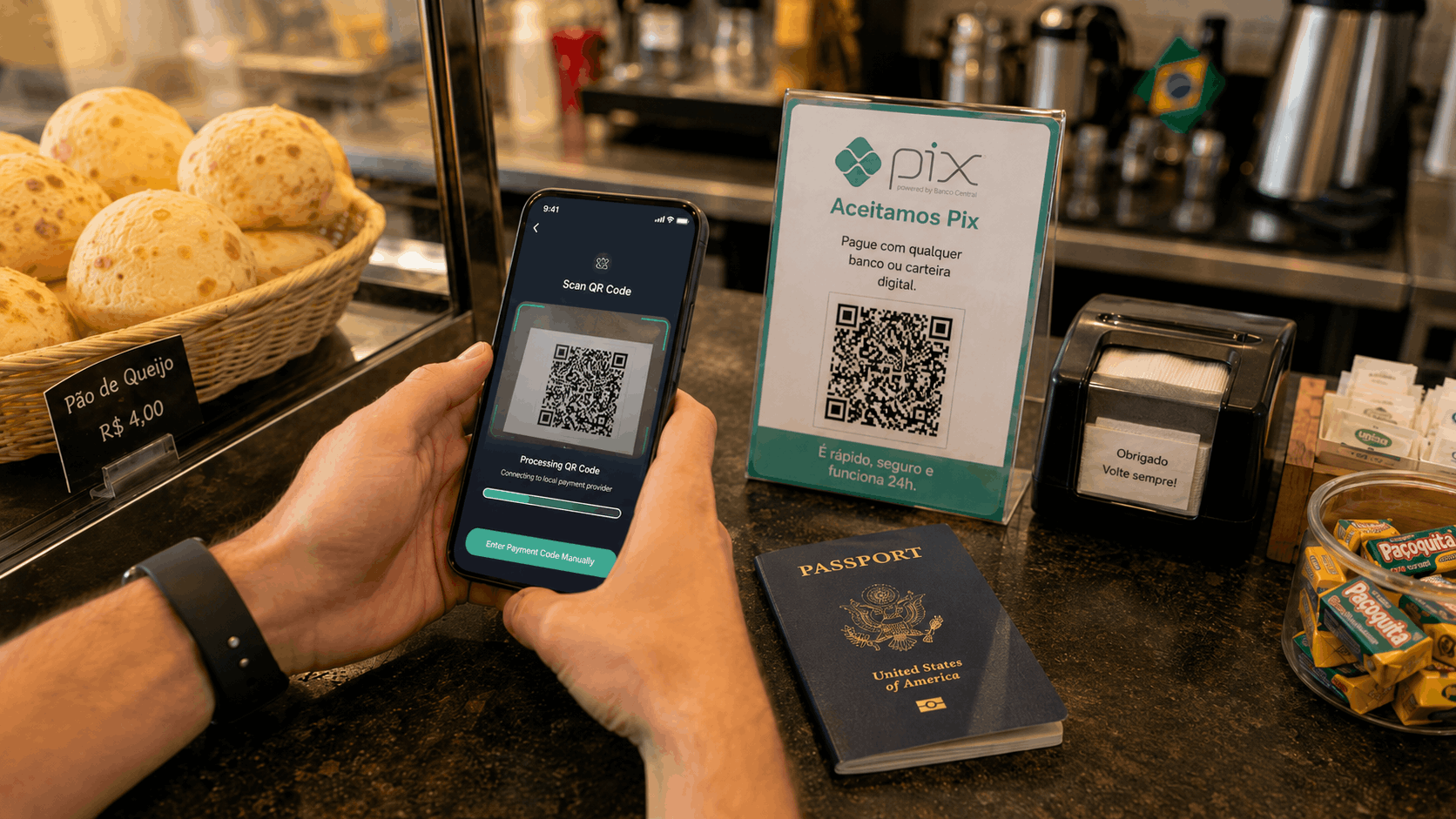
Brazil is one of the easiest countries in the world to pay digitally if you are local. It can also be one of the most confusing if you are a foreigner.
In many countries, the payment question is simple: “Do they take cards?” In Brazil, the better question is often: “Can I pay with Pix?”
Pix is Brazil’s instant payment system, operated by Banco Central do Brasil. It lets people and businesses send and receive money in seconds, any day of the week. For Brazilians, Pix is normal. For visitors, nomads, and expats without a Brazilian bank account, it can feel like there is a local payment world happening right in front of you that you cannot quite access.
The good news: you do not need to open a Brazilian bank account just to handle everyday spending in Brazil. You need the right payment stack.
TL;DR
You can pay in Brazil without a Brazilian bank account by using WanderWallet when Pix is the easiest local option, plus an international card where foreign cards reliably work. You do not need to open a Brazilian account just to handle everyday spending, and the CPF-plus-bank-account route is a lot of work with no guaranteed approval.
Why Paying In Brazil Feels Different
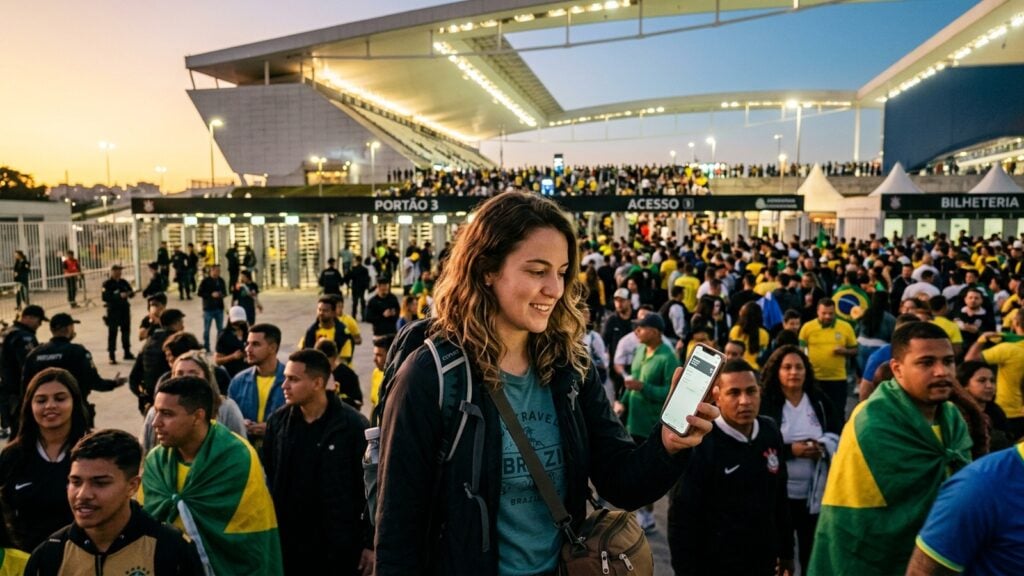
Brazil is highly digital for everyday payments. Cards are common, especially in bigger cities. Contactless terminals are everywhere, and you can usually pay by card in supermarkets, pharmacies, cafes, restaurants, hotels, shopping malls, and ride-hailing apps.
But Pix is the real local layer.
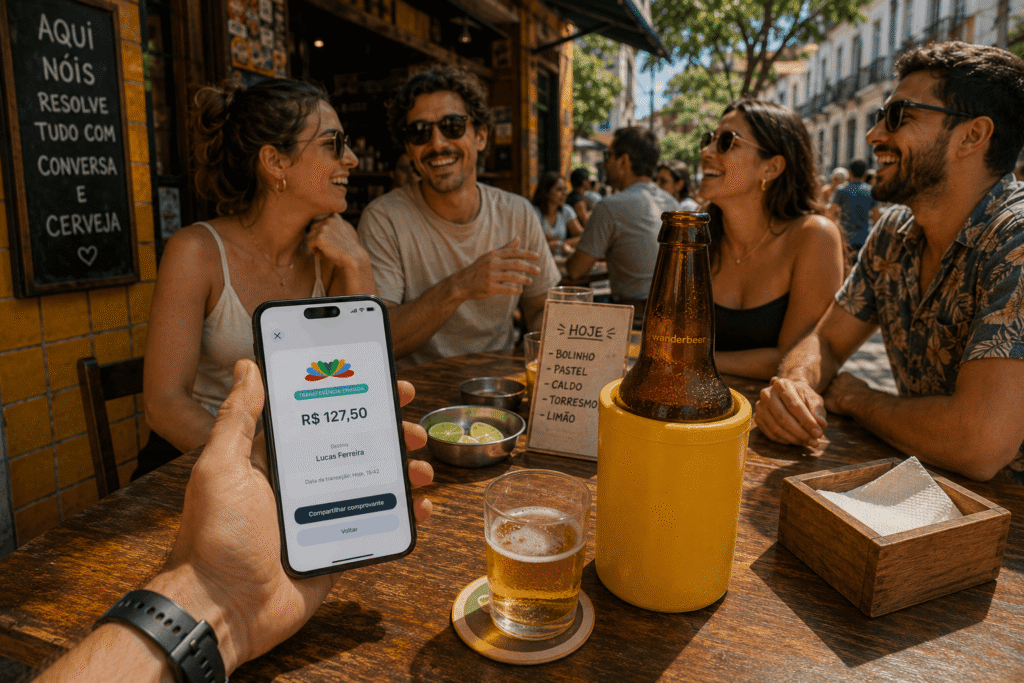
Pix is used for small payments, large payments, street food, beach vendors, apartment deposits, independent guides, bill splitting, small businesses, and purchases arranged through WhatsApp or Instagram. It is not just a banking feature. It is part of daily life.
That is why arriving with only a foreign card can be frustrating. You are not completely stuck, but you are missing the payment method many locals expect. For a deeper comparison, read our guide to Pix vs credit cards in Brazil.
The Core Problem: Pix Is Local, But Your Money Is Not
Pix is simple for people with Brazilian financial accounts. The catch is that most tourists do not have one.
Many short-stay visitors also do not have a CPF, Brazil’s individual taxpayer number. A CPF can be useful, and foreigners can apply for one, but a CPF is not the same thing as an easy local banking setup. You may still face identity checks, proof-of-address requirements, local phone verification, Portuguese-language support, and account approval steps.
If you are moving to Brazil long term, local banking may eventually make sense. If you are visiting for a week, spending a month in Rio, or working remotely from Sao Paulo for a while, opening a local account just to pay for coffee, taxis, groceries, tours, and beach chairs is usually overkill.
For more detail on when a CPF helps and when it is just paperwork, see our guide to getting a CPF in Brazil as a foreigner.
Option 1: Use WanderWallet For Pix-Style Local Payments
This is the practical path for most foreign visitors who want to pay in Brazil without opening a Brazilian bank account.
WanderWallet in Brazil is built for travelers, nomads, and expats who are physically in the country and need to pay for real life: food, transport, hotels, pharmacies, coworking, tours, and everyday purchases.
The point is not to become locally banked overnight. The point is to pay the way Brazil actually works.
With WanderWallet, the flow is designed around day-to-day local payments:
- Sign up and verify.
- Add funds.
- Use the app when local payment rails are the easiest option.
- Check the local-currency amount before confirming.
- Get confirmation after the payment.
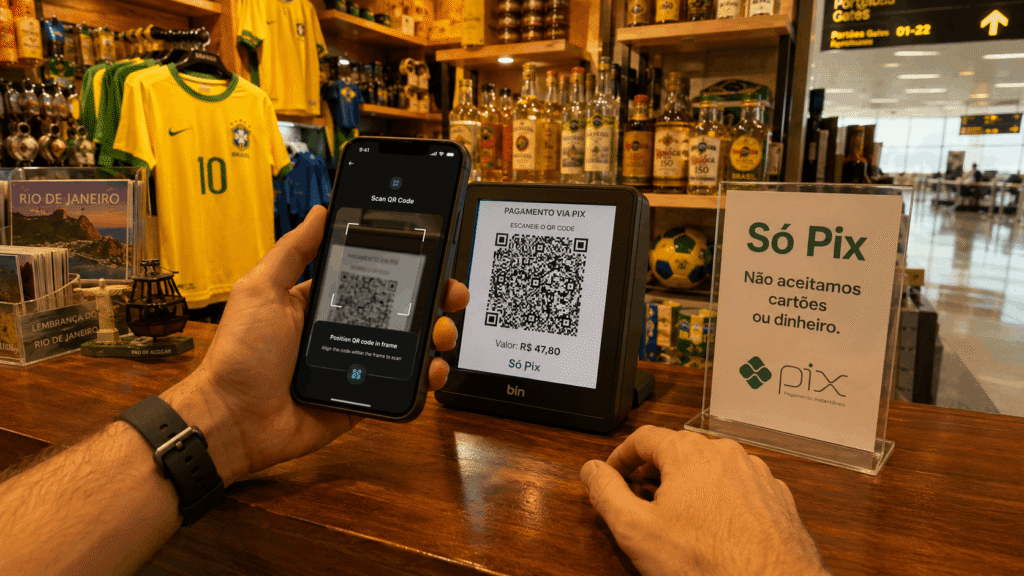
This is useful because Brazil is full of moments where Pix is the easiest answer. A cafe’s card terminal is slow. A small shop prefers Pix. A guide sends a Pix request. A vendor shows a QR code. A local friend says, “Just Pix me.”
That is where WanderWallet fits naturally. It helps foreigners participate in Brazil’s local payment culture without turning a trip into a banking project.
If your real question is how to pay in Brazil without a Brazilian bank account, start here. Use WanderWallet when local Pix-style payments are the smoother route, then keep an international card for places that reliably accept foreign cards.
Option 2: Use An International Card
This is useful, but it should be your second option rather than your only plan.
A Visa or Mastercard debit or credit card will work in many formal businesses in Brazil. Hotels, supermarkets, shopping malls, pharmacies, nicer restaurants, coffee shops, museums, chain stores, and many transport apps usually accept cards.
Cards are useful when:
- You are paying at larger businesses.
- You are booking hotels, flights, or official tickets.
- You are using ride-hailing apps.
- You are shopping in malls or chain stores.
- You want the protections offered by your card issuer.
- You need a familiar payment method on arrival.
But cards have limits. Some foreign cards get declined. Some terminals struggle with certain issuers. Some Brazilian online services expect a CPF or a locally issued card. Some small merchants simply prefer Pix because it is faster and familiar.
Card payments can also hide the real cost through foreign exchange spreads, international transaction fees, ATM fees, or dynamic currency conversion if the terminal offers to charge you in your home currency.
Practical rule: use your card, but do not rely on it as your only way to pay.
Option 3: Get A CPF And Try A Brazilian Bank Account
This is the high-effort path, and it is usually not worth it for normal travel spending.
Some banks and fintechs may, in theory, allow foreigners to open accounts with a CPF and the right documents. In practice, it can take a lot of work: CPF paperwork, identity checks, proof-of-address questions, local phone verification, Portuguese-language support, compliance review, and account approval. Even after doing the work, you may still be rejected or receive an account that does not solve the payment problem you came for.
Only consider this route if you genuinely need:
- A salary account.
- Long-term rent payments.
- Local utility bills.
- Brazilian subscriptions.
- A more permanent financial setup.
- Local financial products beyond travel payments.
For food, taxis, pharmacies, tours, coworking, shopping, and normal travel spending, this is the wrong starting point. It is too much bureaucracy for a problem WanderWallet and a normal international card can usually cover more directly.
A Simple Payment Setup For Brazil
Here is the setup I would recommend to a foreign friend coming to Brazil.
Before You Arrive
- Install WanderWallet and complete verification before you actually need to pay.
- Add funds ahead of time so you are not solving payments while standing at a cashier.
- Bring at least one international debit or credit card with low or no foreign transaction fees for formal merchants.
- Only consider CPF and local banking if you are staying longer and genuinely need local services that require it.
If you are new to the product, start with our guide on how to deposit money into WanderWallet.
During Your Trip
- Use WanderWallet when Pix is the easiest local option.
- Use your card at larger businesses and formal merchants.
- Check the amount before confirming every payment.
- Keep your phone charged, especially on beach days, long tours, and nights out.
- Do not hand your unlocked phone to strangers.
Useful Payment Phrases In Brazil
- “Voce aceita Pix?” – Do you accept Pix?
- “Posso pagar no cartao?” – Can I pay by card?
- “Tem aproximacao?” – Do you have contactless?
- “Pode gerar o QR code?” – Can you generate the QR code?
- “So um segundo, vou conferir o valor.” – One second, I am checking the amount.
These phrases sound simple, but they make payments much smoother.
Where Foreign Cards Are Usually Fine
You can usually rely on cards in places like:
- Hotels.
- Airports.
- Supermarkets.
- Shopping malls.
- Major pharmacies.
- Most formal restaurants.
- Ride-hailing apps.
- Chain coffee shops.
- Tourist attractions with official ticket offices.
Even then, keep a second payment option. Card terminals fail. Banks block transactions. Foreign cards can trigger fraud checks. Brazil is modern, but no payment method is perfect.
Where Pix Can Be A Lifesaver
Pix becomes especially useful with:
- Street food.
- Beach sellers.
- Small cafes.
- Independent guides.
- Local markets.
- WhatsApp sellers.
- Small guesthouses.
- Barbers, salons, and local services.
- Splitting payments with Brazilian friends.
- Last-minute local purchases.
These are exactly the places where “I only have a foreign card” can become annoying. See also our dedicated guide to Pix for foreigners in Brazil.
Is It Safe To Use Pix In Brazil?
Pix is a mainstream Brazilian payment system. But instant payments still require common sense.
Treat a Pix payment as final once you confirm it. The transfer moves quickly.
Before confirming, check:
- The amount.
- The merchant or recipient name.
- The payment description, if shown.
- Whether the person asking you to pay is the actual seller.
- Whether the QR code looks like it belongs to the business.
Do not approve payments under pressure. Do not scan random QR codes from people approaching you on the street. Do not let someone “help” by taking your phone.
Most payment problems are not about the technology. They are about rushing, distraction, or scams.
Do You Still Need A Brazilian Bank Account?
For normal travel spending, no.
For living in Brazil long term, maybe.
A Brazilian bank account can be useful if you are receiving salary, paying rent every month, dealing with utilities, signing contracts, or building a longer-term financial life in Brazil. But if you are visiting, working remotely for a few weeks, staying for a few months, or testing Brazil before deciding what comes next, you probably do not want to start with local banking paperwork.
Start with the practical stack:
- WanderWallet for Pix-style local payments.
- An international card for formal merchants where foreign cards work reliably.
That covers most real-life situations without forcing you to become an expert in Brazilian banking.
Related Guides
- Traveling To Brazil: 10 Things You Should Know – Practical travel context before you arrive.
- Pix For Foreigners In Brazil – A deeper look at how Pix works for visitors.
- Can Wise Do Pix For Foreigners In Brazil? – How Wise compares with Pix-at-checkout needs.
- How To Get A CPF In Brazil As A Foreigner – When CPF is useful and when to skip the bureaucracy.
Final Takeaway
You can get by in Brazil with a foreign card in many formal places. But you will move much more naturally if you can pay the way locals pay.
In Brazil, that means understanding Pix.
For foreigners, the challenge is that Pix usually lives inside the Brazilian banking system. WanderWallet helps bridge that gap by giving travelers, nomads, and expats a practical way to pay through local payment rails in Brazil without opening a Brazilian bank account just to handle everyday purchases.
The setup is simple: bring your card, fund WanderWallet before you need it, and use WanderWallet when Brazil expects Pix.
That is how you pay in Brazil without a Brazilian bank account, and without turning your trip into a paperwork project.
Frequently Asked Questions
Can foreigners use Pix in Brazil?
Yes, but the normal Pix experience is built around Brazilian financial accounts. Many foreigners struggle because they do not have a Brazilian bank account or a local setup. WanderWallet helps travelers and expats access local payment rails for day-to-day spending without opening a Brazilian bank account.
Can I pay in Brazil with Wise, Revolut, or a foreign bank card?
Yes, where cards are accepted. Wise, Revolut, and foreign bank cards can be useful in Brazil, but a card is not the same as Pix. Some merchants accept cards easily, while others prefer Pix.
Do I need a CPF to pay in Brazil?
Not for every payment. You can use many cards and cash without a CPF. But CPF is often requested for local financial services, online purchases, ticketing platforms, phone plans, and account opening.
Is cash enough for Brazil?
Cash is useful as a backup, but it is not the smoothest main payment method. Brazil is highly digital, and Pix is deeply integrated into daily life.
Is WanderWallet a Brazilian bank account?
No. WanderWallet is not meant to replace a full Brazilian bank account for long-term financial life. It is built to help travelers, nomads, and expats pay locally for real-world spending while they are in Latin America.
Ready to Start Paying with Pix?
Download WanderWallet and pay like a local in Brazil.