

Cards Work in Argentina. But I Still Prefer WanderWallet

Hi, I’m Vojta, WanderWallet co-founder. I spent two months living in Buenos Aires right around the time we were launching payments there.
That matters, because this is not a “founder writes marketing copy” situation. I actually lived this.
I started building WanderWallet for myself, for my own needs. But I also wouldn’t use it if it wasn’t actually convenient in day-to-day life. Buenos Aires is the perfect place to test that, because Argentina is one of those countries where paying can either feel effortless, or feel like a constant little tax on your attention.
TL;DR
During two months of living in Buenos Aires, I used WanderWallet for almost all daily payments and barely touched my cards. The reason was currency exchange.
Argentina has multiple dollar rates, and paying via local instant-payment rails consistently gave me a better exchange rate than foreign cards. QR payments were slightly slower than Apple Pay, but came with fewer declines, clearer USD pricing, and easy access to low-fee cash withdrawals.
For those two months, WanderWallet was my default. Groceries, restaurants, taxis, hotels, even hospital bills. Usually, my go-to travel cards are Revolut and Capital One. In Argentina, I used them maybe 5 times combined.
Why? Because Argentina has multiple currency exchange rates, and your foreign card is rarely the best one.
If you’re new to this whole Argentina rate universe, start here.
The Real Reason: Currency Exchange
You probably already know this, but it’s worth saying plainly. In Argentina, the exchange rate is part of the product.
Not your coffee. Not your steak. The exchange rate.
Two people can pay the same ARS price and spend different amounts of USD, depending entirely on how they pay.
WanderWallet uses the dólar cripto exchange rate, which typically tracks the real ‘street’ value of the peso more closely than foreign card rates. That’s typically 3% to 5% better on a given day than what you get through Visa or Mastercard card payments, including so-called tourist rates.
That difference sounds small until you live there.
A Simple Example (From The Day Of Writing)
Rates move daily, so this is just a snapshot, not a promise. But the gap is real:
- WanderWallet rate: 1 USD ≈ 1,499 ARS
- Current card rate: 1 USD ≈ 1,453 ARS
Now take a normal 100,000 ARS grocery run:
- With WanderWallet: about $66.71
- With a card: about $68.82
That’s roughly $2 saved on one boring, everyday purchase.
Do that for two months of living, eating, taxis, coffee, and errands. In my case, it added up to comfortably over $100 saved without changing my behavior at all.
Same coffee. Same groceries. Same life. Different currency exchange outcome.
Argentina Is An Instant-Pay Country (QR Is Just The Most Visible Part)
Here’s the thing many foreigners miss: Argentina isn’t really “cash vs card.”
It’s an instant-pay country.
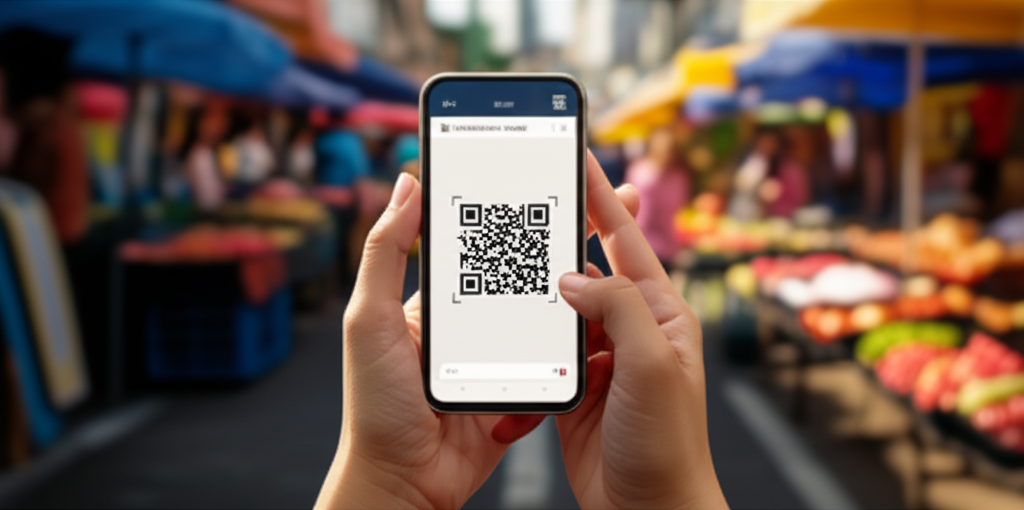
Sometimes that shows up as a QR on the counter. Sometimes it’s just “te paso el alias” and a local transfer. The point isn’t the interface. The point is how merchants expect to get paid.
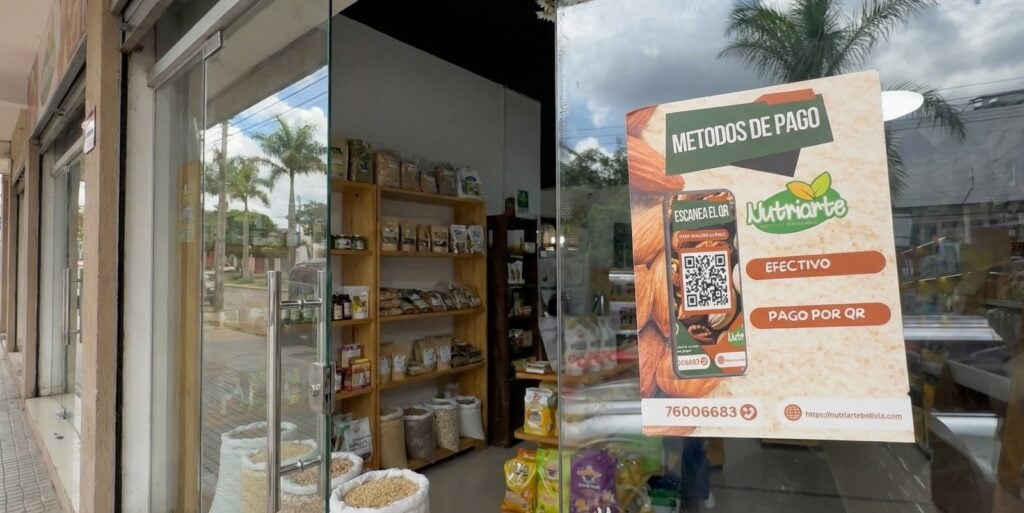
In practice, QR is the most common and obvious interface for that system, especially for everyday merchants. Virtually every place that accepts cards also supports local instant payments, usually via Mercado Pago, MODO, or other compatible networks.
This is why WanderWallet works so smoothly in Buenos Aires. We’re not asking merchants to change anything. We’re letting foreigners participate in how the country already operates.
If you want the practical version, it’s here.
I Paid For Real Life, Not Just “Tourist Stuff”
When fintech founders talk about using their own product, it’s usually a highlight reel.
So here’s mine, unglamorous and real:
- groceries and pharmacies
- coffee shops and restaurants
- InDrive drivers and random local taxis
- hotel bills (Gran Meliá Iguazú, forever in my heart)
- car rentals
- medical bills (Hospital Alemán in Buenos Aires is excellent)
All paid via QR.
Not “I tested it a few times.” This was my default way of paying for two months.
Yes, Cards Are Faster. I Still Prefer This.
Let’s address the obvious objection.
Paying with a card, especially Apple Pay, feels instant. Paying with WanderWallet usually takes around 8 seconds. Sometimes a bit longer if local rails are busy.
That’s real. I’m not going to pretend otherwise.
But if a few extra seconds consistently saves you 3% to 5% on currency exchange, is that really a bad trade?
There’s also something less obvious: instant payments tend to be more reliable than foreign cards in Argentina. Fewer random declines. Fewer terminals that mysteriously stop working. Less standing around while someone reboots a machine.
And WanderWallet shows you the full USD cost before you confirm. No surprises later.
The Underrated Benefit: Getting Cash Without Hating It
Even with a fully topped up WanderWallet, you still sometimes need cash in Argentina. Tips, small vendors, “cash discount,” the occasional place that just wants paper. You know the deal.
The classic options are:
- Western Union (works, but it’s a chore)
- cuevas (works, but… it’s a lifestyle)
- foreign debit card at an ATM (works, but usually expensive)
What a lot of people don’t know is that there’s now an ATM network in Argentina that supports QR withdrawals, called RedATM.
From my experience:
- Large withdrawals are possible. 500,000 ARS per withdrawal is not unusual.
- Fees are low and transparent, often around $1-$3.
- You still get the same WanderWallet currency exchange rate, which is always stronger than foreign card ATM withdrawals.
Our guide, including a map of supported ATMs, is here.
Yes, Charles Schwab reimburses ATM fees abroad. That’s great. But fee reimbursement doesn’t fix a weak exchange rate or low withdrawal limits. In Argentina, the rate matters more than the fee.
The Subtle Part That Makes This Feel Better
You stop thinking in pesos.
Argentina has inflation. Prices move. Your brain gets tired.
With WanderWallet, your balance is in USD, and every payment shows you the real USD cost before you confirm. You’re not mentally converting prices all day, and you’re not sitting on a pile of pesos that quietly loses value.
That alone made daily life feel calmer.
How I Actually Fund WanderWallet
During those two months, I barely used my cards. Not because Revolut is bad. Revolut is great.
But with WanderWallet, I could:
- top up in EUR or USD via bank transfer
- deposit directly from Revolut
- or send USDC on Polygon when I wanted speed
That turns WanderWallet into something boring and reliable, not “a crypto experiment.”
The full funding guide is here.
My routine in Buenos Aires was simple: Revolut for funding. WanderWallet for paying locally.
So Why Do I Use WanderWallet Instead Of Cards In Argentina?
Because Argentina already runs on instant payments.
WanderWallet lets me participate in that system as a foreigner, with better currency exchange than cards, fewer declines, and a clean way to get cash when I need it.
Yes, it’s a few seconds slower than tapping my phone.
But it’s also the first time living abroad has felt financially normal.
That’s the whole point.
Frequently Asked Questions
Do I need an Argentine bank account to pay with QR?
No. WanderWallet lets foreigners pay using local QR payments without opening a local bank account.
Is paying with QR slower than using a card?
Usually, yes. QR payments take a few seconds longer than tapping a card, but often come with better currency exchange and fewer declines.
What exchange rate does WanderWallet use in Argentina?
WanderWallet uses the dólar cripto exchange rate, which typically reflects the real market value of the peso more closely than foreign card rates.
What if a merchant only accepts cash?
In Argentina, WanderWallet can also be used to initiate QR-based cash-outs through RedATM, a third-party ATM network. That can be useful when cash is required, but the actual cash dispense is handled by the ATM operator, not by WanderWallet.
Ready to Start Paying with QRs in Argentina?
Download WanderWallet and pay like a local.


About the Author

Vojta Pohunek
Vojta is the cofounder and CEO of WanderWallet. He is from Prague and has lived in Latin America for three years, where he focuses on making everyday payments simpler for anyone moving between countries.