

How WanderWallet Moves Your Money (and Why Your Balance Stays in Dollars)
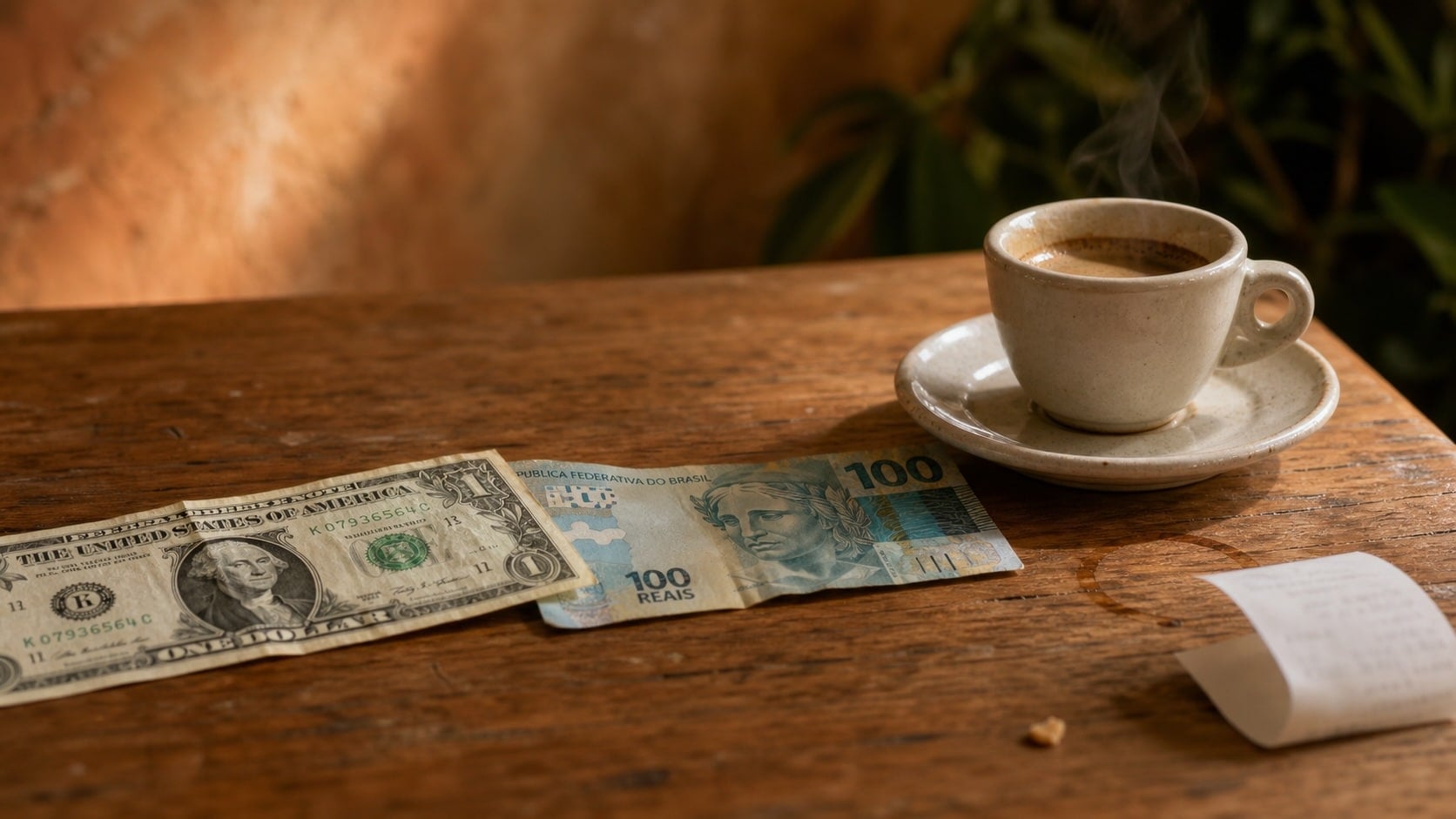
You open WanderWallet, scan a QR code at a cafe in La Paz, confirm, and the coffee is paid for in a couple seconds. It feels like nothing happened. Something did happen, and this guide walks you through exactly what, because you should never have to take a payment app’s word for where your money goes.
The short version: you fund your wallet in dollars or euros, your balance is held as digital dollars that only you control, and when you pay, that value settles on the local rail the merchant already uses, in their currency, instantly. You see the exchange rate and the fee before you confirm. Nothing is hidden in a spread.
TL;DR
You fund WanderWallet in dollars or euros. Your balance is held as USDC, a dollar-backed digital dollar that only you control. When you pay, it settles on the local rail (Pix, QR, Bre-B) in local currency, at a rate you see before you confirm. It is a payments app, not a crypto app, and you never have to touch or manage cryptocurrency.
The One Promise Behind Everything
Before the mechanics, the part that matters most: every time you pay, WanderWallet shows you the amount in the local currency, the exact cost in your own currency, and any fee, before you tap confirm. Your balance is always in dollars. You are never holding something that can swing in value overnight, and you are never guessing what a payment really cost. That transparency is the whole point, and the plumbing below is what makes it possible.
Follow the Money: What Actually Happens
Here is the full journey of a dollar through WanderWallet, start to finish.
- You top up. You fund your wallet by bank transfer in dollars (ACH) or euros (SEPA), or with USDC. Whichever you choose, the result is the same: a balance in digital dollars. (Here are the exact ways to top up.)
- Your balance is held as dollar-backed digital dollars. Specifically USDC, a stablecoin issued by Circle that is designed to stay worth one US dollar. It sits in a wallet that only you control.
- You pay a local merchant. When you scan a QR in Bolivia, pay Pix in Brazil, or send a Bre-B transfer in Colombia, your dollars are converted and settled on that local rail, in local currency, at the rate you saw before confirming.
- The merchant gets a normal local payment. They receive reais, pesos, or bolivianos exactly as if a local paid them. They never know or care what happened on your side.
The digital dollar is the middle leg, the dollar in transit. You fund in dollars, you see dollars in your balance, and the merchant gets local currency. The rail in between is just how the value crosses the border quickly and cheaply.
Why a Stablecoin Rail, and Not a Regular Bank Transfer
This is the boring but honest part, and it is the reason WanderWallet can do what it does.
Moving money across borders the traditional way is slow and expensive. An international bank wire does not actually send your money in one hop. It passes through a chain of correspondent banks, each taking time and a cut, and it pauses on weekends, holidays, and outside banking hours. That is why a wire can take days and why the fees and exchange spreads pile up quietly along the way.
A dollar-backed stablecoin moves value directly on a shared ledger, in seconds, at any hour, without that chain of middlemen. Independent analyses of the two approaches consistently show stablecoin settlement is dramatically faster and cheaper than traditional cross-border wires. We are not going to quote you a magic savings number, because the real figure depends on your bank, your route, and the day. The point is structural: because the rail in the middle is cheap and instant, we can show you a clear rate and a small, flat fee instead of burying our costs inside a worse exchange rate. Hidden spreads are how a lot of the payments world makes money. This is how we avoid needing to.
If you want the bigger picture on why no payment is ever truly free and who actually pays for the rails you use, we wrote a whole piece on it: Free Payments Aren’t Free: Who Pays for Pix, Bre-B and Cards?
Is My Money Safe While It Sits There?
Fair question, and the honest answer has real substance to it.
Your balance is held in USDC, issued by Circle. Each USDC is designed to be backed one to one by a US dollar of reserves, held as cash and short-dated US government debt. Circle publishes regular third-party attestations of those reserves, so the backing is not something you have to take on faith.
The more important part is that WanderWallet does not hold your money. You do. Through Circle’s multi-party computation technology, your digital dollars sit in a wallet only you can access. We cannot freeze it, lock you out, or spend it. If WanderWallet disappeared tomorrow, your balance would still be exactly where it is, and still yours. That is called self-custody, and it is a genuine difference from most payment apps, where the company holds your money and you wait on them if anything goes wrong.
What this is not is a bank account. There is no FDIC insurance, because your funds are not sitting in a bank in the first place, they are digital dollars in a wallet you control. That trade gives you more direct control and transparency in exchange for a different kind of protection. Our honest advice, the same as on our security and trust page, is to treat WanderWallet as spending money for your trip, not as a place to park your life savings.
Why Some Deposit Options Are Not Available Everywhere
If you have tried to fund your wallet and found that a method is not offered in your state or country, this section is for you. It is not a bug, and it is not you doing anything wrong.
The deposit methods that move dollars into your wallet run on regulated financial rails, and some of those rails depend on outside providers whose services are licensed differently from one place to another. A few jurisdictions have their own specific rules for services connected to digital dollars. New York State, for example, runs a distinct licensing regime for virtual-currency activity, and Japan has its own framework overseen by its financial regulator. In places like these, providers across the industry often limit which services they offer rather than operate outside the local rules.
For WanderWallet, that means residents of a small number of places may see fewer deposit options than everyone else. We would genuinely rather offer you one fewer way to top up than route your money through a rail that is not properly licensed where you live. We are working to widen availability responsibly as the rules and our partners allow. If a deposit method is not showing up for you and you are not sure why, email us at support@wanderwallet.io and we will tell you what is and is not available in your location.
The Bottom Line
WanderWallet is a payments app. You fund it in dollars, your balance stays in dollars that only you control, and when you pay, that value settles on the local rail the merchant already uses, at a rate you see up front. The digital-dollar rail underneath is not something you have to think about or manage. It is just the fastest, cheapest way we found to get your money across a border and into a merchant’s hands the way a local would pay them, with nothing hidden in the middle.
Frequently Asked Questions
Is WanderWallet a cryptocurrency app?
No. WanderWallet is a payments app that lets you pay local rails like Pix in Brazil, QR in Bolivia and Argentina, and Bre-B in Colombia, without a local bank account. It uses a dollar-backed stablecoin behind the scenes to move your money quickly and cheaply, but your balance is always in dollars, you always see the rate before you pay, and you never have to buy, hold, or manage any cryptocurrency.
Where is my money held?
In USDC, a dollar-backed digital dollar issued by Circle, in a wallet that only you control. WanderWallet never takes custody of your balance and cannot freeze or spend it.
What is USDC backed by?
Each USDC is designed to be backed one to one by a US dollar of reserves, held as cash and short-dated US government debt. Circle publishes regular third-party attestations of those reserves.
Do I need to understand stablecoins to use WanderWallet?
No. You fund in dollars or euros, you see your balance in dollars, and you pay in local currency. The digital-dollar rail works in the background and you never touch it directly.
Why can't I use a deposit method that other people can?
A few states and countries have specific licensing rules for services connected to digital dollars, and some deposit rails depend on providers whose availability is limited in those places. Residents of a small number of locations may see fewer deposit options. Email support@wanderwallet.io and we will tell you what is available where you are.
Is my balance insured by the FDIC?
No, because your funds are not held in a bank. They are digital dollars in a wallet you control. That gives you more direct control and transparency, but it is a different kind of protection than a bank deposit, so we recommend using WanderWallet for spending money rather than long-term savings.
Ready to Start Paying with QRs or Pix?
Download WanderWallet and pay like a local.


About the Author

Vojta Pohunek
Vojta is the cofounder and CEO of WanderWallet. He is from Prague and has lived in Latin America for three years, where he focuses on making everyday payments simpler for anyone moving between countries.