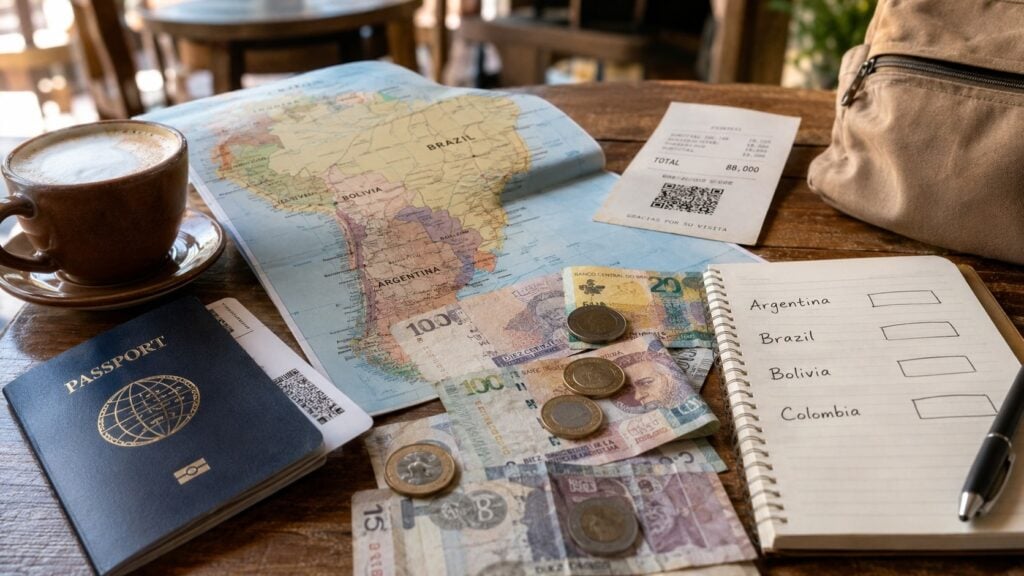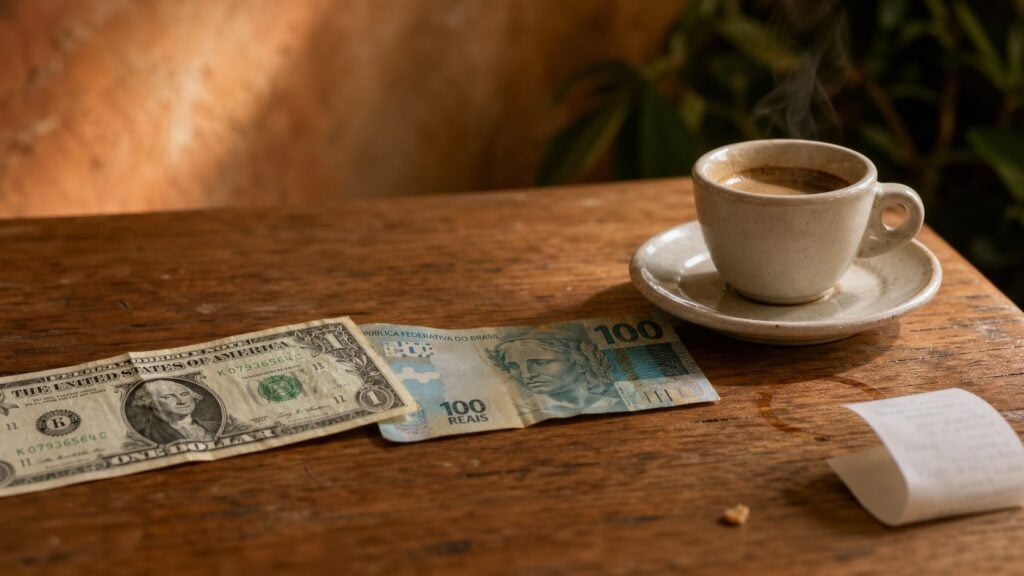


Free Payments Aren’t Free: Who Pays for Pix, Bre-B and Cards?
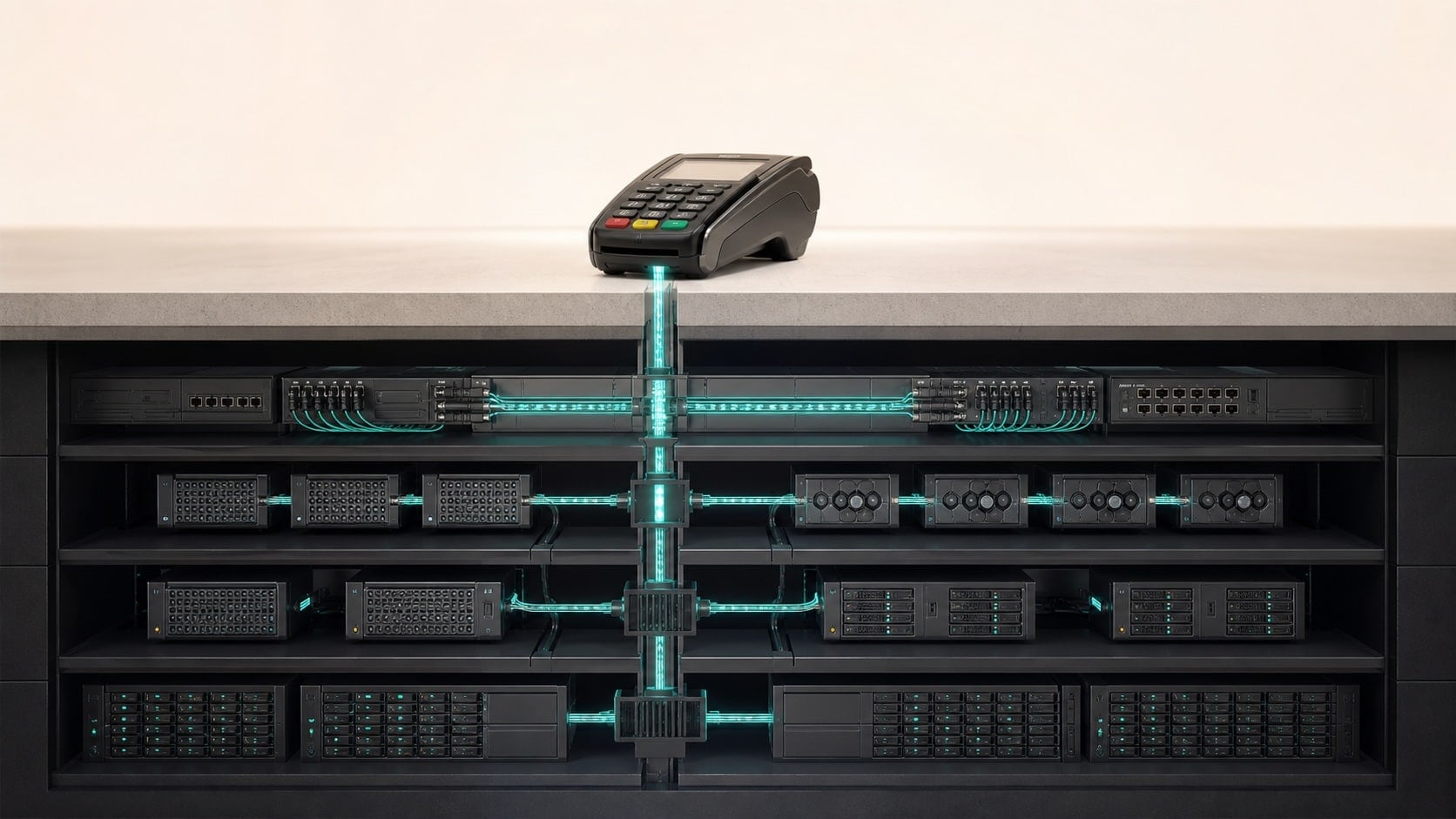
You tap your card, scan a Pix code, or send a Bre-B transfer. The payment arrives in seconds, and it feels as if almost nothing happened.
Something happened. Digital payments have costs because moving money requires more than sending data. The payment must be authorized, funded, secured, converted when currencies are involved, settled between institutions, reconciled, and supported when something goes wrong.
When a payment appears free, those costs have not disappeared. Someone else is paying them, recovering them elsewhere, or deliberately absorbing them. That does not make every fee fair. It means the useful question is not simply “Why is there a fee?” It is: who pays, how visible is the price, and is it reasonable?
TL;DR
- Moving money is not just moving data. Payment systems have infrastructure, settlement, liquidity, fraud, compliance, support, and operational costs.
- “Free to the user” does not mean free to the system. A merchant, bank, payment provider, government, or another product may be covering the cost.
- Real costs are not a blank check. Card-network pricing, hidden exchange-rate markups, and surprise fees can still be excessive.
- WanderWallet starts with a provider exchange rate, adds a 1% conversion fee, and charges a fixed $0.20. The full rate, fee, and payment amount are shown before confirmation.
Why Do Payments Have Fees?
A payment instruction can cross the internet almost instantly. But the instruction is not the money.
Before a payment is complete, several jobs may need to happen:
- Authorization: Does the payer have the money and permission to spend it?
- Processing: Can the systems involved understand and route the payment correctly?
- Fraud and compliance: Is the transaction suspicious, stolen, sanctioned, or otherwise prohibited?
- Settlement: When and how do the financial institutions exchange the actual funds?
- Liquidity: Is enough of the right currency available in the right place at the right time?
- Reconciliation: Do the records of the payer, merchant, provider, and bank all match?
- Support and recovery: What happens when a payment fails, is duplicated, or needs to be refunded?
The World Bank’s framework for measuring retail-payment costs includes authorization, processing, infrastructure, clearing, settlement, fraud prevention, customer support, outsourced services, and the cost of holding funds. Not every payment rail incurs every cost in the same way. But none of the major rails operates on good intentions and server dust.
Cash is not free either. Notes and coins must be produced, counted, transported, stored, insured, checked for counterfeits, and protected from theft. The cost is simply less visible when you hand a note across a counter.
Who Pays When a Payment Looks Free?
“Free” normally describes the price shown to one participant. It does not describe the economics of the whole system.
| Payment Method | What The Payer May See | Where The Cost Can Appear |
|---|---|---|
| Card | No checkout fee | Merchant acceptance fees, cardholder fees, interchange, network fees, acquiring costs, or FX |
| Pix | Usually free for an individual | Participant charges, provider costs, business pricing, or wider bank economics |
| Bre-B | Person-to-person transfers commonly offered free | Financial-institution and payment-system pricing, with merchant tariffs varying |
| Cash | No line-item fee at checkout | Handling, transport, security, theft, insurance, and public infrastructure |
| International Wallet | FX rate, percentage fee, fixed fee, or a combination | Currency conversion, liquidity, provider routing, local settlement, on-chain network fees, compliance, and support |
This is why two statements can both be true: a payment can be free for the person pressing “Pay,” and the payment can still cost money to provide.
A 2025 BIS working paper on fast-payment pricing reached the same basic conclusion in its model: if fees are zero at every level, the system needs an external subsidy or another source of revenue to remain sustainable. That is the paper’s finding, not a rule that says any particular fee is justified.
Where Do Card Fees Actually Go?
Cards are useful because they make a complicated chain feel like one tap. Underneath that tap, the merchant usually works with an acquirer or payment processor, the customer has an issuing bank, and a card network connects the two sides.
A merchant’s card-acceptance price can contain three broad layers:
- Interchange: a wholesale fee that generally flows from the merchant’s acquiring side toward the cardholder’s issuing bank.
- Scheme or network fees: charges paid to the card network for the services it provides.
- Acquirer or processor costs and margin: the price of giving the merchant card acceptance, terminals, routing, reporting, and related services.
The card network does not simply keep the entire merchant fee. The Reserve Bank of Australia explains these layers and notes that rewards cards tend to carry higher interchange. That helps explain why a “free” flight, cashback reward, or purchase protection is not necessarily free to the payment system.
But this is where the distinction between cost and pricing matters. Fraud protection, dispute handling, uptime, certifications, and settlement all cost money. That does not prove that every charge is competitive or proportionate. In 2025, the UK’s Payment Systems Regulator reported substantial real increases in Mastercard and Visa scheme and processing fees and raised concerns about weak competitive pressure and poor pricing information in that market.
“Payments cost money” explains why a price can exist. It does not prove that any particular price is fair.
Is Pix Really Free?
For most Brazilian individuals, yes – Pix is generally free to send and receive under Banco Central do Brasil’s rules. There are exceptions, including some transactions made through in-person or telephone channels and some receipts that indicate commercial activity. Businesses may also be charged by their payment provider. The official Pix FAQ explains the current user-level rules.
But Pix is not free to operate.
Banco Central do Brasil runs the central infrastructure behind Pix, including the Instant Payments System, or SPI. Its 2025 SPI annual report says a direct participant receiving a settled Pix pays R$0.01 for every ten transactions. The central bank says this tariff exists exclusively to recover the technology costs of operating the system.
That amount is tiny because Pix has scale and because its public design prioritizes broad adoption. But tiny is not zero. The system still needs infrastructure, security, settlement accounts, participant integrations, fraud controls, and support inside the banks and payment companies that connect to it.
So the accurate answer is: Pix is usually free for Brazilian individuals at the point of use. The infrastructure and services around it still have costs.
If you are visiting Brazil, our guide to paying in Brazil without a Brazilian bank account explains why accessing a domestic Pix payment from foreign money is a different job from one Brazilian account sending BRL to another.
Is Bre-B Free in Colombia?
Bre-B shows the same difference between the price seen by a user and the economics underneath.
Banco de la República’s 2026 technical report says person-to-person Bre-B transfers have so far been offered without charge to end users. It also describes lower participant pricing and the removal of some access charges that helped make that possible.
However, the central bank’s current Bre-B fee guidance is clear: each financial institution defines the tariffs it applies to its customers. Merchant pricing can also vary by provider and merchant size.
We found no current rule requiring Bre-B to remain free for a fixed introductory period. It is better to say what the evidence supports: person-to-person transfers have commonly been offered free, while institutions retain responsibility for customer pricing.
For travelers, there is another distinction. Bre-B is a domestic Colombian payment system. A Colombian sending COP from a Colombian account is not using the same complete service as a visitor starting with USD, EUR, or USDC and asking a wallet to deliver COP through Bre-B.
Why Do International Payments Cost More?
Domestic instant payments begin with a major advantage: the payer already has local money inside the local financial system.
A Brazilian Pix user normally starts with BRL in a Brazilian account. A Colombian Bre-B user normally starts with COP in a Colombian account. A traveler may start with USD, EUR, or USDC, without a local account, and still expect the merchant to receive local currency in seconds.
Connecting those two worlds can require:
- funding and securing the user’s balance;
- identity, sanctions, and transaction monitoring;
- moving value between wallets or providers;
- quoting and converting currencies;
- maintaining local-currency liquidity;
- routing the payment to a local settlement partner;
- reconciling the on-chain and local-currency sides; and
- handling failures, refunds, and support.
Pix or Bre-B may be the final rail. They are not necessarily the whole journey.
Low-Cost On-Chain Settlement Does Not Mean Free Payments
WanderWallet uses USDC on Polygon as part of its payment plumbing. Polygon is designed to make on-chain transactions inexpensive, but every on-chain transaction still consumes network resources and pays gas. Polygon’s transaction documentation explains that each transaction pays a network-determined base fee.
That network fee is normally small. It would be misleading to pretend that Polygon gas alone explains a $0.20 charge. It is one fixed cost among provider charges, transaction processing, monitoring, reconciliation, and support.
Where Do Payment Fees Become Unfair?
Real infrastructure costs are not permission to charge anything.
A fair payment price should be visible, understandable, and connected to the service being delivered. An unfair price is often difficult to see until after the payment, difficult to compare, or presented as “free” while being recovered through a poor exchange rate.
Dynamic currency conversion is a familiar example. An ATM or card terminal offers to charge you in your home currency, which feels reassuring, but the conversion can include its own exchange rate and additional fees. Visa’s consumer explanation of DCC confirms that the home-currency option includes a conversion rate and additional fees.
Other warning signs include:
- a “zero fee” transfer with no clear exchange rate;
- a fee disclosed only on the final screen or after the transaction;
- several providers deducting money before it reaches the recipient;
- pricing that is impossible to compare with a reference rate; and
- a high-cost rail being used when a reliable lower-cost rail is available.
The fight is not fees versus free. It is clear, proportionate pricing versus hidden or excessive pricing.
What Does WanderWallet Charge?
This argument only works if we explain our own pricing just as plainly.
| Pricing Layer | What It Means |
|---|---|
| Provider exchange rate | The starting FX quote WanderWallet receives. The provider’s own conversion pricing is already reflected in this rate. |
| 1% conversion fee | WanderWallet adds 1% of the local-currency equivalent. This is WanderWallet’s revenue from the transaction. |
| $0.20 fixed fee | This helps cover fixed provider charges, Polygon network fees, and the operational cost of processing small payments. Any remainder contributes to running the service. |
Because the provider rate already contains its own conversion economics, the final WanderWallet quote can sometimes sit around 1.4% or 1.5% away from a reference mid-market rate observed at the same moment. That does not mean the provider component is always 0.4% or 0.5%. The difference varies by provider, currency route, liquidity, and timing. FX markets also move continuously, so any comparison needs a timestamp and a consistent reference.
The fixed fee matters more on a small purchase. On a payment worth roughly $10, $0.20 represents 2%. On $100, it represents 0.2%. The 1% conversion fee remains proportional, while the fixed fee helps make low-value payments economically possible when provider and processing costs do not shrink with the size of the coffee.
WanderWallet’s current terms list the 1% conversion fee and $0.20 fixed network fee. The app displays the exchange rate, applicable fee, and final payment amount before you authorize the transaction.
Transparency does not mean “no markup.” WanderWallet has a markup and earns revenue. Transparency means showing the customer the quote before confirmation and being honest about how the business makes money.
How Can You Tell if a Payment Fee Is Fair?
Before comparing two payment methods, ignore the marketing labels for a moment. Compare the complete outcome.
- Check the final amount you pay. Include fixed fees, percentage fees, taxes, and funding costs.
- Check the amount the recipient gets. Intermediaries may deduct charges along the way.
- Compare the exchange rate. Use a reference rate from approximately the same time, not yesterday’s closing rate.
- Understand the protection. Cards may include chargeback rights that an irreversible instant payment does not.
- Look at the complete job. A domestic transfer and a cross-border payment into a local rail are not equivalent services.
- Ask whether a cheaper reliable rail exists. Technology and competition should push payment costs down over time.
A visible fee can be cheaper than a “free” transfer with a weak exchange rate. A slightly more expensive card can be worthwhile for a hotel deposit or a purchase where dispute protection matters. There is no universally best rail. There is only the best complete outcome for the payment you are making.
Related Guides
- Pix vs Credit Cards in Brazil – Compare acceptance, transparency, speed, and consumer protection.
- How to Pay in Brazil Without a Brazilian Bank Account – See why local Pix access is different for a traveler.
- What Is Bre-B? – Understand Colombia’s interoperable instant-payment system.
- Cards Work in Argentina. But I Still Prefer WanderWallet – A firsthand look at rates, tradeoffs, and everyday local payments.
- How to Deposit Money Into WanderWallet – Learn how bank transfers, Revolut, and USDC connect to your balance.
Sources
- World Bank: Retail Payments – A Practical Guide for Measuring Retail Payment Costs
- Reserve Bank of Australia: The Cost of Card Payments for Merchants
- UK Payment Systems Regulator: Scheme and Processing Fees Market Review
- Banco Central do Brasil: Pix FAQ
- Banco Central do Brasil: SPI Annual Report 2025
- Banco de la República: Bre-B – Design, Implementation and Perspectives
- Banco de la República: Bre-B FAQ
- BIS Working Paper: Pricing in Fast Payments
- Polygon Documentation: Transaction Fees and EIP-1559
- Visa: Dynamic Currency Conversion
Bottom Line
Free is a user experience, not a description of the infrastructure.
Cards, cash, Pix, Bre-B, bank transfers, FX providers, and on-chain networks all distribute their costs differently. Sometimes the customer pays. Sometimes the merchant pays. Sometimes an institution absorbs the cost to encourage adoption. Sometimes the price is hidden inside an exchange rate or another product.
The existence of real payment costs does not make every fee good. It gives us a better standard: fees should be visible, proportionate, competitive, and reduced when better technology or scale makes that possible.
That is the job WanderWallet is trying to do: connect travelers to efficient local payment rails, show the rate and fee before confirmation, and keep compressing the cost of paying like a local.
Frequently Asked Questions
Why do digital payments have fees?
Digital payments have fees because money must be authorized, secured, processed, settled, reconciled, and supported. Even when the payer sees no fee, a merchant, bank, payment provider, government, or another product may be covering or absorbing those costs.
Is Pix really free in Brazil?
Pix is generally free for Brazilian individuals to send and receive, subject to limited exceptions. Businesses may be charged, and participating institutions still have infrastructure, fraud, integration, liquidity, and operating costs.
Is Bre-B free in Colombia?
Person-to-person Bre-B transfers have so far commonly been offered without charge to end users. However, Banco de la República says each financial institution defines the tariffs it applies to customers, and merchant pricing can vary.
Why does an international payment cost more than a domestic transfer?
A domestic transfer starts with local money inside the local financial system. An international payment may also require currency conversion, local liquidity, multiple providers, compliance checks, cross-system reconciliation, and local settlement.
Can a zero-fee transfer contain an exchange-rate markup?
Yes. A provider can advertise no transfer fee while earning revenue through the exchange rate. Compare the final amount paid and received against a reference rate from the same time, rather than looking only for a line labeled fee.
Why does WanderWallet charge 1% plus $0.20 if Pix or Bre-B can be free?
Pix and Bre-B are domestic payment rails, while WanderWallet connects a traveler’s USD, EUR, or USDC to local-currency settlement. WanderWallet adds a 1% conversion fee as its revenue. The fixed $0.20 helps cover provider charges, Polygon network fees, and the operational cost of processing small payments. The rate, fee, and final amount are shown before confirmation.
Ready to Start Paying with QRs or Pix?
Download WanderWallet and pay like a local.


About the Author

Vojta Pohunek
Vojta is the cofounder and CEO of WanderWallet. He is from Prague and has lived in Latin America for three years, where he focuses on making everyday payments simpler for anyone moving between countries.