

How to Save Up to 30% on Domestic Flights in Bolivia (A March 2026 Case Study)
Editor’s Note (Updated June 2026): This Is a Dated March 2026 Case Study
The booking test below was run in March 2026, during Bolivia’s old fixed-rate era, so the exact figures and the 6.96-vs-9.0 exchange-rate explanation reflect that moment. In late June 2026 Bolivia floated its currency, which compressed that exchange-rate gap.
The practical takeaway still holds, and it is worth being precise about why. Bolivian airlines like BoA often price the local (boliviano) checkout well below the international (foreign-card) checkout for the same flight. That is mostly a local-versus-foreign pricing gap, not just an exchange-rate effect, so paying the local checkout by QR can still be significantly cheaper than booking through the foreign-card path. Always compare the final local total against the international total before you pay. For the current rate picture, read Bolivia’s Parallel Dollar Is Changing.
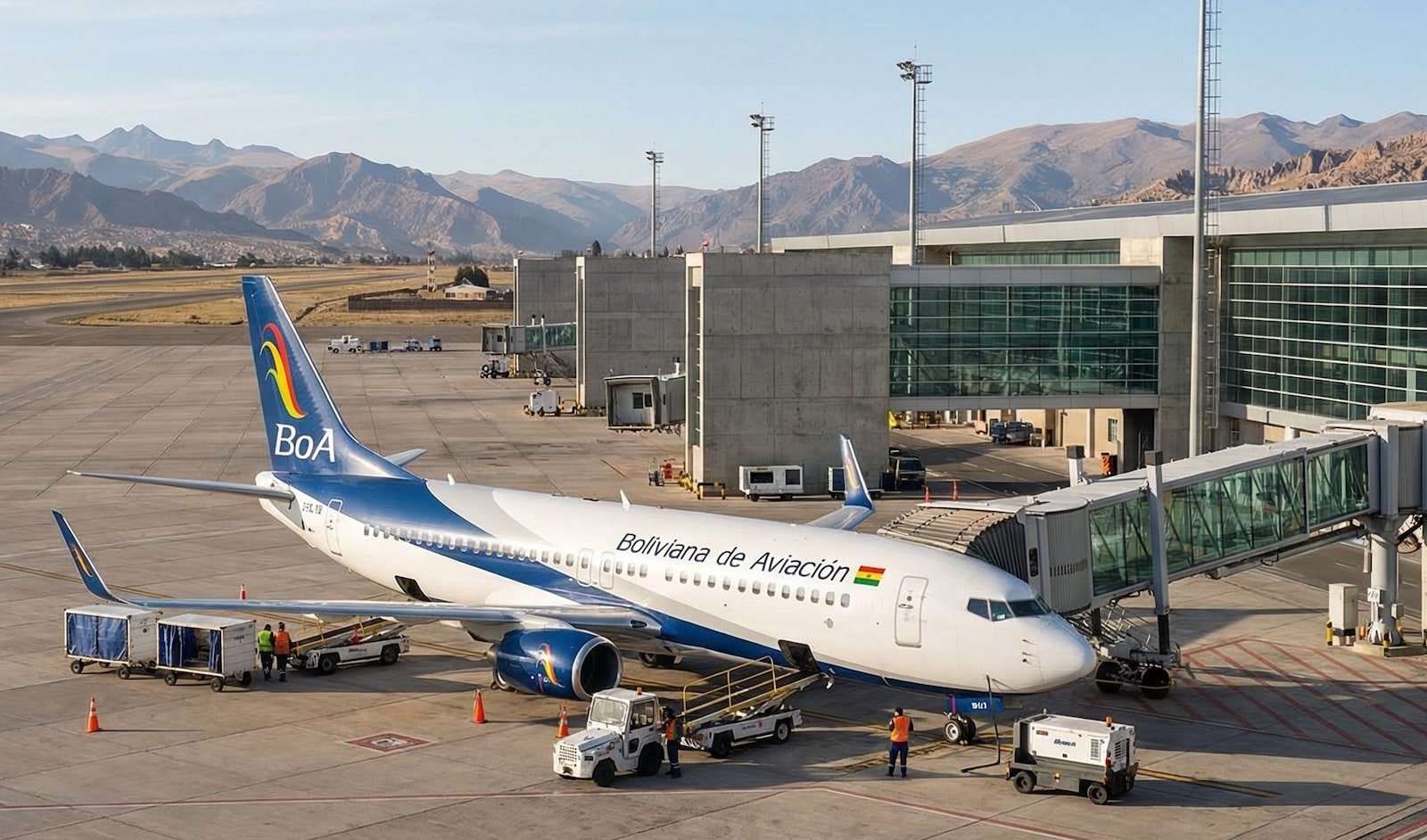
Domestic flights in Bolivia can be much more expensive when you book through the foreign checkout path. In a real test, the exact same itinerary was $165.75 cheaper on the local path. Here’s why that happens, and how travelers can avoid overpaying.
TL;DR
Real booking test: $445.60 (international flow) vs 2,488 BOB / $279.85 (Bolivia-local flow) for the same BoA round trip. Savings in this case: $165.75 (~37%).
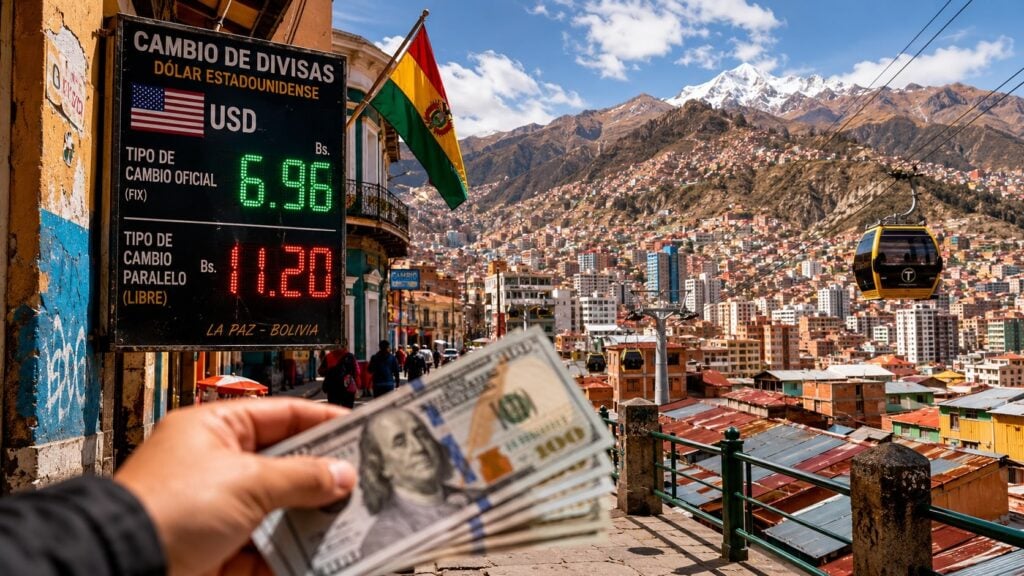
The mechanism is the key: cards and ATMs use Bolivia’s official 6.96 BOB per 1 USD rate, while local QR rails track the market-real rate (often around 9.0 BOB per USD). That gap usually means about 25-30% more purchasing power when you can pay through local rails.
A Real Test: Same Flight, Two Very Different Prices
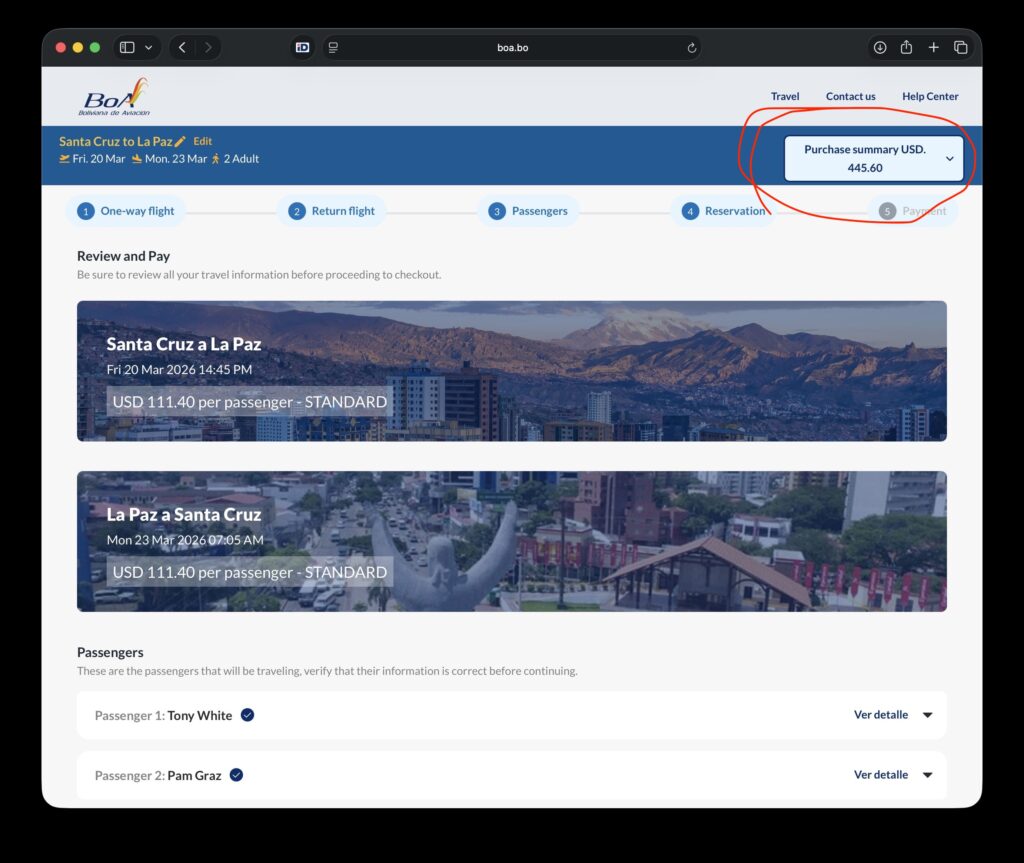
- Route: Santa Cruz → La Paz → Santa Cruz
- Dates: March 20 outbound, March 23 return
- Passengers: 2
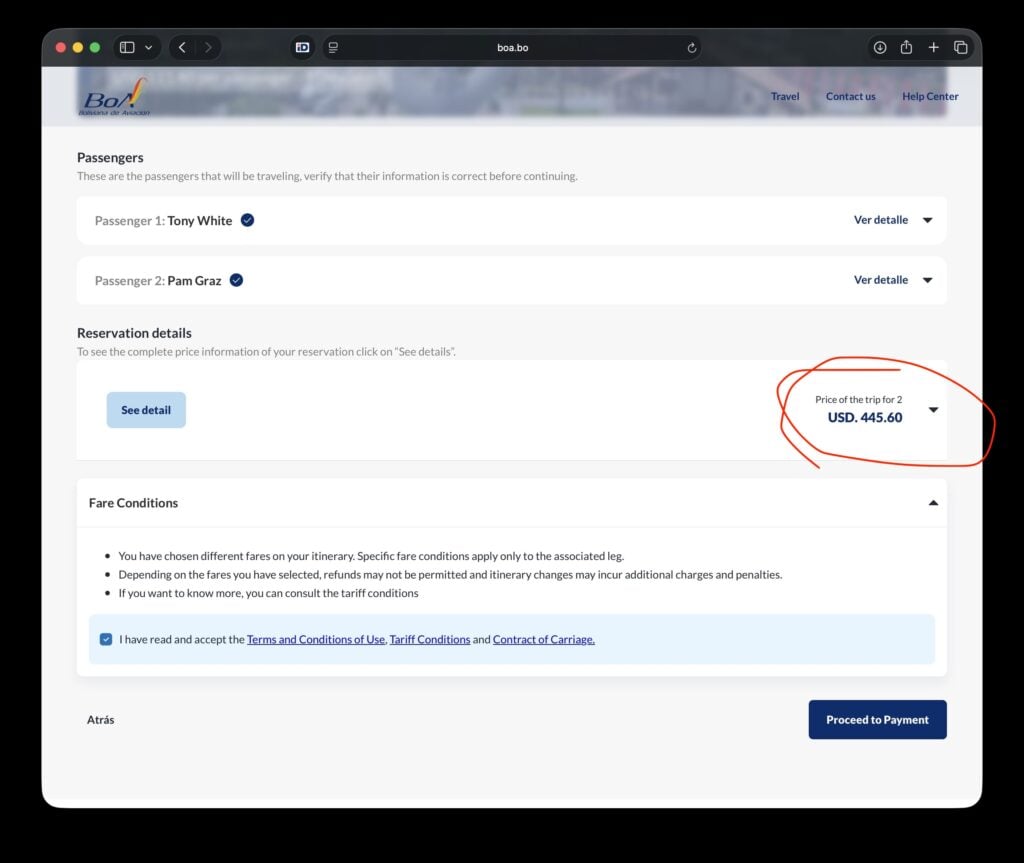
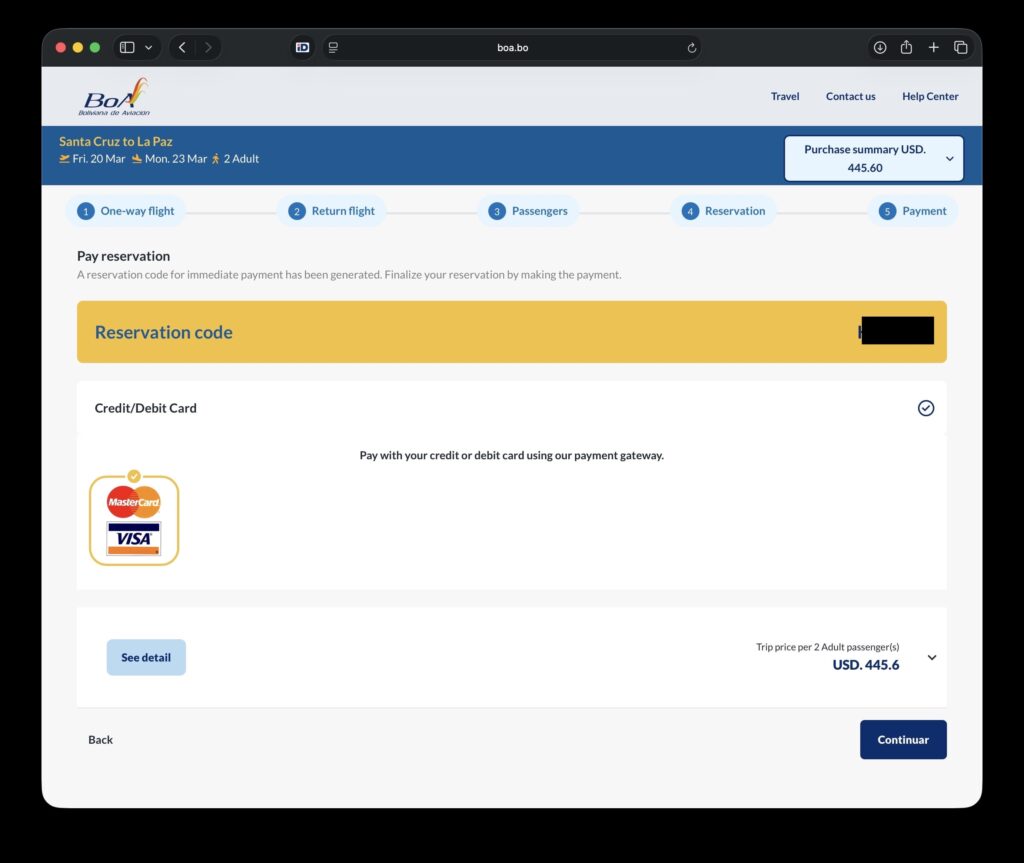
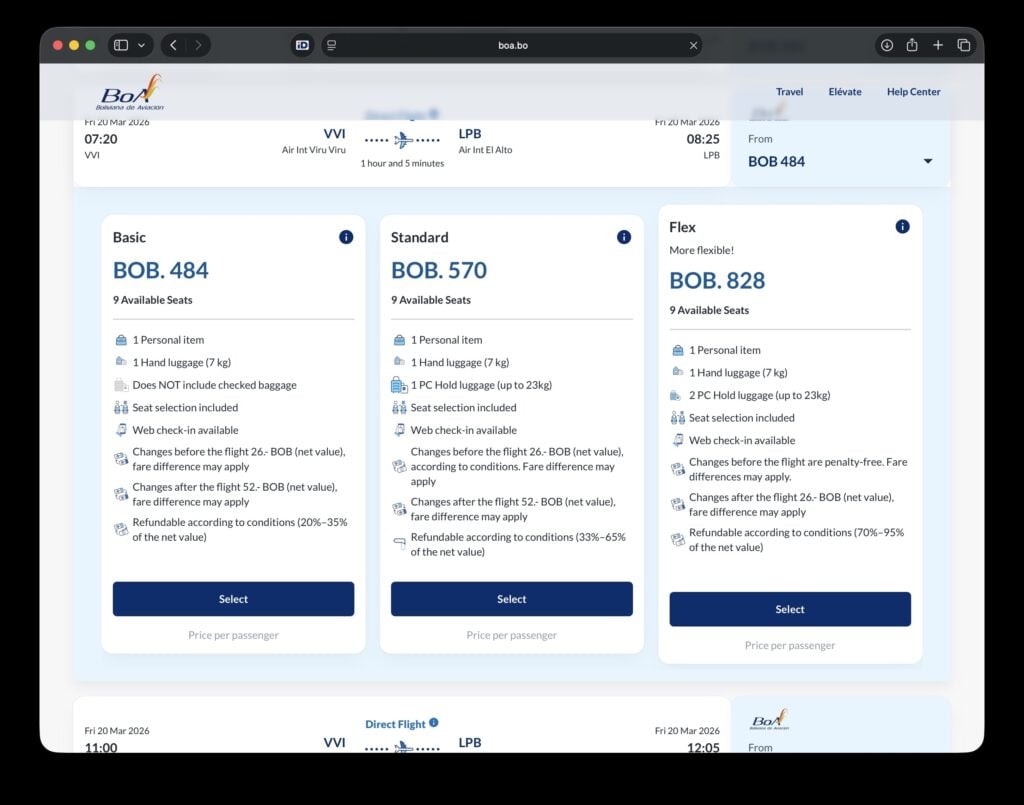
I compared final totals with all variables held constant (same route, dates, passenger count, and fare conditions).
Price Comparison for the Same Itinerary
International checkout path: $445.60
Bolivia-local checkout path: 2,488 BOB ($279.85)
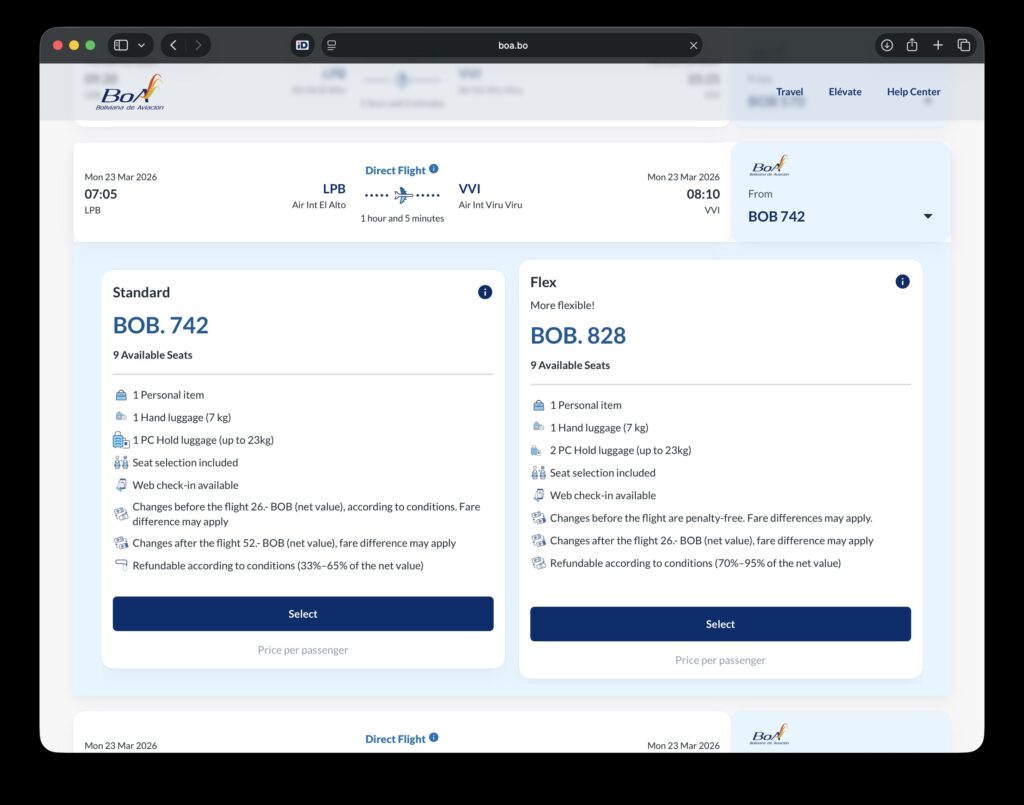
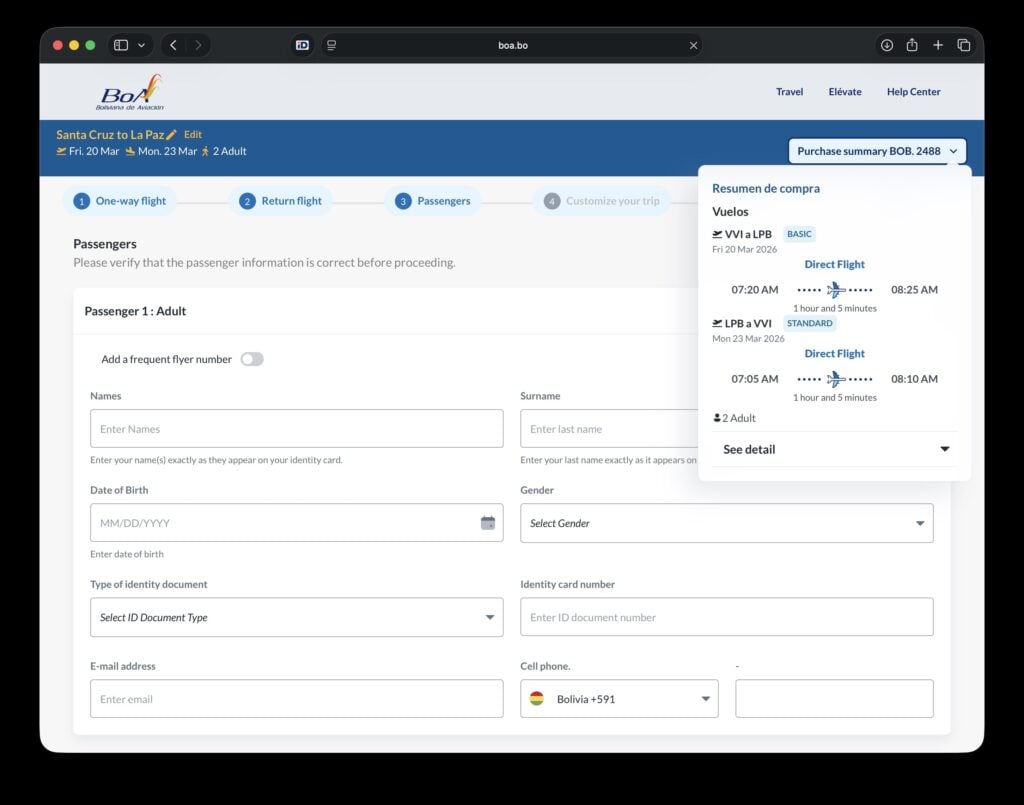
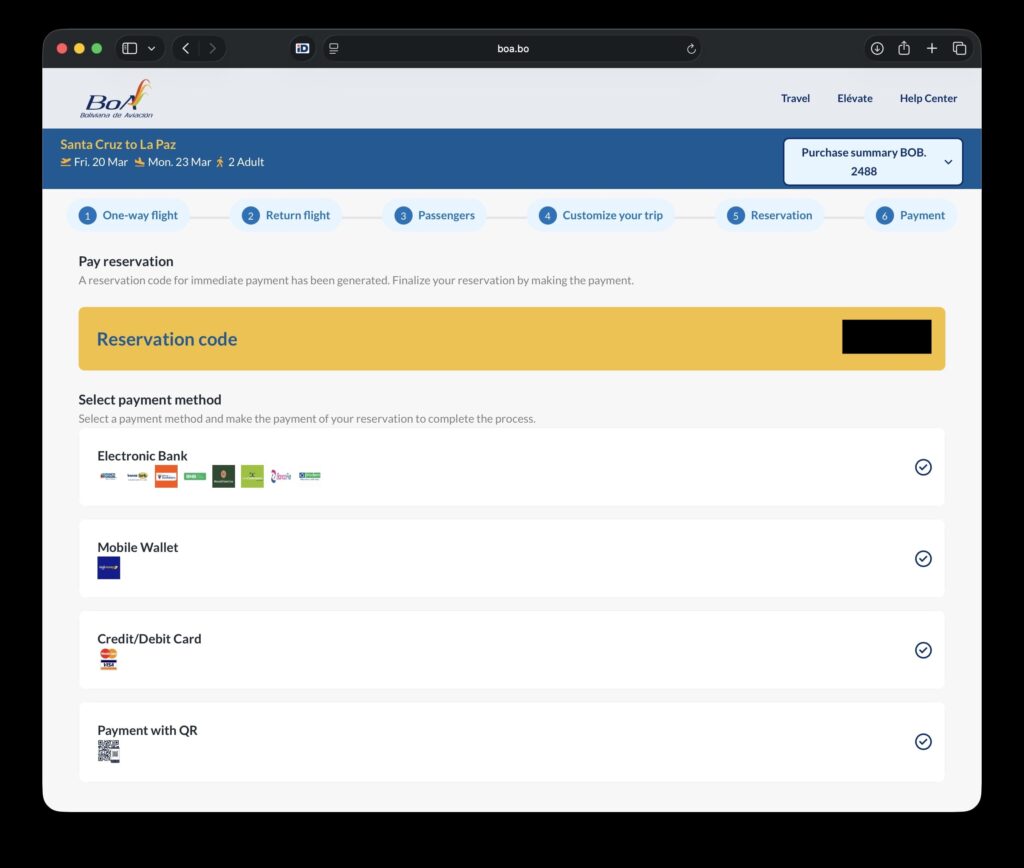
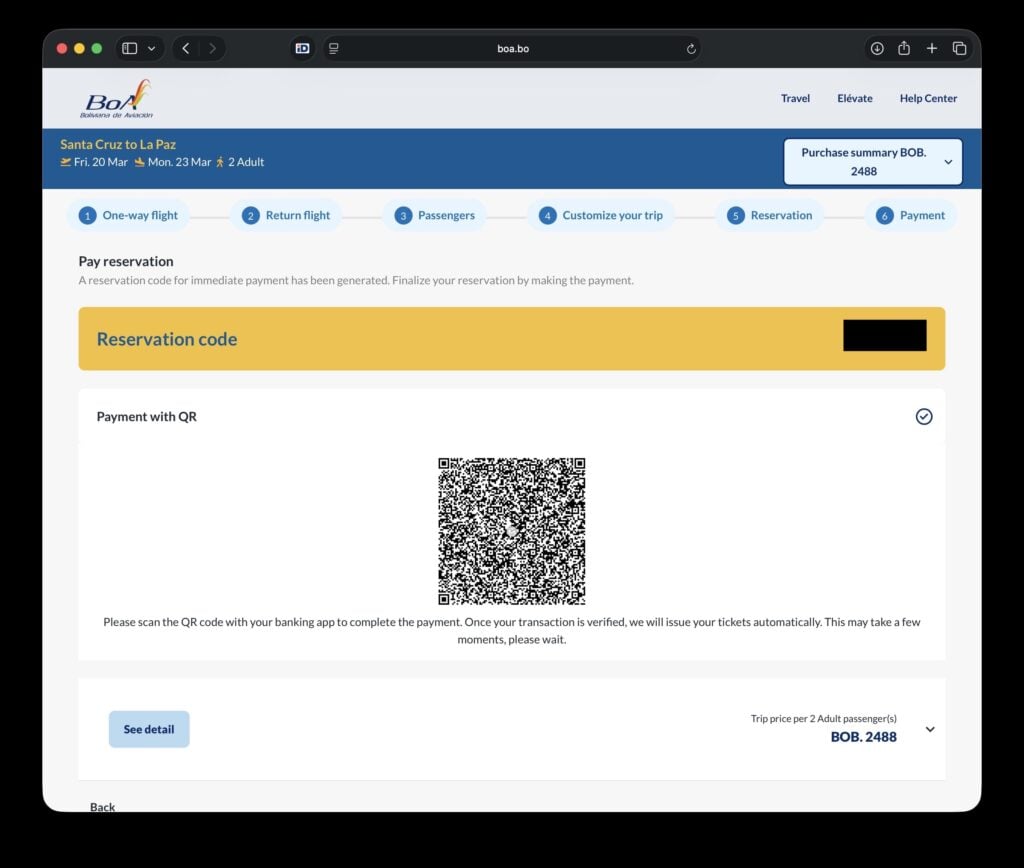
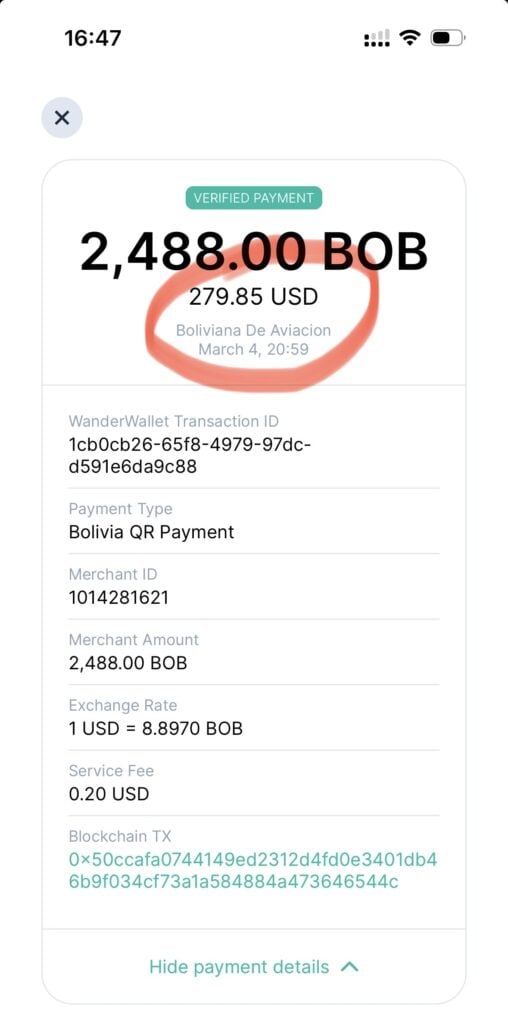
Difference in this test: $165.75
This is not a promo discount. It is a checkout-rail and exchange-rate effect.
Why the Same Flight Can Be Much Cheaper Locally
Bolivia effectively runs with two pricing realities for foreign travelers:
- Official-rate path (cards/ATMs): around 6.96 BOB per USD
- Local market path (QR rails): often around 8.8-9.0 BOB per USD
When you pay the local checkout, you get the airline’s local price instead of its higher international, foreign-card price. For the current exchange-rate picture, read Bolivia’s Parallel Dollar Is Changing.
How to Check If a Flight Is Cheaper Locally
- Keep itinerary details identical across both checkout paths.
- Compare the final pre-payment totals, not just the search results page.
- Confirm fare class and baggage are the same.
- Choose the lower all-in total.
If you pay with a foreign card or ATM cash, you are still on the official-rate path. The savings only appear when you can pay through local QR rails.
Where WanderWallet Fits
WanderWallet gives travelers in Bolivia access to QR Simple payments without opening a Bolivian bank account. You load funds, scan the QR code, and pay like a local. For setup, start with how to deposit money into WanderWallet.
Bottom Line
On this Santa Cruz ↔ La Paz test, the local checkout path was $165.75 cheaper than the international path for the same BoA flights.
Will every booking be exactly 37% cheaper? No. Prices move by date and route. But the exchange-rate mechanism is consistent, and it is the main reason travelers keep seeing materially lower local-payment totals in Bolivia.
Next reads: How to Pay in Bolivia as a Tourist, Bolivia ATM guide, and how foreigners can pay in Bolivia.
Frequently Asked Questions
Can domestic flights in Bolivia really be cheaper through local checkout?
In this real test, yes. The same round-trip itinerary showed $445.60 in the international flow and 2,488 BOB ($279.85) in the Bolivia-local flow, a $165.75 difference.
Why is there such a large price gap?
The payment rails follow different exchange-rate realities. Cards and ATMs are tied to the official 6.96 BOB/USD rate, while local QR flows often reflect market-real pricing around 8.8-9.0 BOB/USD.
Does this mean every flight will be exactly 37% cheaper?
No. Route, date, and fare bucket still change the final total. The case study shows one real booking result, while the mechanism explains why large differences can happen repeatedly.
Can travelers use QR payments without a Bolivian bank account?
Yes. WanderWallet connects travelers to Bolivia’s QR Simple rail so they can pay like a local without opening a local bank account.
If I pay with a foreign card or cash from an ATM, do I get the same result?
Usually no. Those paths still use official-rate economics. The savings in this case came from a local QR payment path.
Ready to Start Saving in Bolivia with QR Payments?
Download WanderWallet and pay like a local.


About the Author

Vojta Pohunek
Vojta is the cofounder and CEO of WanderWallet. He is from Prague and has lived in Latin America for three years, where he focuses on making everyday payments simpler for anyone moving between countries.